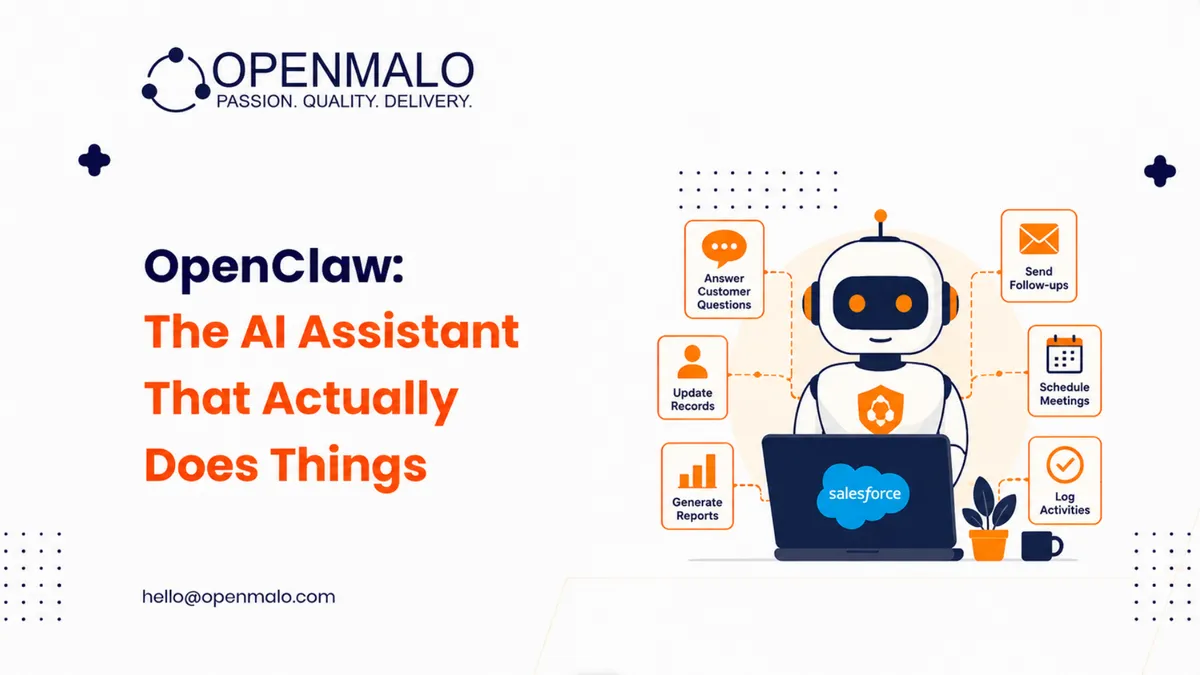
The 2026 Shift: From Chatbots to Digital Workers
We have officially reached "Chatbot Fatigue."
In 2024, we were impressed that an AI could write an email. In 2025, we were happy it could summarize a PDF. But in 2026, the bar has moved. Businesses no longer want a "pen pal" in a browser tab; they want a digital employee that can open the browser, log into the CRM, find the overdue invoices, and send the follow-up messages while the team is asleep.
This is the era of Agentic AI, and at the forefront of this revolution is OpenClaw.
OpenClaw isn't just another LLM wrapper. It is a paradigm shift in how we interact with silicon. While big tech tries to lock you into their "walled gardens" with high monthly subscriptions and opaque data policies, OpenClaw gives you the keys to the entire estate. It is an open-source, self-hosted framework that turns "talking" into "doing."
What is OpenClaw? The Anatomy of an Agent
OpenClaw (formerly known as Moltbot) is an MIT-licensed, open-source AI assistant designed to run on your own hardware—be it a laptop, a private server, or a Docker container.
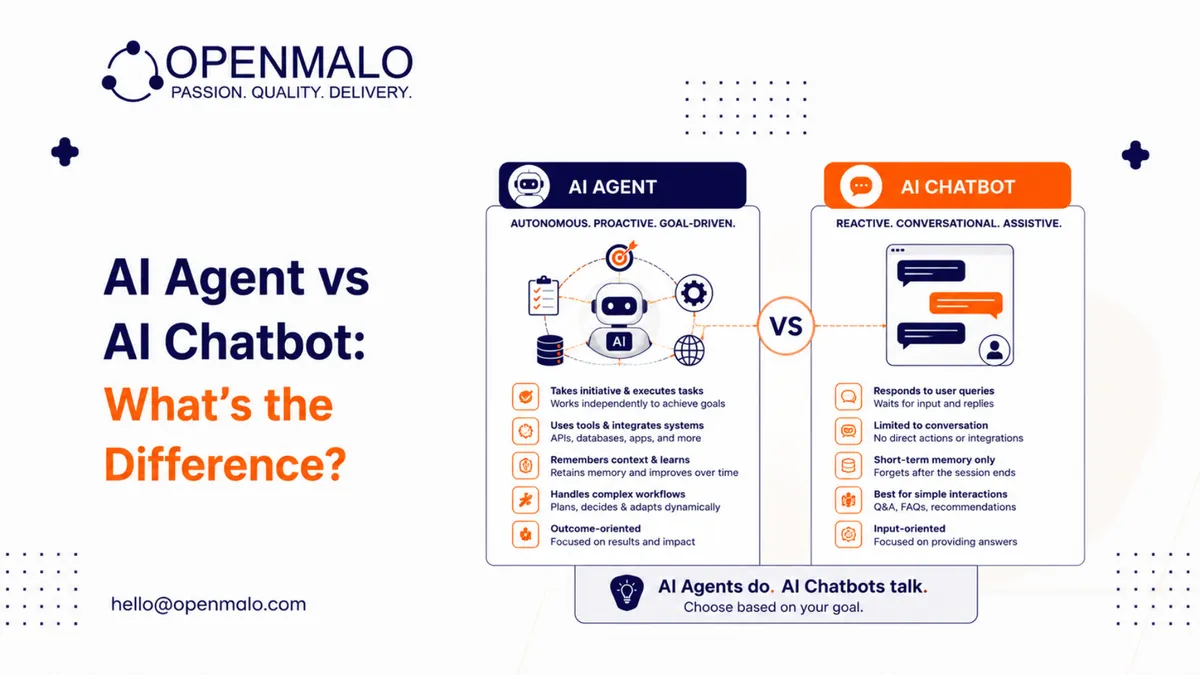
Unlike ChatGPT or Claude, which are Reactive (they only speak when spoken to), OpenClaw is Proactive. It lives in the messaging apps you already use (WhatsApp, Telegram, Slack, Signal, iMessage) and operates as a background service (daemon) that stays awake 24/7.
The "Lobster" Philosophy
The community calls it the "Lobster Philosophy":
- Hard on the outside: Aggressive local-first security and data sovereignty.
- Soft on the inside: A seamless, human-like interaction experience that feels like texting a highly competent chief of staff.
The "Heartbeat": Why OpenClaw Doesn't Wait for You
The "secret sauce" of OpenClaw is its Heartbeat Scheduler.
Most AI assistants are "session-locked." When you close the tab, the brain stops. OpenClaw, however, has a configurable pulse. Every 30 minutes (or whatever interval you set), the agent "wakes up," reads a checklist from a local file (usually HEARTBEAT.md), and scans its environment.
- Did I get a new lead in Salesforce?
- Is the server disk space above 90%?
- Did the price of that flight to New York drop below $500?
If the answer is yes, it doesn't just notify you—it takes the next logical step based on your predefined "Skills."
Technology Breakdown: How It "Does" Things
For non-technical readers, the easiest way to understand OpenClaw is to think of it as a Brain with Hands.
1. The Brain (Model Agnostic)
OpenClaw doesn't care which AI model you use. You can plug in Claude 3.5 for high-level reasoning, GPT-5 for creative tasks, or a local Llama 4 (via Ollama) if you want 100% offline privacy.
2. The Hands (AgentSkills)
OpenClaw uses a standard called AgentSkills. These are modular YAML/Markdown files that teach the AI how to use specific tools. There are currently over 3,000 community-built skills on ClawHub for everything from managing GitHub PRs to controlling Philips Hue lights.
3. The Nervous System (The Gateway)
The Gateway is a background process that normalizes communication. Whether you send a voice note on WhatsApp or a file on Slack, the Gateway converts it into a format the "Brain" can understand, executes the task, and sends the result back to your preferred channel.
Sector-Specific Use Cases
For Founders
Stop spending three hours a day on "admin theater."
- Scenario: Connect OpenClaw to your Stripe and Slack. Have it monitor churn events. When a high-value customer cancels, OpenClaw can automatically research their LinkedIn profile, draft a personalized "What went wrong?" email, and ping you for approval before sending.
For HR Professionals
- Scenario: Automate the "Onboarding Drip." OpenClaw can monitor your HRIS (like Workday or HiBob). When a new hire is added, it can proactively message them on Slack on their first day, provide links to their specific benefits, and check in every Friday for the first month to ask how they're settling in.
For Developers
- Scenario: The 24/7 DevOps Assistant. Tell OpenClaw: "Watch the production logs. If you see a 500 error, find the offending commit in GitHub, summarize the bug, and DM the developer who pushed the code."
For Enterprise Buyers
The ROI here is De-risking.
- Scenario: Instead of paying a "per-seat" tax for every AI feature in every SaaS tool you own, you build a centralized "Agentic Layer" with OpenClaw. You own the data, you control the tokens, and you aren't at the mercy of a vendor's price hike.
For Students
- Scenario: Personal Research Librarian. Send a 50-page research paper to your OpenClaw assistant via Telegram. Ask it to find all citations related to "Carbon Capture" and add them to your Notion database. It does the legwork while you're in your next lecture.
The ROI of Agency: Cutting the "Human-in-the-Loop" Tax
In 2026, "efficiency" is measured by the reduction of Operational Latency. Most businesses suffer from the "Middle Mile" problem: the gap between receiving information and taking action. A human might take 4 hours to see an email, 30 minutes to process it, and 10 minutes to act.
An OpenClaw agent reduces that 4-hour gap to seconds.
The Brutal Math:
- Traditional Chatbot: Costs $20/mo. Saves you 5 mins/day in writing help.
- OpenClaw Agent: Costs $0 (MIT License) + API tokens. Saves you 2 hours/day by performing background tasks (browser automation, file management, proactive monitoring).
- Net Result: A 10x higher ROI because the AI is doing, not just suggesting.
Risk Management: The Truth About Local Autonomy
I won't sugarcoat this: Giving an AI agent access to your shell and browser is a cybersecurity challenge.
- Prompt Injection: A malicious email could theoretically contain hidden instructions that tell your agent to "Delete all files."
- The Fix: Use OpenClaw's Sandbox mode (Docker-based) for high-risk tasks.
- Skill Poisoning: Downloading unverified skills from the community can be dangerous.
- The Fix: Only use verified skills from ClawHub and always review the YAML source code.
- Privacy Leaks: If you use cloud-based models (like GPT-5), your data still travels to their servers.
- The Fix: For sensitive work, use a Local LLM (Ollama/LM Studio).
Conclusion: The Future of Agentic Infrastructure
We are moving toward a world of Multi-Agent Orchestration. Within 2–3 years, you won't have one assistant; you will have a "Swarm." One agent for finance, one for coding, one for personal life—all communicating through a central Gateway like OpenClaw.
The businesses that thrive in 2027 won't be the ones with the best prompts; they will be the ones with the best Agentic Infrastructure. They will own their agents, their data, and their workflows.
Here's How We Help Businesses Move From Idea to Scalable Product
The era of "talking to AI" is over. We are now in the era of AI doing the work. At Openmalo Technologies, we don't just follow trends—we build the infrastructure that defines them. Whether you are looking to integrate autonomous agents into your CRM, build a custom SaaS with agentic workflows, or secure your enterprise AI stack, we have the 13+ years of expertise to make it happen.
Contact Openmalo Technologies for:
- Custom AI & GPT Integrations
- SaaS Application Development
- Web and Mobile App Development
- Enterprise-Grade Cloud Solutions
- CRM & Workflow Automation
- Precision UI/UX for AI Workspaces