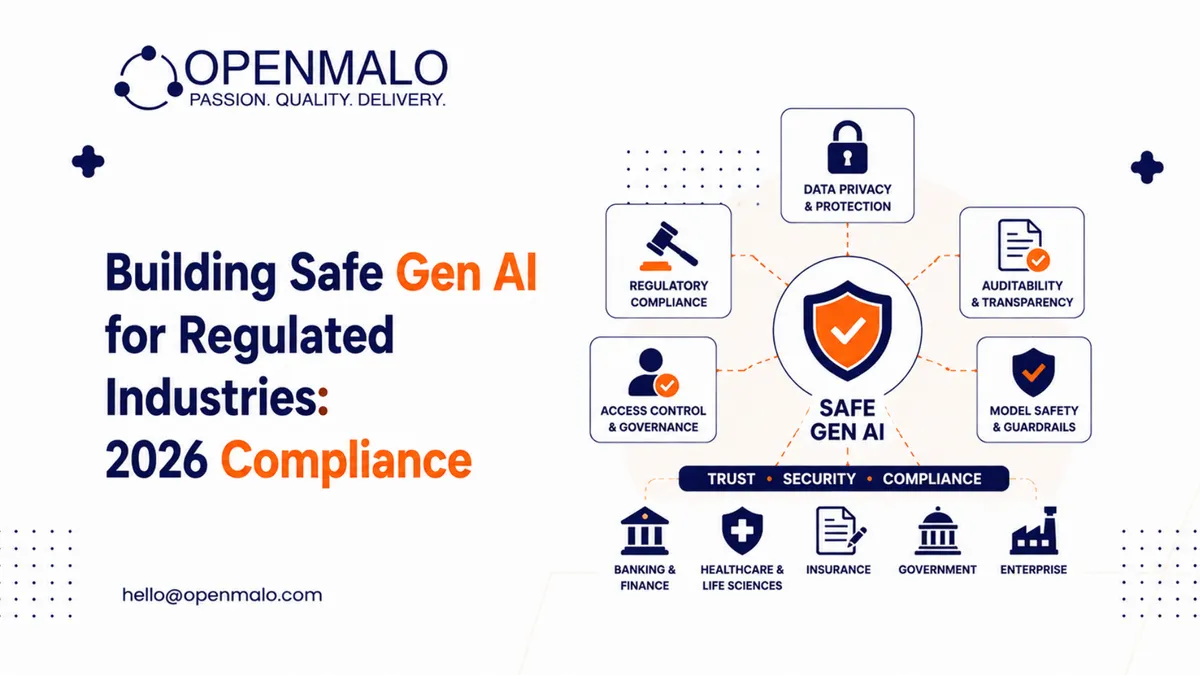
In 2026, the era of "move fast and break things" in AI has officially ended. For enterprises in Finance, Healthcare, and Infrastructure, the stakes have shifted from performance metrics to Legal Liability. With India's Digital Personal Data Protection (DPDP) Act in full force and the EU AI Act setting global benchmarks for high-risk systems, "hallucination" is no longer just a technical glitch—it's a regulatory breach.
At OpenMalo Technologies, we specialize in the "Hardened Safety" architecture. We build AI systems that don't just "talk"—they comply. Whether you are navigating the strict takedown timelines of India's 2026 IT Rules or the rigorous audit trails required by the UAE's financial regulators, your AI must be as secure as your core database.
1. The 2026 Regulatory Landscape: The Shift to Accountability
By 2026, regulators have moved from broad guidelines to surgical enforcement.
- India (DPDP & IT Rules 2026): Mandatory labeling for AI-generated content (SGI) and expedited takedown windows as short as 2 hours for sensitive deepfakes or misinformation.
- EU AI Act: High-risk AI (used in recruitment, healthcare, or law enforcement) now requires a full Quality Management System (QMS) and 10 years of technical documentation.
- Global Trend: Accountability is non-transferable. Even if you use a third-party API (like OpenAI), the Data Fiduciary (your company) is legally responsible for the output.
2. Architecture Pillar 1: Air-Gapped & Domain-Specific Models
For regulated industries, the public cloud is often a non-starter. In 2026, we see a massive shift toward Private Cloud and On-Premise SLMs (Small Language Models).
- Data Isolation: Keeping your PII (Personally Identifiable Information) within your own VPC ensures it never leaks into the training loops of global frontier models.
- Domain Grounding: We "harden" these models using your internal, verified documents, ensuring the AI only speaks from your Gold-Standard data, effectively eliminating "hallucinations" in critical workflows.
3. Architecture Pillar 2: The "Traceability" Log & Audit Trail
In an audit, "I don't know why the AI said that" is not an acceptable answer.
- The Metadata Mandate: Every AI output must be timestamped, labeled, and linked to its original source data.
- Input-Output Tracing: We implement Versioned Prompting, where we store the exact prompt, the model version, and the retrieval context for every transaction. This creates a "Forensic Trail" that can be reviewed six months later by a compliance officer.
4. Architecture Pillar 3: Automated Takedowns & Safety Guardrails
With the 2026 IT Amendment Rules requiring takedowns within 2–3 hours, manual moderation is impossible at scale.
- Real-time Sanitization: We implement a Secondary Guardrail Layer that inspects every AI response for toxic content, PII leaks, or prohibited advice before it reaches the end-user.
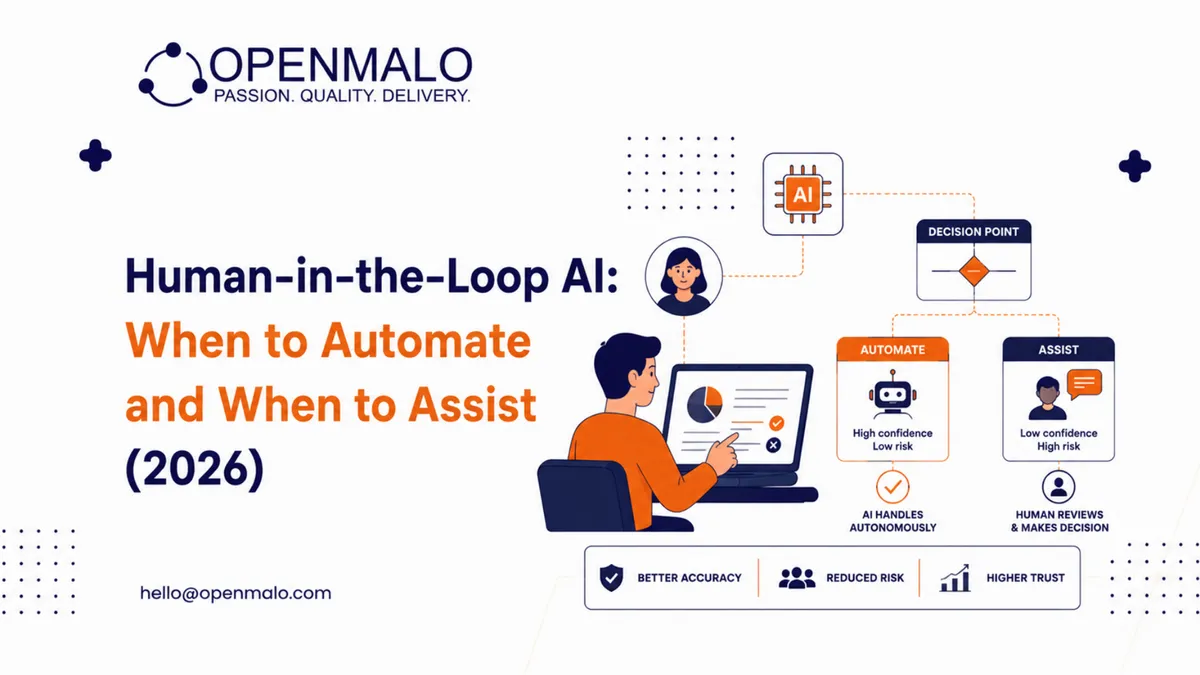
- Kill-Switches: In autonomous agentic workflows, if the AI detects it is moving toward a "High-Risk" decision (e.g., denying a medical claim), it is hard-coded to halt and trigger a Human-in-the-Loop review.
5. Industry Focus: Safety Protocols
Healthcare
- Clinical Validation: AI diagnostic aids must be validated within your specific clinical context (e.g., local patient demographics) before deployment.
- Disclosure: Patients must be notified whenever AI is influencing their care or interacting with them via mental health chatbots.
Finance & Banking
- Model Explainability: If an AI-driven credit score is rejected, the system must provide a "Human-Readable" reason to comply with anti-discrimination laws.
- DORA Compliance: Digital Operational Resilience is key—your AI must have redundant "fail-safes" to ensure zero service interruption.
Key Takeaways
- Human-in-the-Loop is Legal Armor: Don't let AI make high-stakes decisions autonomously.
- Privacy by Design: Use "Small Language Models" to keep sensitive data on-site.
- Label Everything: Clear AI-content labeling is no longer optional—it is a statutory requirement.
- Auditability = Trust: Your AI is only as safe as your ability to explain its decisions.
Conclusion
Building AI for regulated industries in 2026 is about more than just smart code; it's about Strategic Resilience. By embedding compliance directly into your technical architecture, you transform "Risk" into a "Competitive Advantage." At OpenMalo Technologies, we provide the hardened infrastructure needed to lead in the most scrutinized markets on earth.
Is your AI project "Audit-Ready"? OpenMalo Technologies provides comprehensive AI Safety Audits and DPDP/EU AI Act-compliant infrastructure for enterprise leaders.