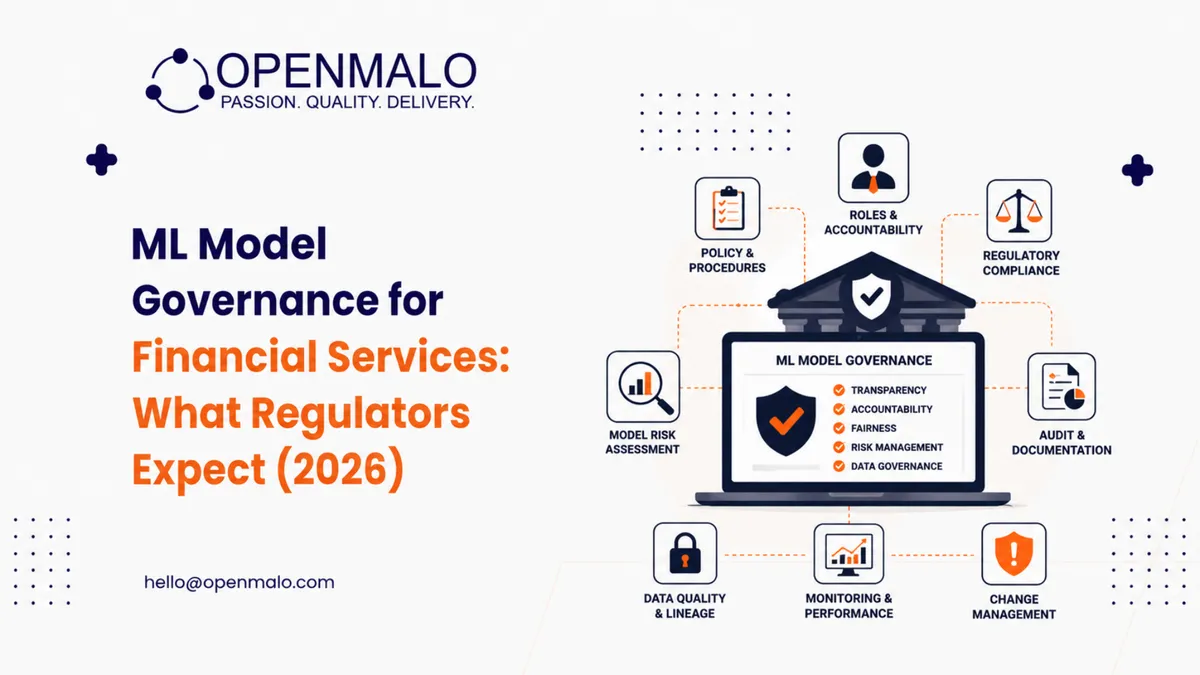
In 2026, the "Wild West" era of experimental AI in finance has officially ended. Regulators—including the RBI in India, the SEC in the US, and bodies governed by Europe's DORA—now view Machine Learning models not just as software, but as Systemic Risk Factors.
At OpenMalo Technologies, we specialize in transitioning firms from "Fragile AI" to Hardened, Audit-Ready Systems. Governance is no longer a checkbox for the legal team; it is a core engineering requirement. In 2026, if you cannot explain how and why a model made a decision, you don't have an innovation—you have a liability.
1. The "Explainability" Mandate (XAI)
The biggest shift in 2026 is the ban on "Black Box" models for critical financial decisions.
- The Expectation: Regulators expect Local Interpretability. If a loan is denied or a trade is flagged for fraud, you must be able to produce a "Reason Code" or a SHAP/LIME value showing exactly which features (e.g., debt-to-income ratio or recent transaction velocity) drove that specific outcome.
- The OpenMalo Technologies Standard: We implement XAI (Explainable AI) layers that translate complex neural network weights into human-readable justifications for compliance officers.
2. The DPDP Act & "Automated Decision-Making"
Under India's Digital Personal Data Protection (DPDP) Act 2026, users have a right to "Grievance Redressal" regarding automated decisions.
- Purpose Limitation: You must prove that the data used to train your model was collected for that specific purpose.
- Accuracy Requirement: A model that "drifts" and provides incorrect financial assessments is a direct violation. Regulators now look for Active Drift Monitoring as proof of "Reasonable Security Safeguards."
3. Model Lineage: The Digital Paper Trail
If an auditor walks into your office today, can you show them the exact version of the model that was live on July 14, 2025?
- Data Lineage: Which version of the dataset was used?
- Code Lineage: Which Git commit generated the model?
- Environment Lineage: Which Docker image was used for inference?
- Hardened Governance: We use Immutable Model Registries where every model is digitally signed and "locked" once it passes the compliance gate.
4. Bias & Fairness: The Regulatory Standard
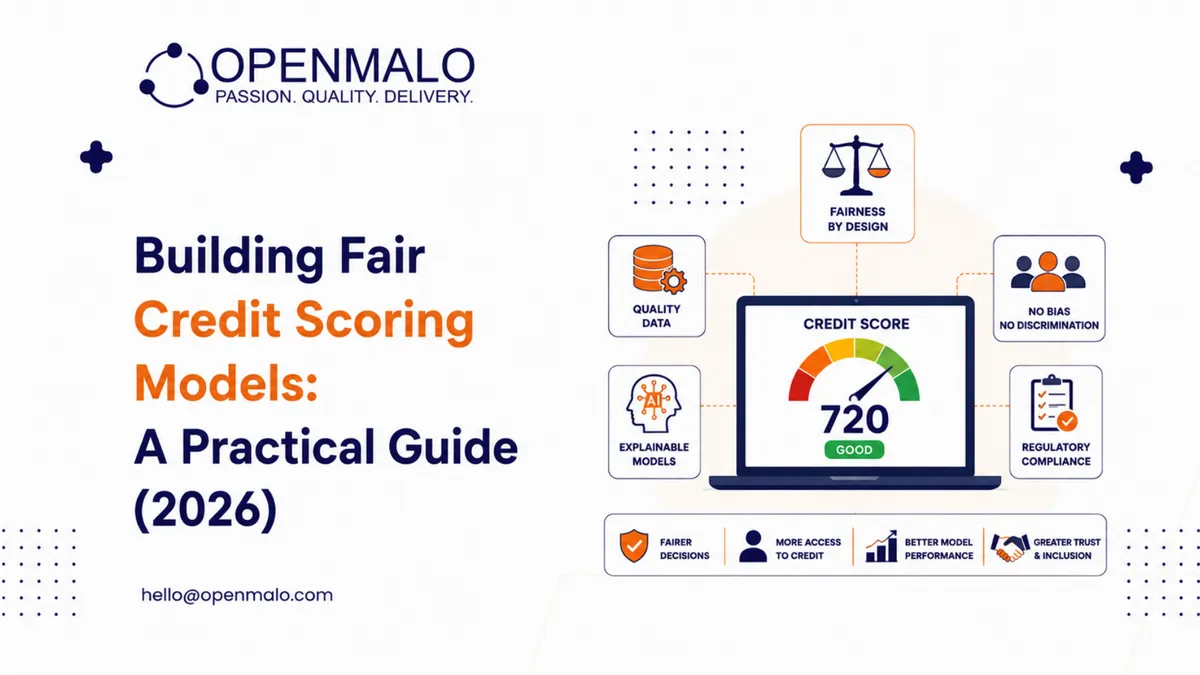
In 2026, "I didn't include race/gender in the features" is no longer a valid defense against bias.
- Proxy Variables: Regulators are looking for "Proxy Bias"—where a model uses a feature like postal code or shopping habits to indirectly discriminate against protected groups.
- Mandatory Stress Testing: You must perform Fairness Audits across demographic slices before deployment. If the "disparate impact" exceeds a set threshold, the model must be blocked from production.
5. Agentic Accountability: Who Owns the "Agent's" Mistake?
As we move toward Agentic AI—autonomous systems that can execute financial transactions—the governance question shifts to Delegation.
- The KYA (Know Your Agent) Protocol: Regulators expect agents to have defined "Operating Envelopes." For example, an agent may have the authority to rebalance a portfolio but not to withdraw funds to an external account.
- Human-in-the-Loop (HITL): For high-value transactions, regulators expect a "Hardened" breakpoint where a human must verify the AI's "Plan" before execution.
Key Takeaways
- Trust is Engineered: Governance must be baked into the CI/CD pipeline, not "bolted on" at the end.
- Transparency is a Feature: Build your models to be "Inspectable" by design.
- Data Sovereignty is Mandatory: Ensure your MLOps stack respects regional residency laws (like the DPDP Act).
- Document Everything: In the eyes of a regulator, if it isn't logged, it didn't happen.
Conclusion
Model Governance in 2026 is about moving from "Hype" to "Integrity." By building transparent, traceable, and fair AI systems, you don't just satisfy regulators—you build a Partnership of Trust with your customers. At OpenMalo Technologies, we provide the engineering depth and the "Hardened" frameworks to ensure your AI is as reliable as it is innovative.
Is your AI "Audit-Ready"? OpenMalo Technologies provides full AI Governance Audits and XAI implementation for Fintech and HealthTech firms.