In 2026, the honeymoon phase for "Experimental AI" in finance is over. Regulators (from the RBI to the SEC) and customers now demand that every automated decision—be it a credit limit increase or a fraud alert—is traceable, accountable, and resilient.
At OpenMalo Technologies, we see many firms struggling with "Fragile AI"—models that work in a notebook but fail under the weight of compliance audits or real-world data drift. A Hardened MLOps Stack isn't just about training better models; it's about building a factory that safely manufactures trust. Here is the 2026 essential stack for FinTech.
1. The Shift: From MLOps to "RegOps"
Traditional MLOps focuses on velocity. FinTech MLOps in 2026 focuses on Integrity.
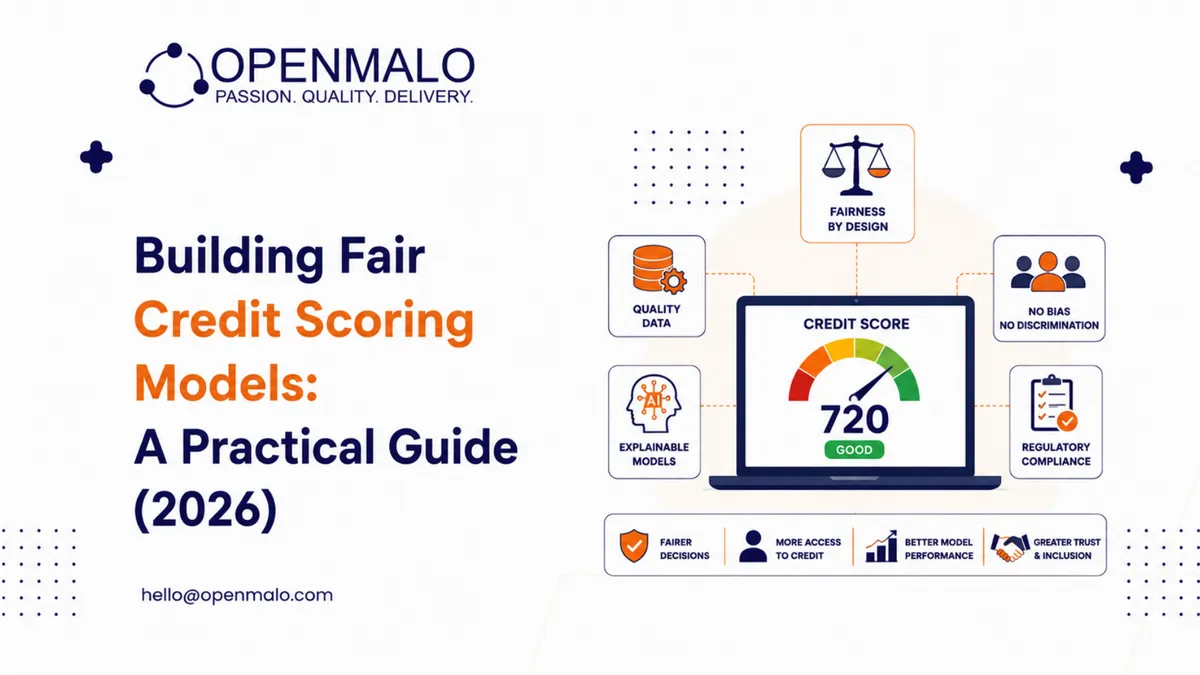
- The "Black Box" Ban: You can no longer deploy a model that says "Denied" without providing a specific, human-readable reason. Explainability (XAI) is now a mandatory layer, not an add-on.
- Token Economics: With the rise of LLMs for financial advice, MLOps teams now manage "Unit Economics"—calculating the exact cost of an AI inference vs. the lifetime value of the customer.
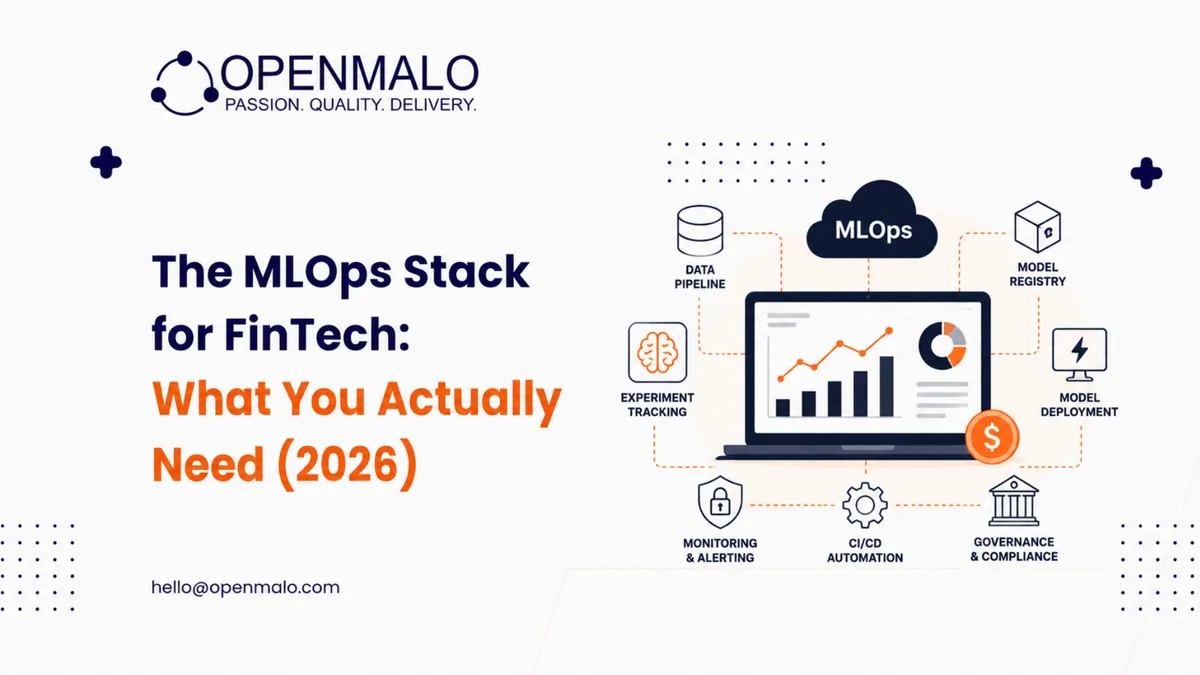
2. The 2026 FinTech Stack: Core Components
To build a production-grade system this year, your stack must include these four pillars:
A. The Feature Store (The "Source of Truth")
- Tools: Feast or Tecton.
- Why: In FinTech, "Data Leakage" (using future data to train a model) is a common cause of model failure. A Feature Store ensures that the data used for training exactly matches the data available at the time of inference.
B. Automated Lineage & Versioning
- Tools: DVC (Data Version Control) and MLflow.
- Why: If an auditor asks, "Why did your model fail on March 14th?", you must be able to reproduce the exact code, exact dataset, and exact environment used on that day.
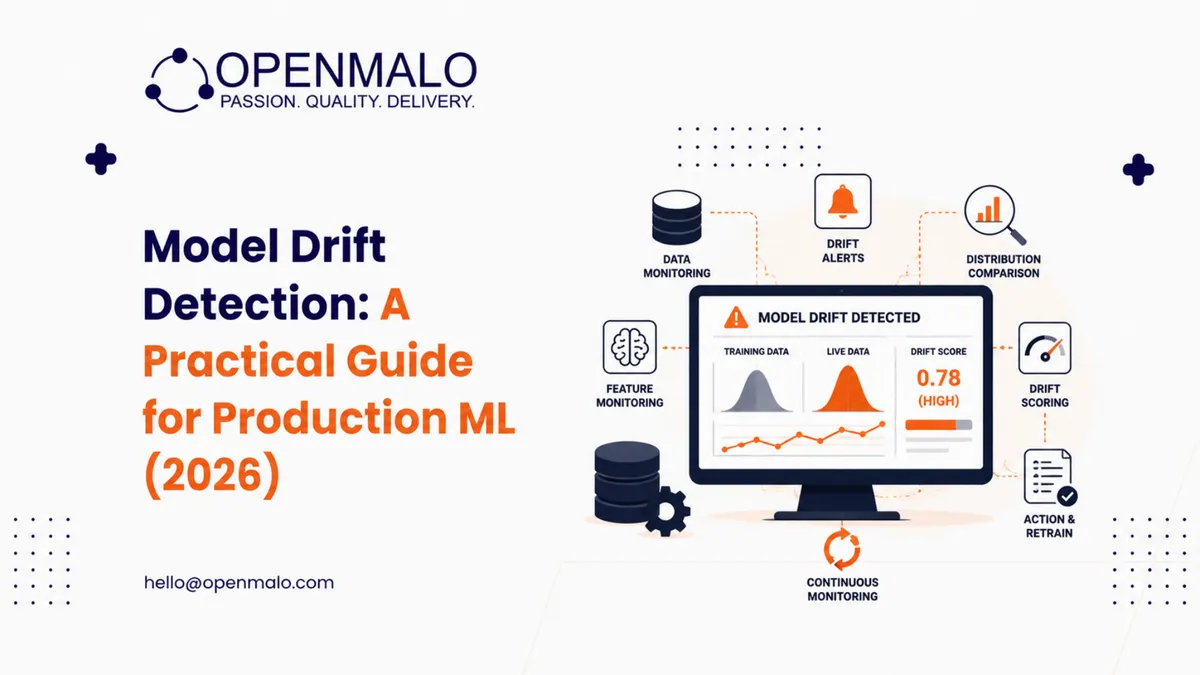
C. The Monitoring & Observability Layer
- Tools: Evidently AI or Prometheus/Grafana.
- Focus: You must track Prediction Drift (is the model giving too many 'Approvals' today?) and Data Quality (is a third-party credit score feed sending null values?).
D. Model Serving (The "Hardened" Perimeter)
- Tools: KServe or Seldon Core on Kubernetes.
- Feature: Must support Shadow Deployments (running a new model in the background to compare its results with the live model before fully switching over).
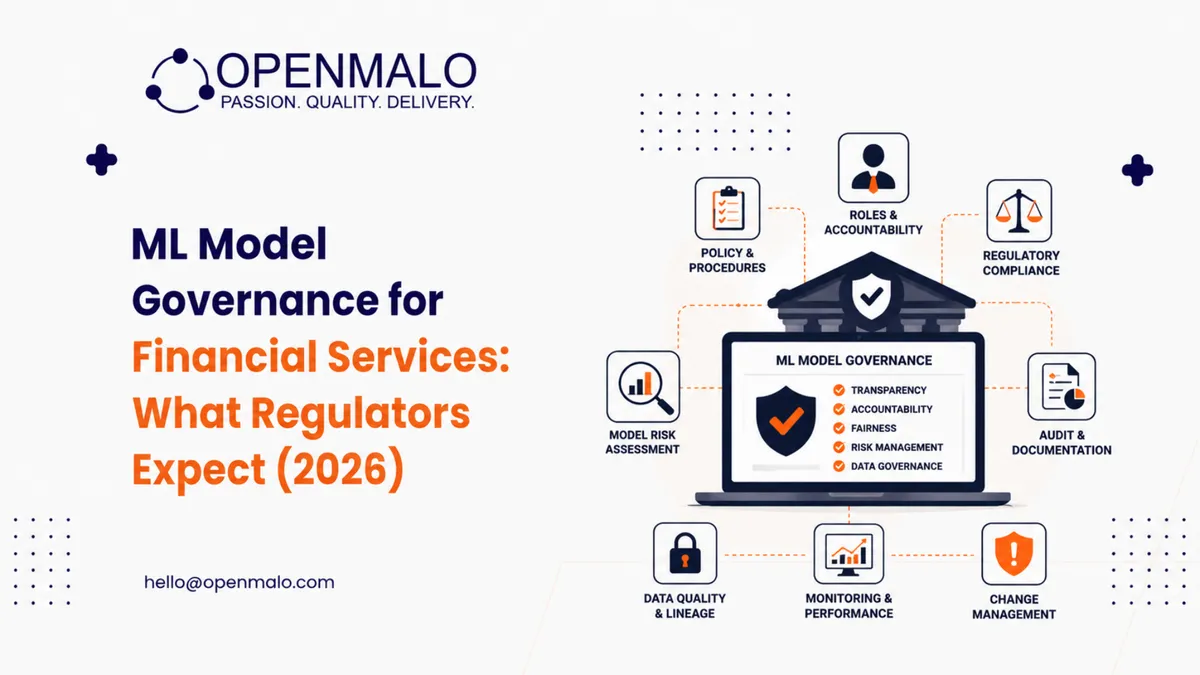
3. Governance & The DPDP Act: Compliance-by-Design
In India, the Digital Personal Data Protection (DPDP) Act 2026 has reshaped how ML teams handle data.
- Purpose Limitation: Your MLOps pipeline must ensure that data collected for "Fraud Detection" is never accidentally used for "Marketing Predictions" unless explicit consent was obtained.
- Data Isolation: Use "Region-Specific Clusters." If your FinTech serves Indian users, the MLOps training compute and data storage must reside within Indian borders (e.g., AWS Mumbai/Hyderabad) to satisfy residency requirements.
- The "Right to Erasure": Your pipeline must be able to programmatically "un-learn" or remove a specific user's data from training sets upon request.
4. Agentic AI & "Know Your Agent" (KYA)
By mid-2026, FinTech is moving toward Agentic AI—autonomous systems that can execute trades or move money.
- KYA Protocols: Just as you verify a customer (KYC), you must now verify your AI agents. Every agent must have a unique digital signature and a "Scoped Consent" limit (e.g., "This agent can only move up to ₹10,000 per day").
- Audit Logs for Agents: Every "Plan" an AI agent makes must be logged before it is executed, creating a "Paper Trail" for autonomous actions.
5. The OpenMalo "Hardened" MLOps Framework
At OpenMalo Technologies, we don't just set up tools; we build Resilient AI Factories:
- Privacy-Preserving Training: We implement Zero-Knowledge Proofs (ZKP) and Differential Privacy so you can train models without ever "seeing" the raw PII.
- Circuit Breakers: We build "Financial Guardrails" into the deployment layer. If a model starts making decisions that deviate 10% from the historical baseline, the system automatically rolls back to the previous "Safe" version.
- Cost-Aware Inference: We set up LLM routers that send simple queries to cheap, local models (SLMs) and only use expensive frontier models for complex advisory tasks.
Key Takeaways
- MLOps is 80% Data, 20% Modeling: If your data pipeline isn't "Hardened," your model is a liability.
- Traceability is Your Defense: In a regulated market, "I don't know why it did that" is an admission of guilt.
- Automate the Boring Stuff: Use CI/CD for ML (GitOps) to ensure that every model update is tested for bias and accuracy before hitting production.
- Think "Agentic": Prepare your stack now for a world where AI agents, not just humans, are your primary users.
Conclusion
The 2026 MLOps stack for FinTech is a balance of Velocity and Vigilance. By integrating compliance, observability, and cost-management into your core architecture, you move from "AI Experiments" to "Financial Infrastructure." At OpenMalo Technologies, we help you bridge that gap with a hardened, audit-ready AI strategy.
Is your AI model a "Black Box" that scares your compliance team? OpenMalo Technologies provides Hardened MLOps Audits and implementation services tailored for the FinTech sector.