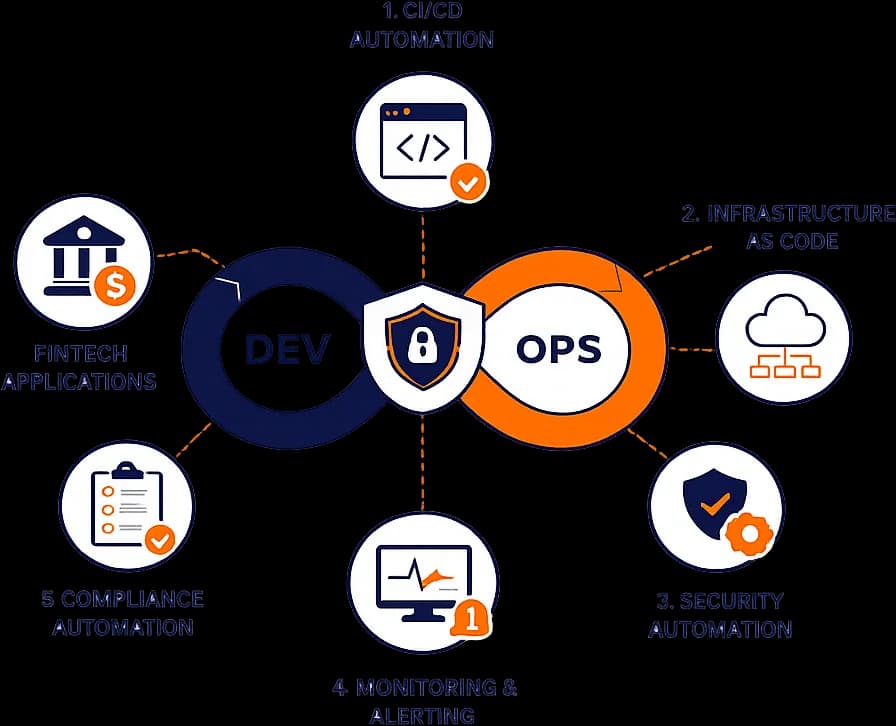
In 2026, a FinTech startup isn't just a "finance company with an app"; it is a Security and Compliance engine that happens to move money. With the mandatory enforcement of PCI-DSS 4.0.1 and the Digital Operational Resilience Act (DORA), the "Move Fast and Break Things" era is over. If you aren't automated from Day One, your first audit will be your last.
At OpenMalo Technologies, we specialize in building "Hardened FinTech Stacks." We've found that the difference between a successful launch and a regulatory nightmare comes down to five specific automations that must be baked into your "Day One" CI/CD pipeline.
1. Compliance-as-Code: The Policy Gatekeeper
In 2026, manual "Change Advisory Boards" are a liability. You need Policy-as-Code (PaC). Using tools like Open Policy Agent (OPA), you can automate your compliance checks directly into the pipeline.
- Day One Automation: Every deployment is automatically scanned against a policy library. If a developer accidentally tries to open a public S3 bucket or deploy a service without encryption, the pipeline rejects the build before it ever hits a server. This turns compliance from a "once-a-year" headache into a "once-a-second" reality.
2. Ephemeral Environments: Cutting the Blast Radius
FinTechs are prime targets for lateral movement attacks. Using a shared "Staging" environment is a 20th-century risk.
- Day One Automation: Implement Preview Environments. For every Pull Request, the pipeline spins up a completely isolated, temporary version of your stack.
- The Benefit: Tests are run in a clean room. Once the PR is merged, the environment is destroyed. This ensures that no configuration drift or "ghost" vulnerabilities persist between versions.
3. Dynamic Secrets Management: No More Static Leaks
Static API keys and database passwords are the "low-hanging fruit" for hackers. PCI-DSS 4.0.1 Requirement 8 mandates strict control over these credentials.
- Day One Automation: Use Just-in-Time (JIT) Secrets. Instead of your app having a permanent password to the database, it requests a temporary credential from a vault (like HashiCorp Vault). The password is generated for that specific session and auto-expires in 15 minutes. Even if a token is stolen, it's useless by the time the attacker tries to use it.
4. Synthetic Data Generation: Privacy-First Testing
Under India's DPDP Act and the GDPR, using "Real Customer Data" for testing is a high-risk violation. Yet, developers need realistic data to catch edge cases.
- Day One Automation: Build a Synthetic Data Pipeline. As part of your CI/CD, an automated script generates "fake" users, transactions, and card numbers that mimic the statistical patterns of real data without containing any PII (Personally Identifiable Information).
5. Automated Audit Trails: The "Push-Button" Evidence Engine
When an auditor asks, "Who approved this deployment on March 14th?", you shouldn't be digging through Slack logs.
- Day One Automation: Implement Immutable Deployment Logs. Every change—who wrote the code, who reviewed it, which security scans passed, and who triggered the deploy—is automatically bundled into a signed metadata file.
- The Result: Audit readiness becomes "Push-Button." You can generate a full compliance report for any period in seconds, satisfying DORA and PCI-DSS requirements instantly.
The OpenMalo Technologies Hardening Checklist
| Automation | Regulation Addressed | Business Impact |
|---|---|---|
| Policy-as-Code | PCI-DSS Req 6, DORA | 0% Manual Compliance Errors |
| JIT Secrets | PCI-DSS Req 8 | 90% Reduction in Credential Risk |
| Synthetic Data | DPDP Act, GDPR | Zero PII in Non-Prod Environments |
| Audit Logs | All Financial Regs | "Audit-Ready" in < 5 Minutes |
Key Takeaways
- Shift Left, Stay Left: Security isn't a final step; it's the first line of code.
- Least Privilege is Default: If a service doesn't need access, don't give it any.
- Immutable is Safer: Don't patch servers; replace them with new, hardened images.
- Automation is the Trust Layer: Regulators trust code more than they trust "Human Promises."
Conclusion
Building a FinTech in 2026 requires a "Compliance-First" engineering culture. By automating these five areas on Day One, you aren't just checking boxes—you are building a Hardened Business that can scale without fear of regulatory shutdown. At OpenMalo Technologies, we help FinTech leaders bridge the gap between "Innovation" and "Integrity."
Building the next big thing in Finance? OpenMalo Technologies provides Day-One DevOps hardening and compliance automation for high-growth FinTechs.