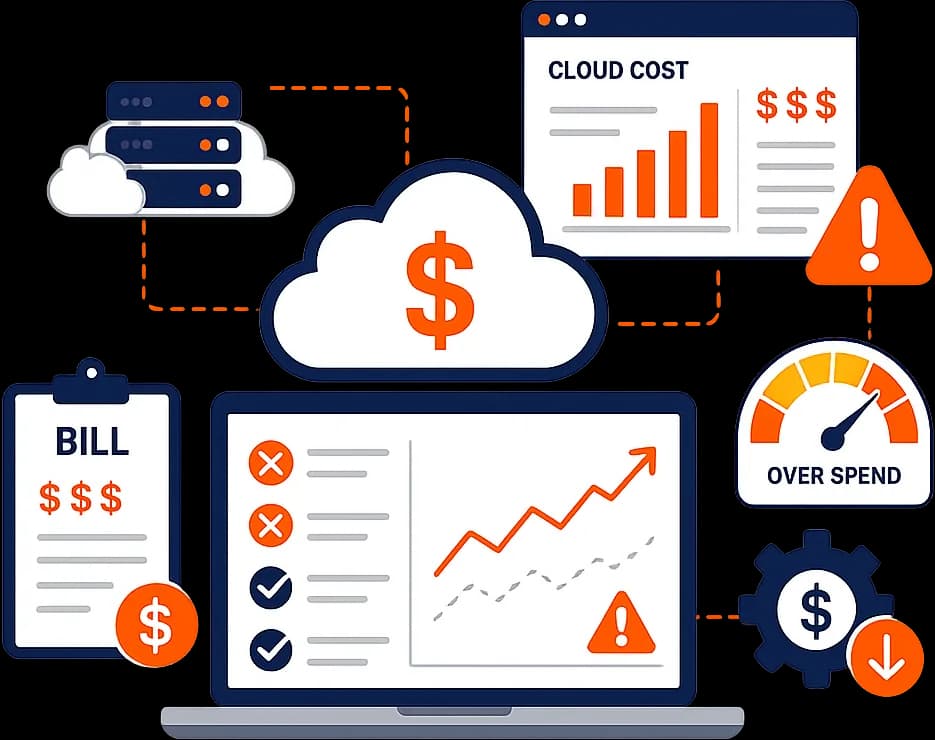
In 2026, the "Cloud Bill" has replaced rent as the most volatile line item in a startup's budget. While the cloud promises "pay-as-you-go" efficiency, the reality for most growing firms is "pay-more-than-you-know." With the explosion of Generative AI, startups are now balancing traditional compute costs with high-frequency "Token Invoices" and specialized GPU clusters.
At OpenMalo Technologies, we specialize in Hardened FinOps. We've seen hundreds of startups scale their traffic while their margins evaporate into the hyperscaler's pockets. If your cloud spend is growing faster than your user base, you are likely making one of these seven 2026-specific mistakes.
1. The "AI Inference" Leak: Unmanaged Token Spend
In 2026, the biggest budget killer isn't a server; it's an API call. Startups often give their developers unlimited access to frontier LLM endpoints without Rate Limiting or Model Routing.
- The Mistake: Using GPT-4o for a simple task that a "Hardened" Small Language Model (SLM) could do for 1% of the cost.
- The Fix: Implement an AI Gateway. It triages prompts and routes 80% of simple queries to cheaper, local models, saving thousands of dollars in monthly "Token Shock."
2. The "Elasticity Tax": Over-Provisioning for "What Ifs"
Startups often leave their "Production" instances running at 200% capacity "just in case" of a traffic spike.
- The Mistake: Treating cloud servers like on-prem hardware.
- The Fix: Move to Horizontal Pod Autoscaling. Your infrastructure should breathe with your users—expanding during the 9 PM peak in India and shrinking to a skeleton crew during the 4 AM lull.
3. Data Egress: The $0.12 Trap
Cloud providers usually let data in for free but charge you to take it out.
- The Mistake: Storing heavy video or data assets in one cloud and processing them in another (or on-prem) without realizing every GB moved is a hidden fee.
- The Fix: Use Content Delivery Networks (CDNs) and keep your "Compute" and "Storage" in the same regional zone to minimize egress fees.
4. Zombie Resources: The Cost of Forgotten Prototypes
A developer spins up a GPU-heavy instance for a weekend hackathon and forgets to turn it off.
- The Reality: In 2026, a single high-end AI instance can cost $30+ per hour. Leaving it on for a month is a $21,000 mistake.
- The Fix: Use Auto-Terminate Tags. If an instance hasn't seen traffic in 4 hours and isn't tagged as "Production," the system should kill it automatically.
5. Multi-Region Sprawl: High Availability vs. High Cost
Regulators in 2026 (like those under India's DPDP Act) require data residency, leading startups to open regions in India, the US, and the EU prematurely.
- The Mistake: Running a full stack in every region before you have the traffic to justify the "Base Fee" of those services.
- The Fix: Use a Centralized Core for non-sensitive data and only "Edge-Deploy" the parts of your app that require local residency for compliance.
6. Ignoring Spot Instances & Savings Plans
Most startups pay "On-Demand" prices, which is the "Retail" price of the cloud.
- The Mistake: Not leveraging Spot Instances for non-critical background jobs. Spot instances can be 70–90% cheaper than on-demand.
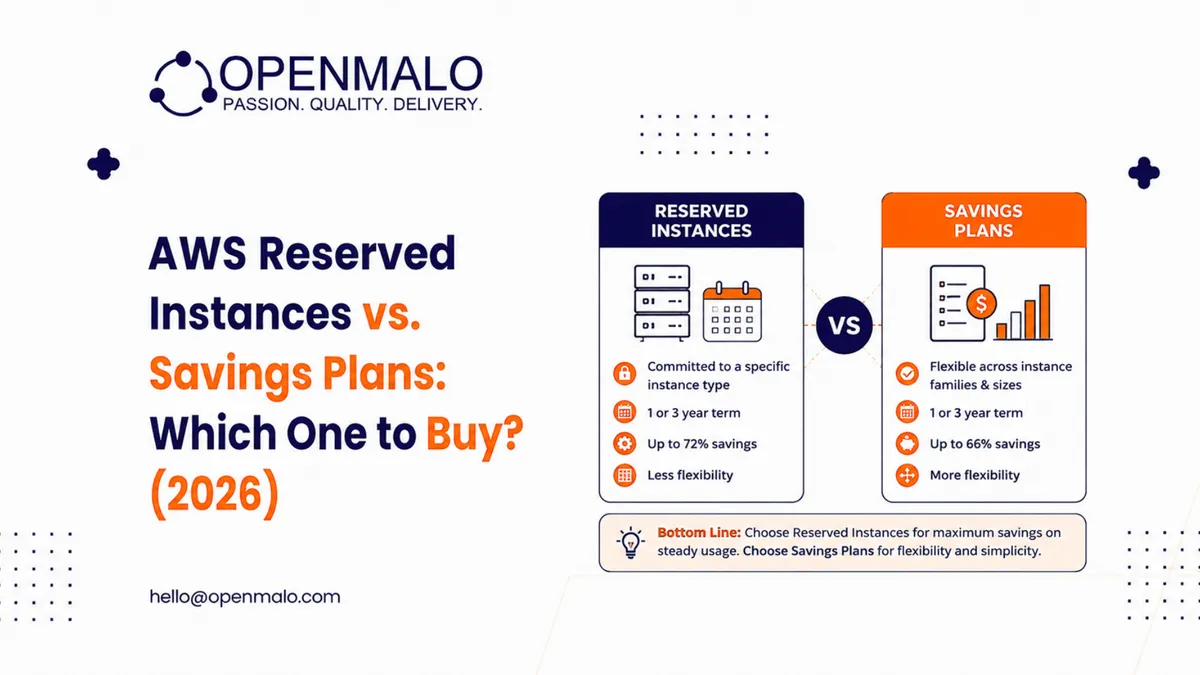
- The Fix: Commit to a 1-year Savings Plan for your "Baseline" usage and use Spot for your "Spikes."
7. The "Manual Scaling" Bottleneck
If your CTO has to log into a console to change a server size, you are losing money.
- The Mistake: Relying on human intervention to manage costs.
- The Fix: Implement Infrastructure as Code (IaC) with built-in cost guardrails. Every PR should estimate the change in the monthly cloud bill before it's merged.
Key Takeaways
- Visibility First: You can't optimize what you can't see. Use a real-time FinOps dashboard.
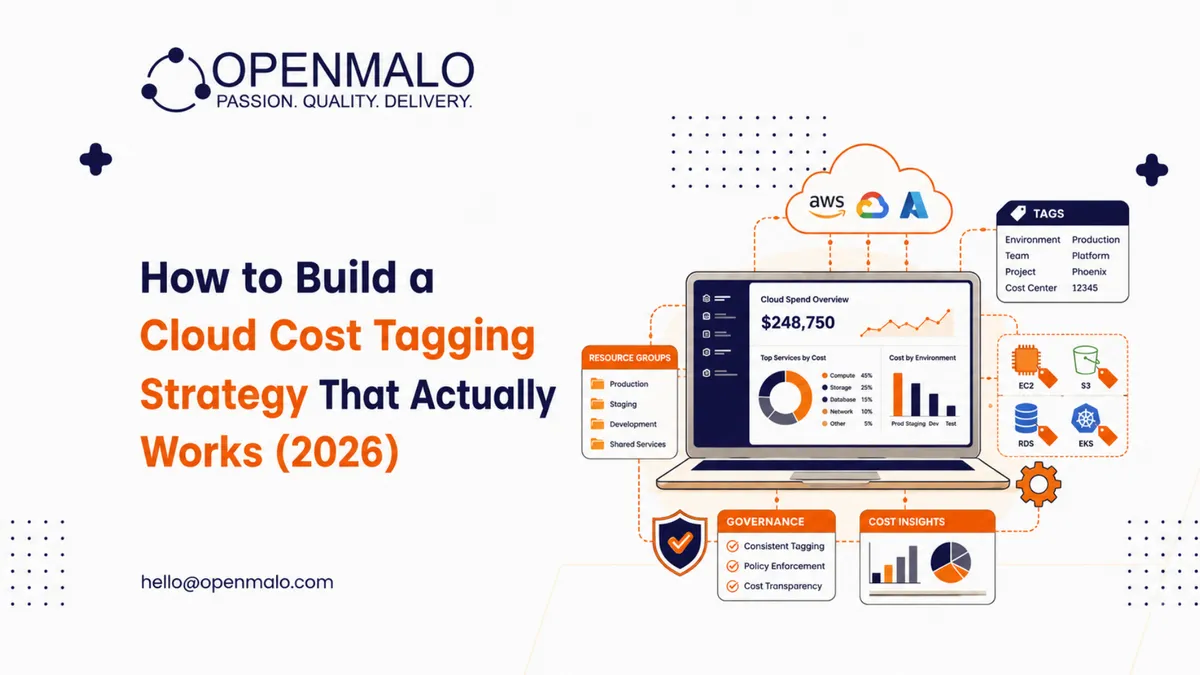
- Tag Everything: If a resource doesn't have an "Owner" and a "Project" tag, it should be deleted.
- The 80/20 Rule: 80% of your savings will come from the top 20% of your most expensive services (usually DBs and AI).
- Hardened Compliance: Ensure your cost-saving measures don't violate the DPDP Act (e.g., don't move data to a cheaper region if it must stay in-country).
Conclusion
Cloud cost management in 2026 is no longer a "quarterly cleanup"—it is a core engineering discipline. By avoiding these seven traps, you transform your cloud from a "Variable Liability" into a "Hardened Asset." At OpenMalo Technologies, we don't just build apps; we build the FinOps Infrastructure that ensures those apps are profitable from Day One.
Is your cloud bill eating your runway? OpenMalo Technologies provides full Cloud Cost Audits and FinOps implementation to reduce your monthly spend by up to 40%.