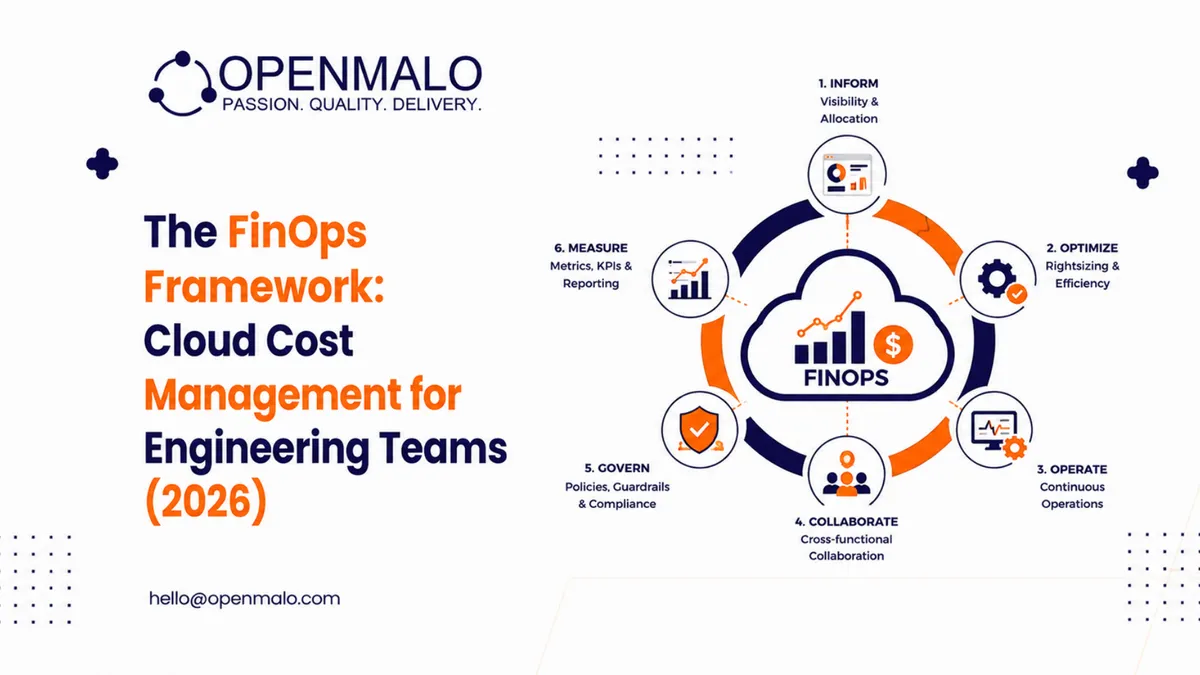
In 2026, the definition of FinOps has officially evolved. The FinOps Foundation now defines it as "The practice of managing the value of technology," expanding its reach far beyond simple cloud bills to include SaaS, AI tokens, and even private data centers. For engineering teams, this means that "cost" is no longer a finance problem—it is a core architectural constraint, as vital as latency or security.
At OpenMalo Technologies, we specialize in Hardened FinOps. We help teams move away from reactive "bill-shaming" and toward a proactive culture where every developer understands the unit economics of their code. Here is the 2026 blueprint for the modern FinOps framework.
1. The 2026 Evolution: Shift-Left & Shift-Up
The 2026 FinOps Framework focuses on two strategic movements:
- Shift-Left (The Developer): Integrating cost data directly into the CI/CD pipeline. Developers now see a "Cost Estimate" in their Pull Request before the code is even merged.
- Shift-Up (The Executive): FinOps has moved from the "IT basement" to the CTO/CIO office. 78% of mature practices now report directly to tech leadership, ensuring that technology spend is aligned with the company's multi-year investment strategy.
2. The Three Phases: Inform, Optimize, Operate
The framework operates in a continuous loop, ensuring that your infrastructure remains "Hardened" against waste.
Phase 1: Inform (Visibility)
You cannot fix what you cannot see. This phase focuses on Allocation.
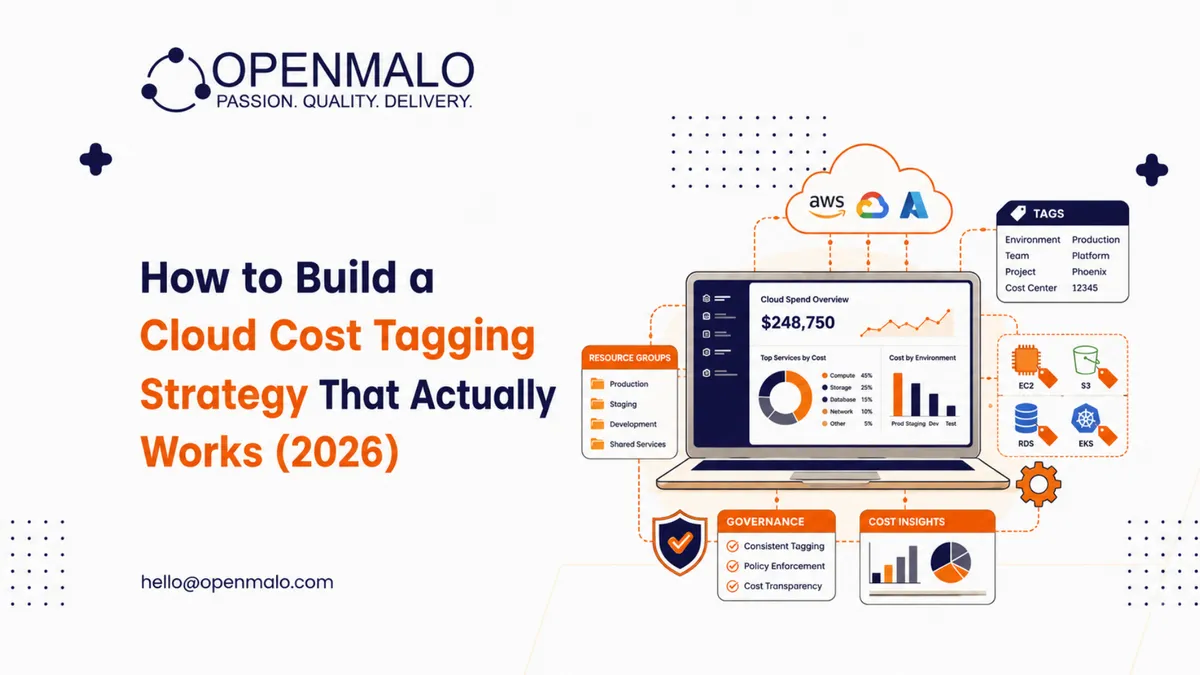
- Tagging Mastery: Every resource must be tagged by Team, Project, and Environment. In 2026, "Untagged" resources are automatically terminated.
- Shared Cost Management: Properly distributing the cost of shared resources like Kubernetes clusters or "Golden Data" pipelines.
Phase 2: Optimize (Efficiency)
This is where engineering grit meets financial logic.
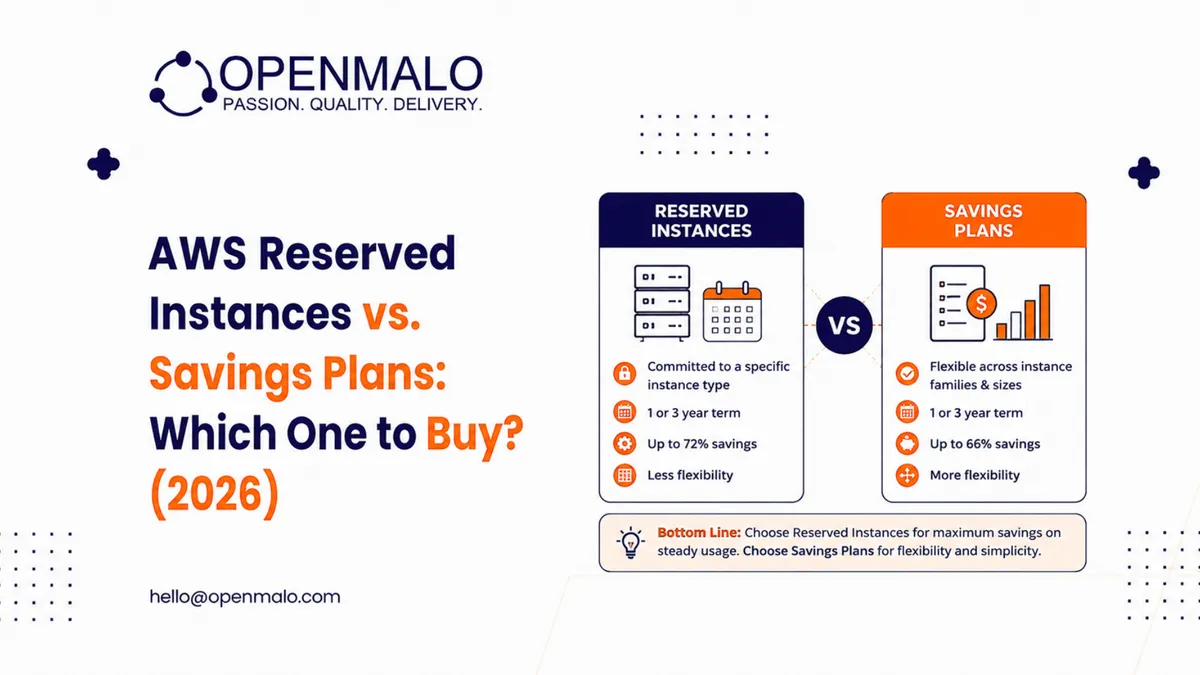
- Rate Optimization: Procurement and Finance handle "Savings Plans" and "Reserved Instances."
- Usage Optimization: Engineering teams focus on Rightsizing and Spot Instances.
- The 2026 Rule: If a non-production environment runs 24/7, it is a failure of the Optimize phase. Use Ephemeral Environments to save 70%.
Phase 3: Operate (Continuous Improvement)
Making FinOps a "Business as Usual" activity.
- Cost Governance: Setting up automated alerts that trigger when a specific service exceeds its daily budget by 20%.
- Unit Economics: Measuring the "Cost per Transaction" or "Cost per Active User" rather than just the total monthly bill.
3. The AI Era: Managing "Token Economics"
In 2026, 98% of FinOps teams are now managing AI spend. This is the new "Hardened" frontier.
- Model Routing: Don't use an expensive frontier model for a task a Small Language Model (SLM) can handle.
- Inference Efficiency: Monitoring "Tokens per Second per Dollar."
- AI for FinOps: Using AI agents to automatically find waste, suggest rightsizing, and even negotiate better rates with vendors in real-time.
4. Engineering Personas: Where Do You Fit?
- DevOps/SRE: Primary Goal is Stability & Automation. Hardened Metric: Wasted Spend %.
- Product Manager: Primary Goal is Feature Velocity vs. Margin. Hardened Metric: Unit Cost per User.
- Engineering Lead: Primary Goal is Team Autonomy & Flow. Hardened Metric: PR Cost Impact.
- CTO/CIO: Primary Goal is Strategic Value Realization. Hardened Metric: ROI of Tech Spend.
5. The OpenMalo Strategy: Engineering for Value
At OpenMalo Technologies, we implement "Value-Based Engineering." We believe that a high cloud bill is only a problem if it isn't generating a higher return.
- Hardened Architecture: We design systems that are "Cold-Start" aware, allowing for aggressive scaling-to-zero when services are idle.
- FinOps as a Service: We provide our partners with automated dashboards that translate "AWS jargon" into "Business Value," helping your team speak the same language as the CFO.
Key Takeaways
- FinOps is Culture, Not a Tool: Buying a dashboard won't save you money; changing how you write code will.
- Embrace the Variable: Cloud is an OpEx world. Stop trying to make it a fixed CapEx line item.
- Automate the "Janitor Work": Use automated cleanup scripts for orphaned disks and snapshots.
- Focus on Value, Not Just Savings: Sometimes, spending more on a better instance saves you more in engineering time and user churn.
Conclusion
The 2026 FinOps Framework is about empowering engineering teams to be the Financial Architects of the business. By mastering the Inform, Optimize, and Operate phases, you ensure that your technology stack is a hardened engine for growth, not a leaky bucket of capital. At OpenMalo Technologies, we don't just optimize your cloud; we optimize your business value.
Is your engineering team flying blind on costs? OpenMalo Technologies provides FinOps Workshops and Hardened Cloud Audits to help you master your 2026 spend.