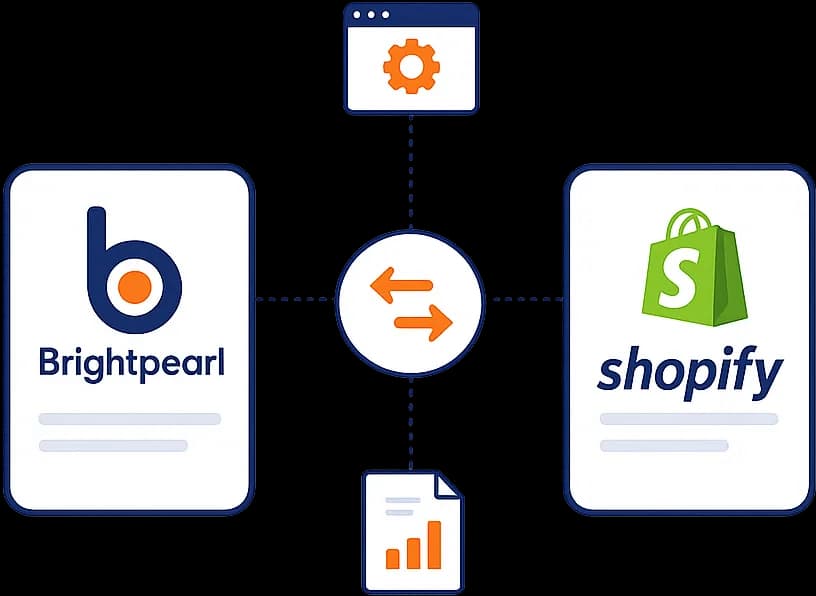
In 2026, a Brightpearl-Shopify integration typically ranges from the low five figures (USD) for a standard order and inventory sync, up to the higher five figures for multi-store, multi-warehouse setups with custom mappings and edge-case handling. The main cost driver is how many data flows you need synced and how far your data model differs from the default mappings.
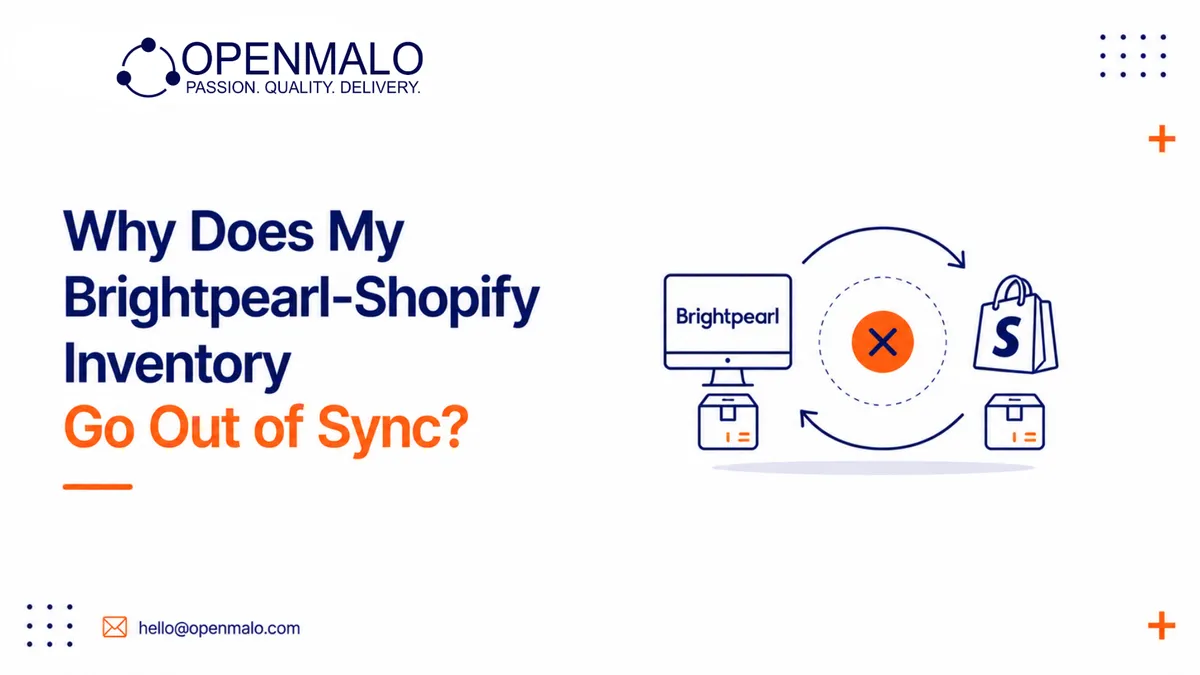
Brightpearl is a retail operations and inventory management system; Shopify is the storefront. An integration keeps them in step — orders flowing from Shopify into Brightpearl, inventory and fulfilment flowing back. The cost depends on which flows you need, how clean your product and SKU data is, and how many stores and warehouses are involved. Every project is scoped individually, so treat these as market ranges.
What drives the cost
- Number of data flows. Each sync direction — orders in, inventory out, fulfilment status, refunds, customers, product data — is its own piece of work with its own mapping and edge cases.
- Data model differences. If your Brightpearl product structure and Shopify variants line up cleanly, mapping is fast. Mismatched SKUs, bundles, kits, or custom fields add significant effort.
- Store and warehouse count. Multi-store Shopify setups and multi-warehouse Brightpearl inventory raise complexity — inventory has to be allocated and reconciled correctly across locations.
- Volume and real-time needs. High order volumes and near-real-time inventory accuracy require careful queueing, rate-limit handling, and reconciliation logic.
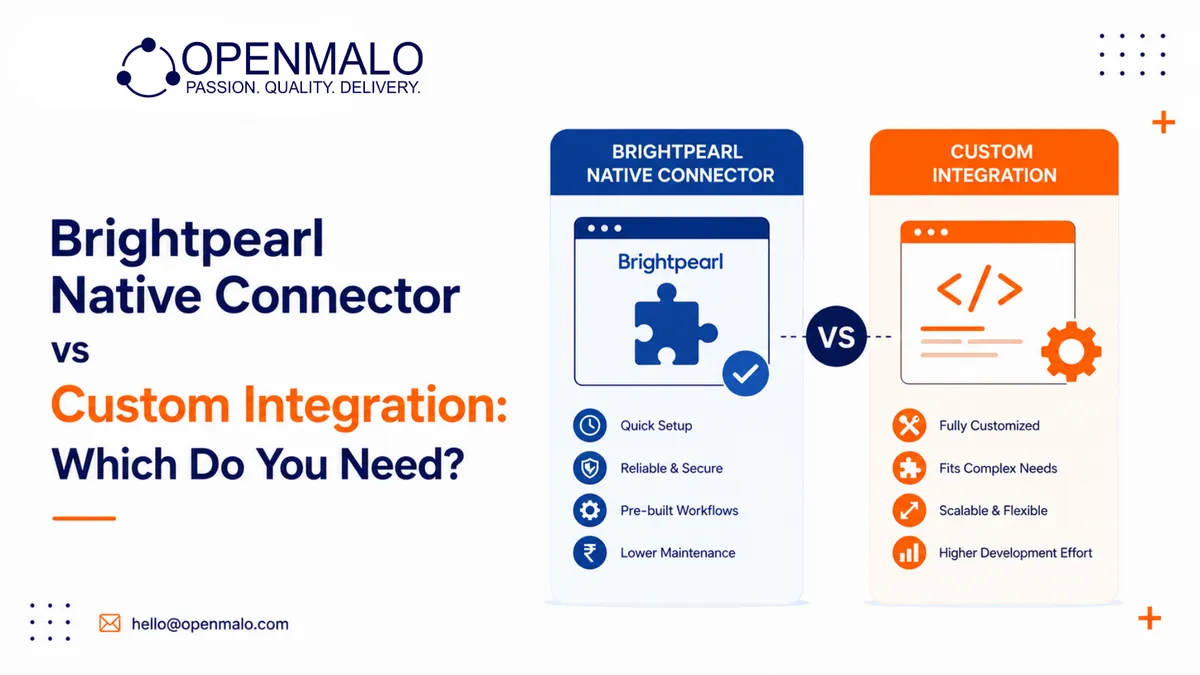
- Off-the-shelf vs custom. A standard connector may cover common cases; custom requirements (bundles, B2B pricing, unusual tax or currency handling) push toward a bespoke build.
Typical project tiers
General market ranges, varying widely by scope and region:
- Simple — one Shopify store, one warehouse, standard order-in and inventory-out sync, clean matching SKUs. Low five figures (USD).
- Mid — added fulfilment, refunds, and customer sync; some custom field mappings; moderate order volume. Mid five figures.
- Complex — multiple stores, multiple warehouses, bundles or kits, B2B pricing, high volume with real-time accuracy. Higher five figures and up.
Typical phases
- Discovery. Map every field that must sync, in which direction, and how the two data models differ. This is where bundles, SKU mismatches, and edge cases surface.
- Build. Implement each flow, handle Shopify and Brightpearl API rate limits, and add queueing and retry logic so a transient failure does not lose an order.
- Reconciliation and testing. Verify inventory stays accurate across locations and that orders, refunds, and fulfilment match on both sides under realistic load.
- Launch and support. Monitor the sync, alert on failures, and maintain mappings as your catalogue and operations change.
Engagement models
- Fixed scope — works when the flows and mappings are well defined after discovery. You get a fixed estimate.
- Time and materials — fits when data is messy or requirements are still being clarified.
- Dedicated support retainer — fits ongoing operations where catalogue changes and edge cases need continued attention.
What changes the price up or down
Price goes up with: more sync directions, mismatched or messy product data, bundles and kits, multiple stores and warehouses, high volume, and near-real-time requirements. Price goes down with: clean matching SKUs, a single store and warehouse, a small set of flows, tolerance for short sync delays, and reusing a proven connector pattern instead of fully custom code. A thorough discovery that catches the edge cases early is the best way to keep the estimate accurate.
For a scoped, fixed estimate, see Brightpearl-Shopify Integration Services or book a discovery call.