TL;DR: Custom software is built specifically for your business and workflows, rather than configured from a generic product. It fits exactly how you work, integrates with your systems, and you own it. The process runs from discovery and architecture through development, QA and launch to ongoing support.
Custom software development builds applications tailored to your exact workflows instead of forcing your business into off-the-shelf tools. It covers web, mobile and enterprise apps from architecture through launch and support — and it's worth it when your processes are a competitive advantage that generic software can't capture.
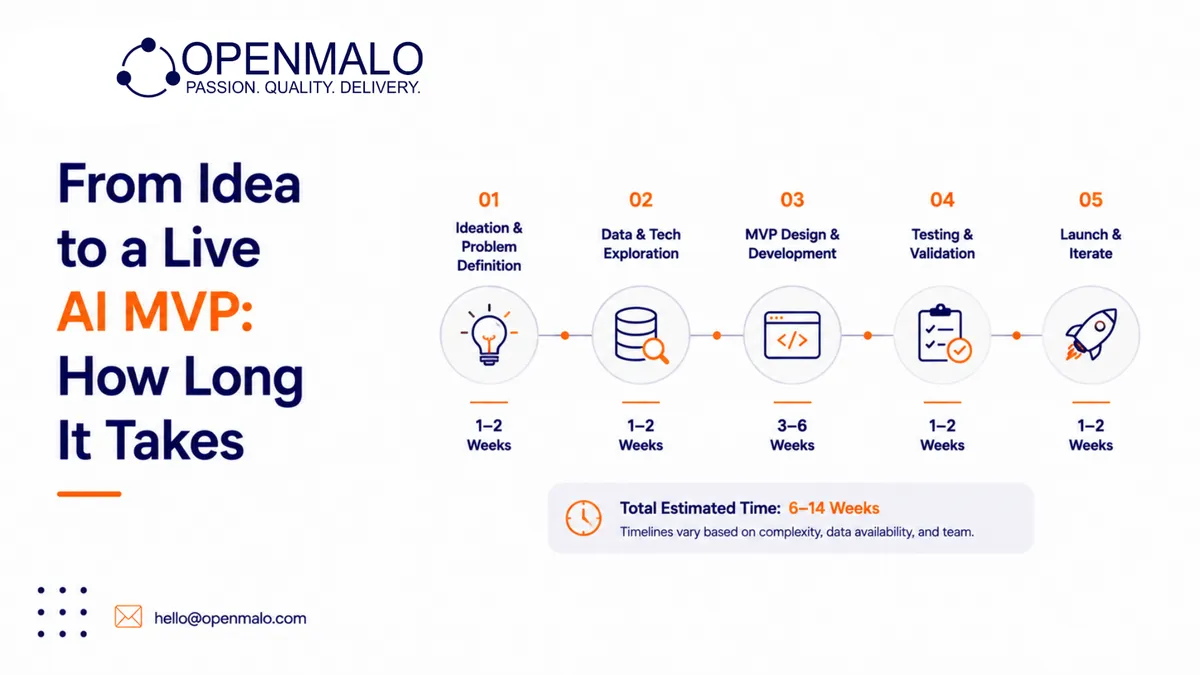
This post sits under our pillar on going from idea to a live AI MVP.
What is custom software development?
It's building software designed around your specific needs — your workflows, your data, your integrations — instead of bending your business to fit an off-the-shelf product. It spans web, mobile and enterprise applications, from architecture through launch and support.
Custom vs off-the-shelf: when does custom make sense?
| Choose off-the-shelf when | Choose custom when |
|---|---|
| A common need (email, accounting) | Your workflow is a differentiator |
| Speed and low cost matter most | Generic tools force painful workarounds |
| Standard features suffice | You need deep integration or unique logic |
| Small budget | The software is core to how you compete |
Custom pays off when the software is the advantage — when forcing your process into a generic tool would cost you the edge that makes you competitive.
What does the software development process look like from discovery to launch?
A typical end-to-end process:
- Discovery — understand goals, users, workflows and constraints.
- Architecture & design — define structure (architecture) and experience (UX/UI).
- Development — build in iterative increments with regular demos.
- QA & testing — verify quality and catch regressions. See QA & testing.
- Launch — deploy with monitoring and a rollback path.
- Support & iteration — maintain and evolve the product. See product engineering.
Why iterative beats big-bang
Building in increments with regular demos means you see working software early and steer as you go, instead of waiting months to discover the build drifted from what you needed. It's the same risk-reducing logic behind starting with an MVP.
Do you own custom software that's built for you?
Yes — with a reputable partner, all source code, models and IP are transferred to you, and they can work within your repositories and infrastructure so you retain control. See data security & IP ownership.