TL;DR: Quality assurance (QA) verifies software works as intended and keeps working as it changes. It spans manual and automated testing, regression suites, performance and security testing, and quality gates wired into CI/CD. The payoff: confident, frequent releases and fewer bugs reaching users.
QA and testing services cover manual and automated testing, test strategy, regression suites, performance and security testing, and CI-integrated quality gates — so releases ship reliably and regressions are caught before users see them. Good QA is what lets teams move fast without breaking things.
This post sits under our pillar on going from idea to a live AI MVP.
What do QA and testing services include?
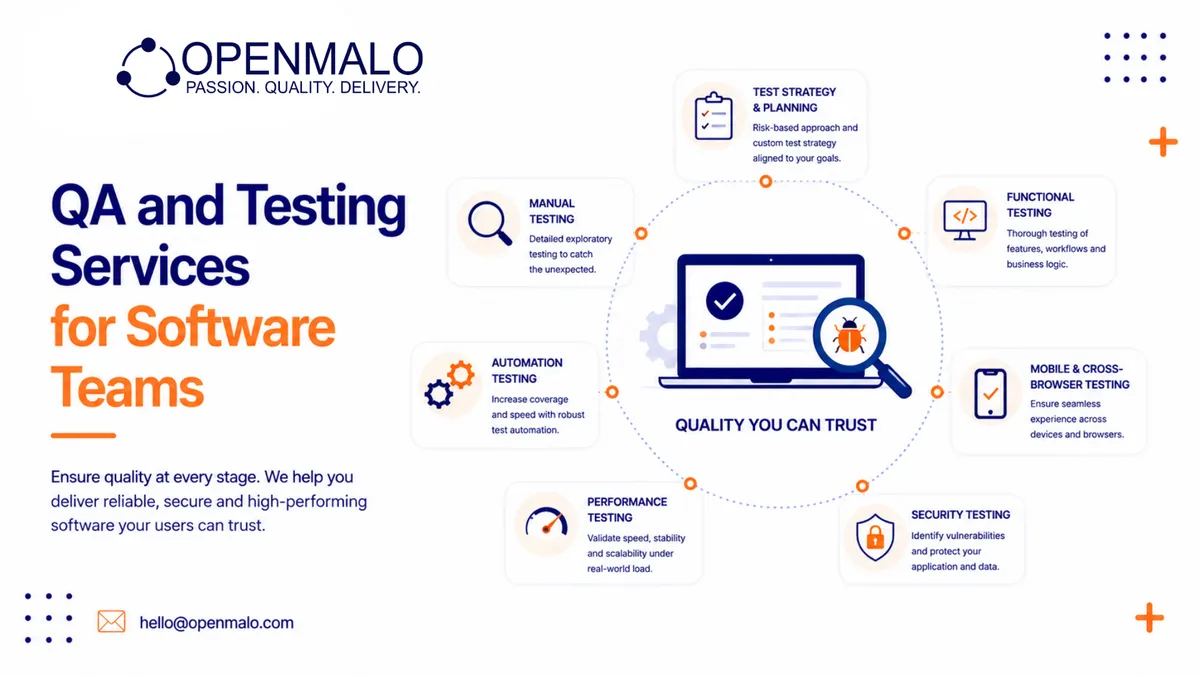
A complete QA practice covers:
- Test strategy — deciding what to test and how, based on risk.
- Manual testing — exploratory and usability checks a script can't catch.
- Automated testing — fast, repeatable tests for core behavior.
- Regression suites — catching things that used to work but broke.
- Performance testing — behavior under load.
- Security testing — finding vulnerabilities before attackers do.
- CI-integrated quality gates — blocking bad changes before they merge or deploy.
Why do regressions matter so much?
A regression is when a change breaks something that already worked. They're insidious because the new feature looks fine while something elsewhere quietly fails. Automated regression suites and CI quality gates catch these before release — which is what lets a team add features quickly without a steady drip of "we broke production again."
Manual vs automated testing
Both matter. Automated tests are fast, repeatable and ideal for core flows and regression — they run on every change. Manual testing catches the things automation misses: usability, edge cases and exploratory "what if I do this?" issues. A good QA strategy uses automation for breadth and humans for judgment.
How does QA fit into the delivery pipeline?
QA isn't a phase at the end — it's wired throughout. Quality gates in CI/CD run tests automatically on every change, blocking anything that fails before it reaches users. Combined with manual review for high-risk areas, this is how teams ship frequently and reliably as part of product engineering.