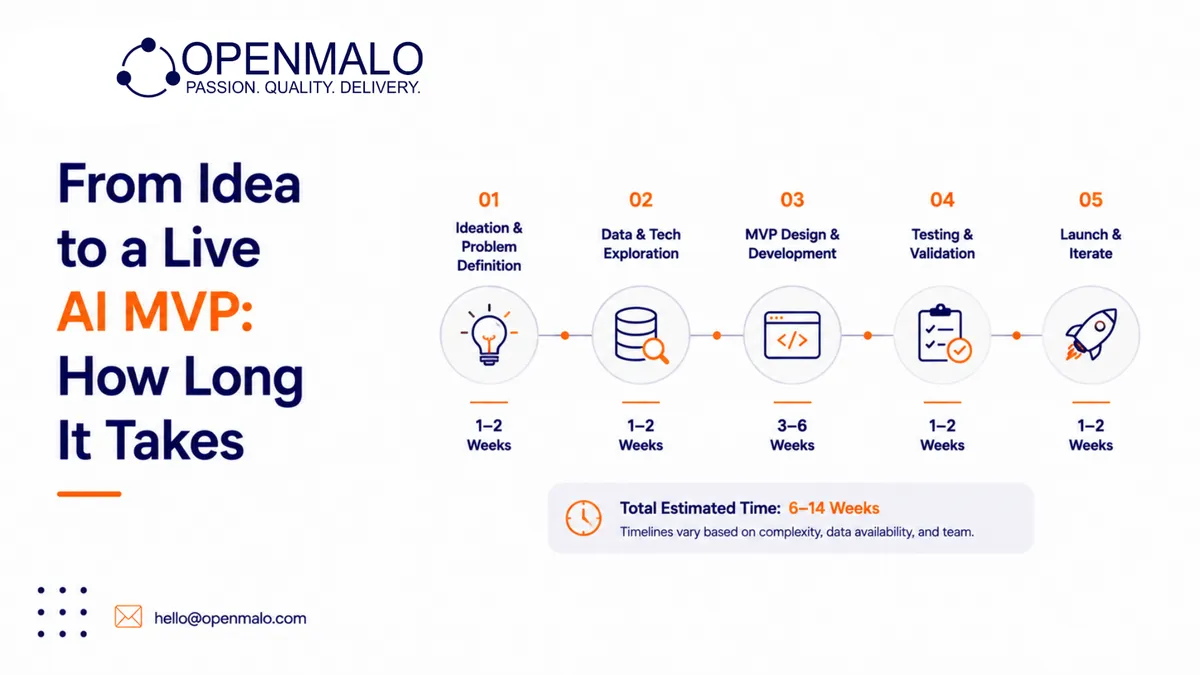
TL;DR: An MVP (minimum viable product) is the smallest production-quality version of your product that proves value to real users. For AI products, expect ~8–12 weeks from idea to live MVP, often preceded by a short POC to de-risk the AI feasibility first. Build for scale from the start so the MVP becomes the foundation, not a rewrite.
Going from idea to a live AI MVP typically takes 8–12 weeks. The fastest, safest path is phased: a 2–6 week POC to prove feasibility, then an MVP build with architecture that scales rather than throwaway code. The timeline depends on integrations, data readiness and compliance.
This is the pillar for our posts on POC vs prototype, custom software development, product engineering, UX/UI design and QA & testing.
What is an AI MVP?
An MVP is the smallest production-quality version of your product that delivers real value to users — enough to validate the idea in the market, not a throwaway demo. For AI products, the MVP proves both the product (people want it) and the AI (it's accurate and reliable enough). It should be built on architecture that scales, so success doesn't force a rebuild.
What's the path from idea to live MVP?
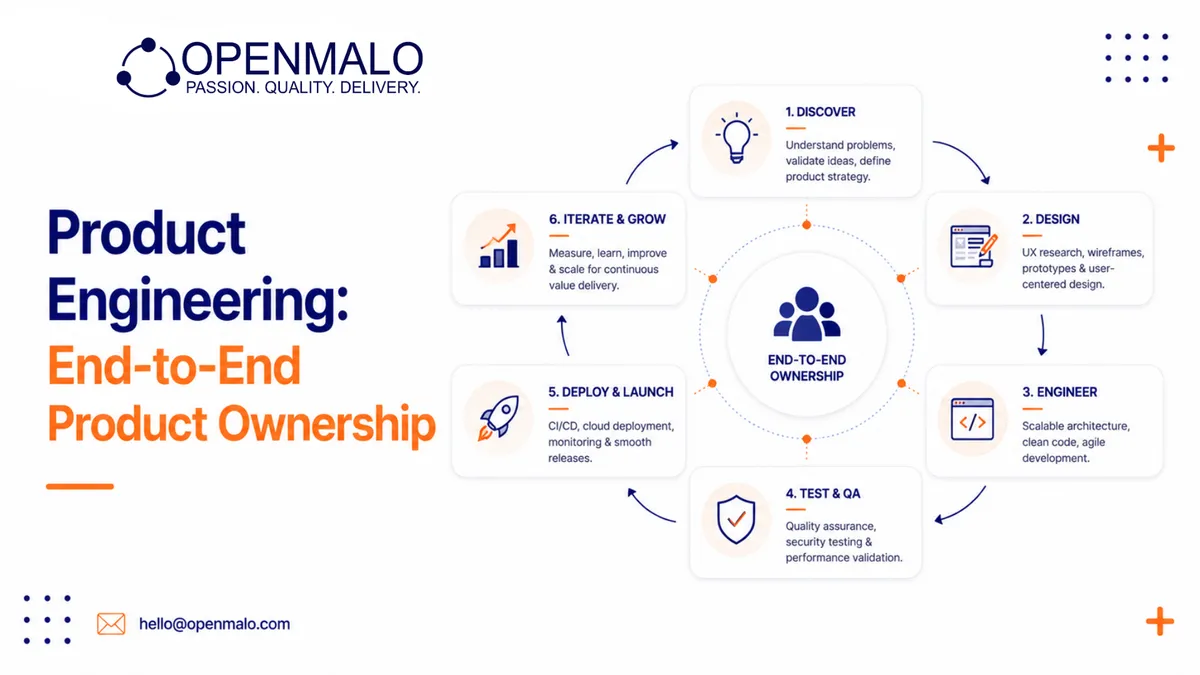
The phased route keeps risk and cost under control:
- Discovery — scope goals, users, data and success metrics.
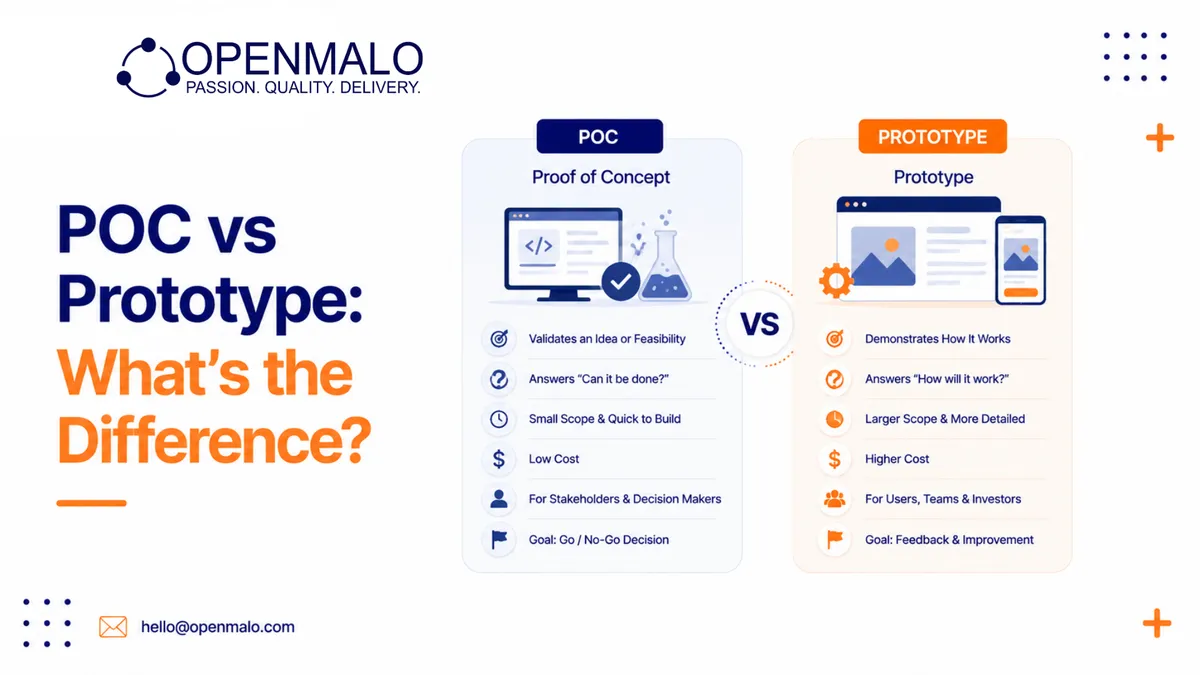
- POC (2–6 weeks) — prove the risky part (usually AI feasibility) on real data. See POC vs prototype.
- MVP build (8–12 weeks) — production-quality core features, evaluated and integrated.
- Launch & learn — ship to real users, measure, iterate.
Why prove AI feasibility before building the MVP
AI is the part most likely to surprise you — accuracy, data quality, cost. A short POC answers "can this even work on our data?" before you spend MVP budget, so you don't build a polished product around an AI feature that can't hit the quality bar.
How long does it take to build and launch an MVP?
A typical AI MVP ships in 8–12 weeks. What moves the number:
- Integrations — each external system adds scope.
- Data readiness — clean, accessible data speeds everything; messy data slows it.
- Compliance — regulated builds (HIPAA, PCI-DSS) add review and engineering.
- AI complexity — a simple RAG feature is faster than a multi-step agent.
How do you avoid building a throwaway MVP?
Build the MVP on production-grade architecture from day one — proper data models, security and scalability — while keeping the feature set minimal. The discipline is "minimal scope, solid foundation," so when the MVP succeeds you extend it rather than rebuild it. That's the difference between an MVP and a disposable prototype.