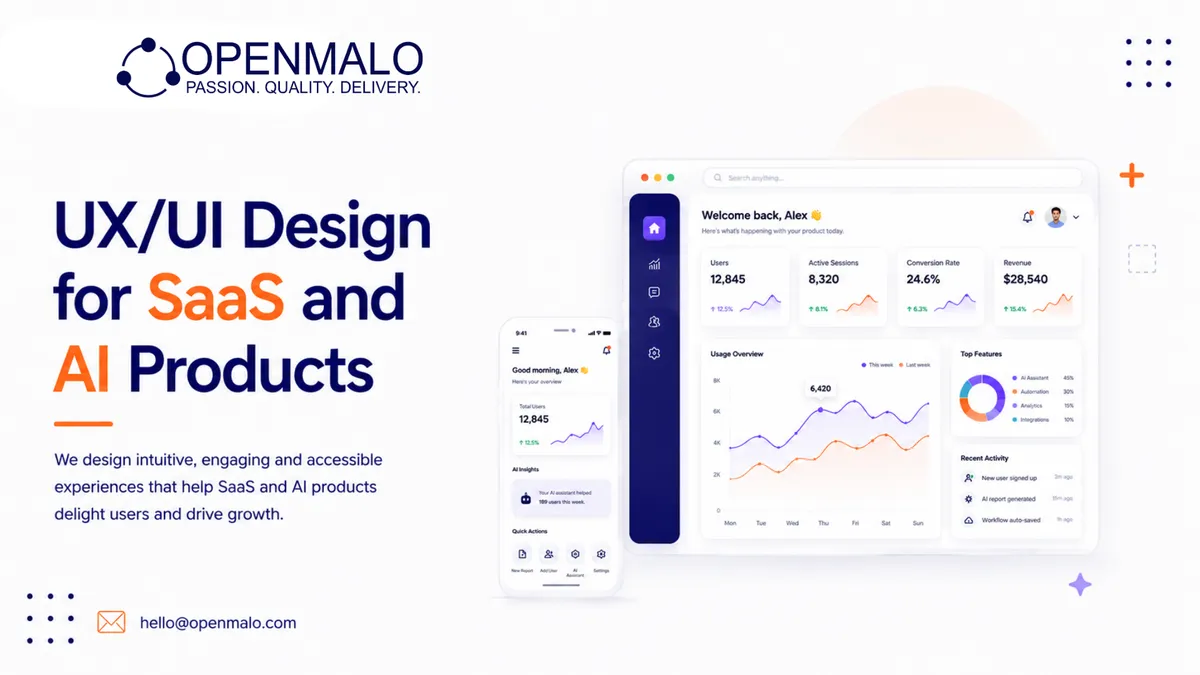
TL;DR: Experience design (UX) shapes how a product works; interface design (UI) shapes how it looks. For SaaS and AI products, design covers research, user flows, wireframes, visual UI and reusable design systems. The payoff is adoption — usable products get used, and well-designed AI features build the trust users need to rely on them.
UX/UI design for SaaS and AI products covers research, flows, wireframes, UI design and design systems — so products are usable and adoption-ready, not just functional. Good design is what turns a capable product into one people actually use, which matters even more for AI features that can feel unpredictable.
This post sits under our pillar on going from idea to a live AI MVP.
What does UX/UI design include?
A full product design engagement covers:
- Research — understanding users, their goals and pain points.
- User flows — mapping how people move through tasks.
- Wireframes — structure and layout before visual polish (a form of prototype).
- UI design — the visual interface: layout, typography, color, components.
- Design systems — reusable components so the product stays consistent and scales.
Why does design matter so much for adoption?
A product can be technically excellent and still fail because people can't or won't use it. Design removes friction — making the right action obvious, reducing steps, and building confidence. For SaaS, that's the difference between trial users who convert and ones who churn. Design is an adoption lever, not decoration.
Why AI products need design even more
AI features can feel opaque or unpredictable — users don't know what the system can do or whether to trust its output. Good UX makes capabilities discoverable, shows sources and confidence, offers undo, and sets expectations. That trust-building design is often what decides whether an AI feature gets adopted, which is why it's central to copilots.
What is a design system and why does it matter?
A design system is a reusable library of components, patterns and rules. It keeps the product visually and behaviorally consistent, speeds up development (engineers reuse instead of rebuild), and makes scaling to new features far easier. For a growing SaaS product, it's a core investment, not a nice-to-have.
How does design fit into product development?
Design isn't a one-time phase — it runs alongside development and QA within product engineering. Research and wireframes shape what's built, UI design makes it usable, and a design system keeps quality consistent as the product grows.