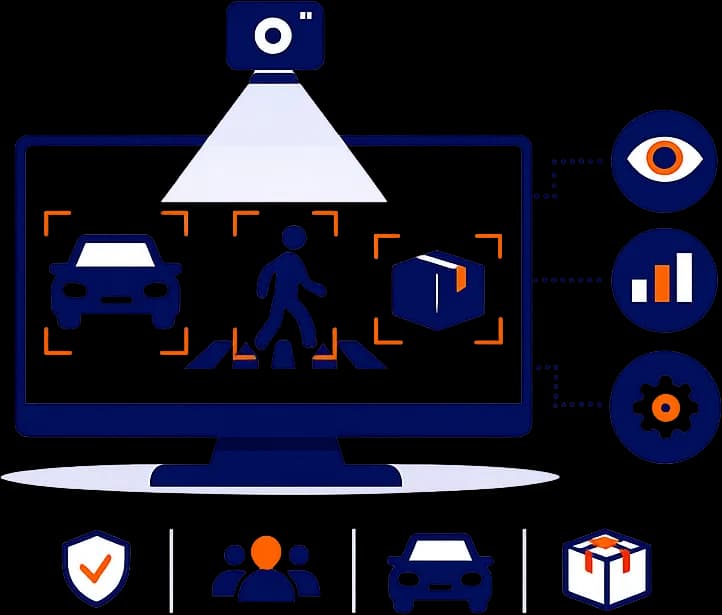
TL;DR: Computer vision lets software "see" — detecting objects, reading text (OCR), classifying images, and analyzing video. It delivers the most value where visual inspection is repetitive, high-volume or error-prone: factory quality control, retail analytics, medical imaging support and security monitoring.
Computer vision development builds systems that interpret images and video — object detection, image classification, OCR, video analytics and quality inspection — for manufacturing, retail, healthcare and security. These systems are built on PyTorch with modern models like YOLO, ViT and SAM.
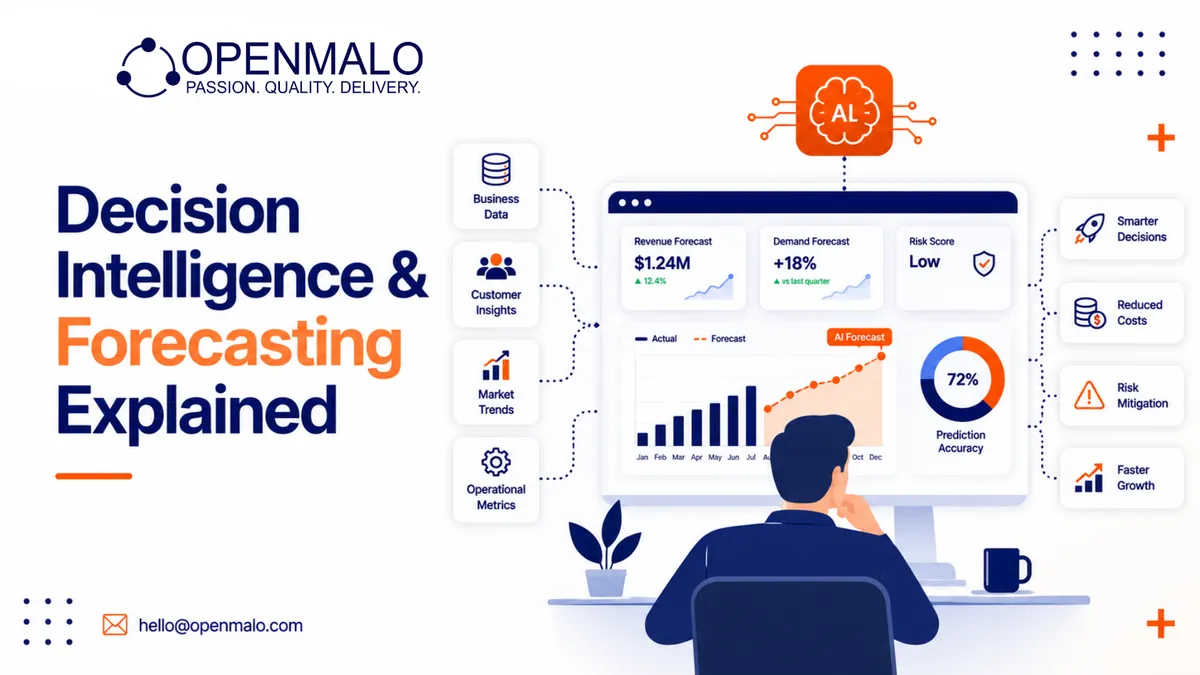
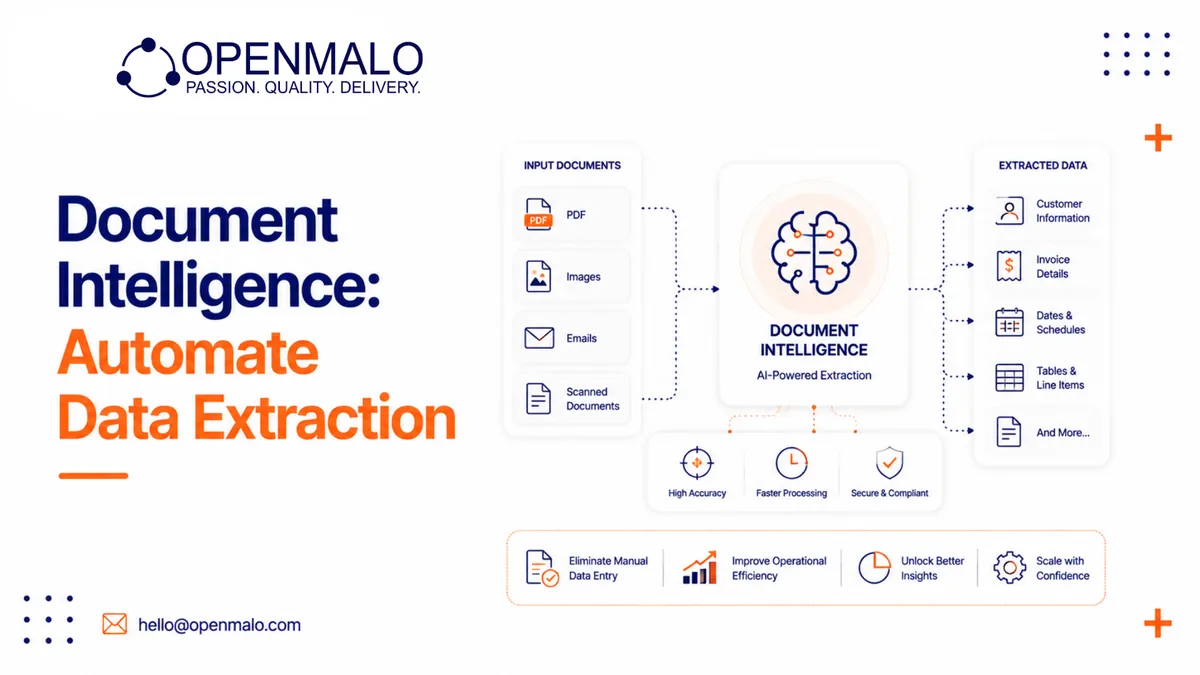
This post sits alongside our other AI solution guides like document intelligence and decision intelligence.
What is computer vision development?
Computer vision development builds systems that interpret images and video — object detection, image classification, OCR, video analytics and quality inspection. OpenMalo builds these on PyTorch with modern models like YOLO (detection), ViT (classification) and SAM (segmentation), tuned to the specific visual task.
Where does computer vision deliver the most value?
It pays off most where visual checking is repetitive, high-volume, or beyond human consistency:
- Manufacturing — automated quality inspection and defect detection.
- Retail — shelf analytics, footfall, checkout-free shopping.
- Healthcare — supporting clinicians with medical-image analysis.
- Security — video analytics and anomaly detection.
- Logistics — reading labels, counting, tracking.
Why these use cases
Humans are inconsistent at repetitive visual tasks at scale — they tire, and 100% inspection is often impractical. Computer vision applies the same standard to every item, every time, around the clock. The biggest ROI is where the volume is high and a missed defect or event is costly.
What are the main computer vision tasks?
- Object detection — find and locate items in an image (YOLO).
- Image classification — label what an image contains (ViT).
- OCR — extract text from images and documents.
- Segmentation — outline objects precisely (SAM).
- Video analytics — detect events and behavior over time.
OCR in particular often connects to document intelligence for end-to-end document processing.
What does it take to build a computer vision system?
Like other AI, the model is part of it — but data and evaluation decide success. A typical build involves collecting and labeling representative images, choosing and tuning the right model, evaluating accuracy on real conditions (lighting, angles, edge cases), and deploying with monitoring. A POC is the usual first step to prove feasibility on your actual images.