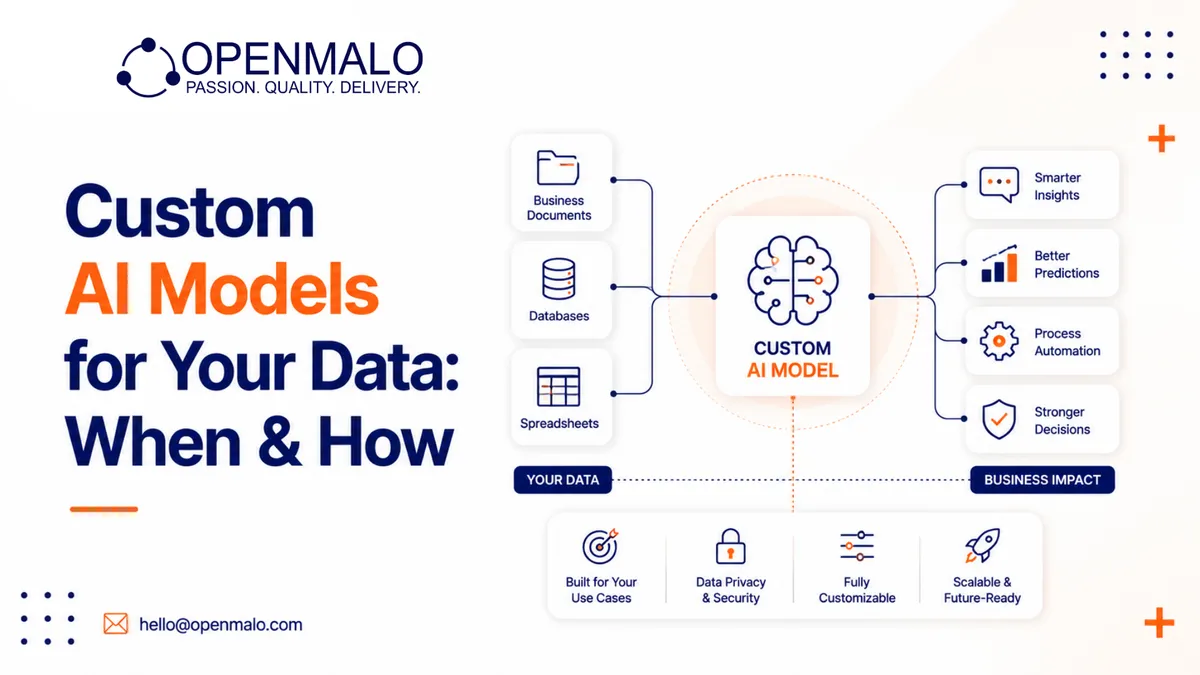
TL;DR: A custom AI model is built or fine-tuned on your own data to do a specific job better than a general model can. It makes sense when off-the-shelf models aren't accurate enough, can't meet compliance, or don't understand your domain. For many tasks, a foundation model plus RAG is cheaper and better — so custom models are a deliberate choice, not a default.
Yes, you can build custom AI models on your proprietary data — from classification and forecasting to fine-tuned LLMs — when off-the-shelf models aren't accurate or compliant enough. The work includes data prep, training, evaluation and deployment, and it's worth it specifically when generic models fall short.
This post sits alongside our AI solution guides and connects to RAG vs fine-tuning.
Can you build custom AI models for your data?
Yes. We build and fine-tune models on your proprietary data — from classification and forecasting to fine-tuned LLMs — when off-the-shelf models aren't accurate or compliant enough. This includes data prep, training, evaluation and deployment, covering the full lifecycle so the model stays accurate in production.
When do you actually need a custom model?
Build custom when off-the-shelf options fall short:
- Accuracy — a general model can't hit the quality bar on your specific task.
- Domain language — your field's terminology or data is too specialized.
- Compliance / data control — you need a self-hosted model so data stays in your perimeter.
- Latency or cost — a smaller, specialized model is cheaper or faster at scale.
- Differentiation — the model itself is part of your competitive edge.
Why not always build custom?
Because for many tasks, a strong foundation model plus RAG is more accurate, cheaper and faster to ship than training your own — and it stays current without retraining. Custom models add cost (data, compute, evaluation, maintenance) and should be chosen only when generic approaches genuinely can't meet the need. See RAG vs fine-tuning for the decision framework.
How are custom AI models built?
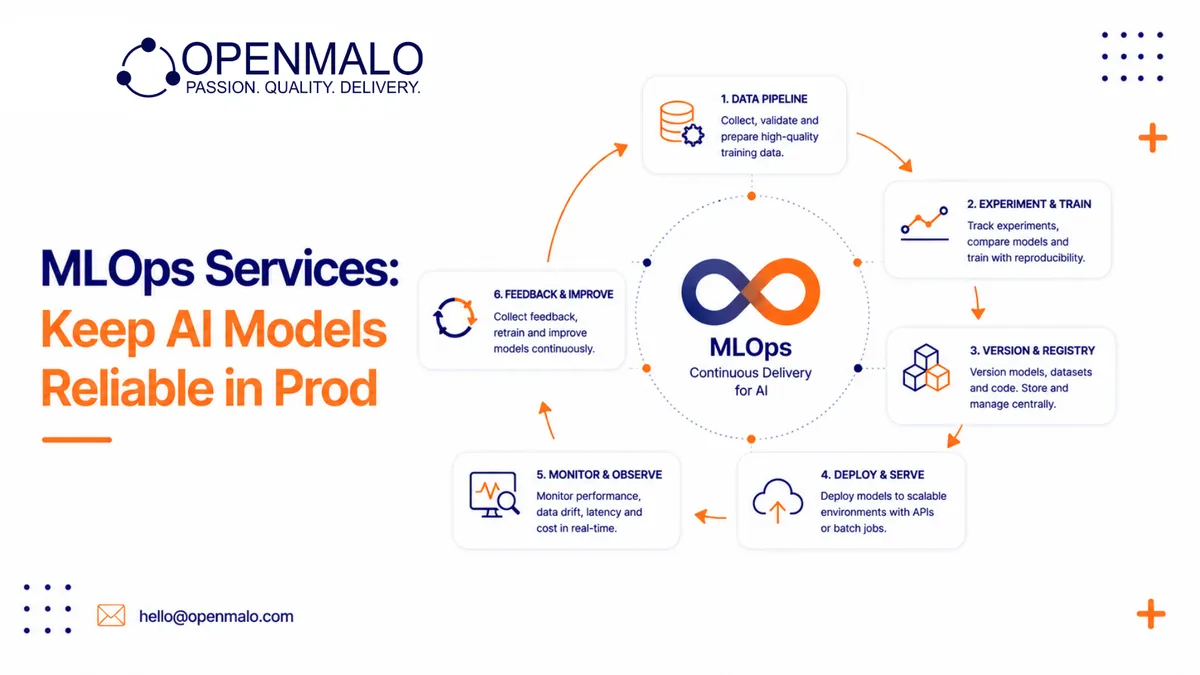
The lifecycle, regardless of model type:
- Data prep — collect, clean and label representative data.
- Training / fine-tuning — build the model or adapt an open one to your data.
- Evaluation — measure accuracy on real, held-out cases.
- Deployment — ship to production, often self-hosted for control.
- Monitoring & retraining — keep it accurate over time with MLOps.
Data quality and evaluation — not the model architecture — usually decide whether a custom model succeeds.
What types of custom models can be built?
- Classification — categorize text, images or records.
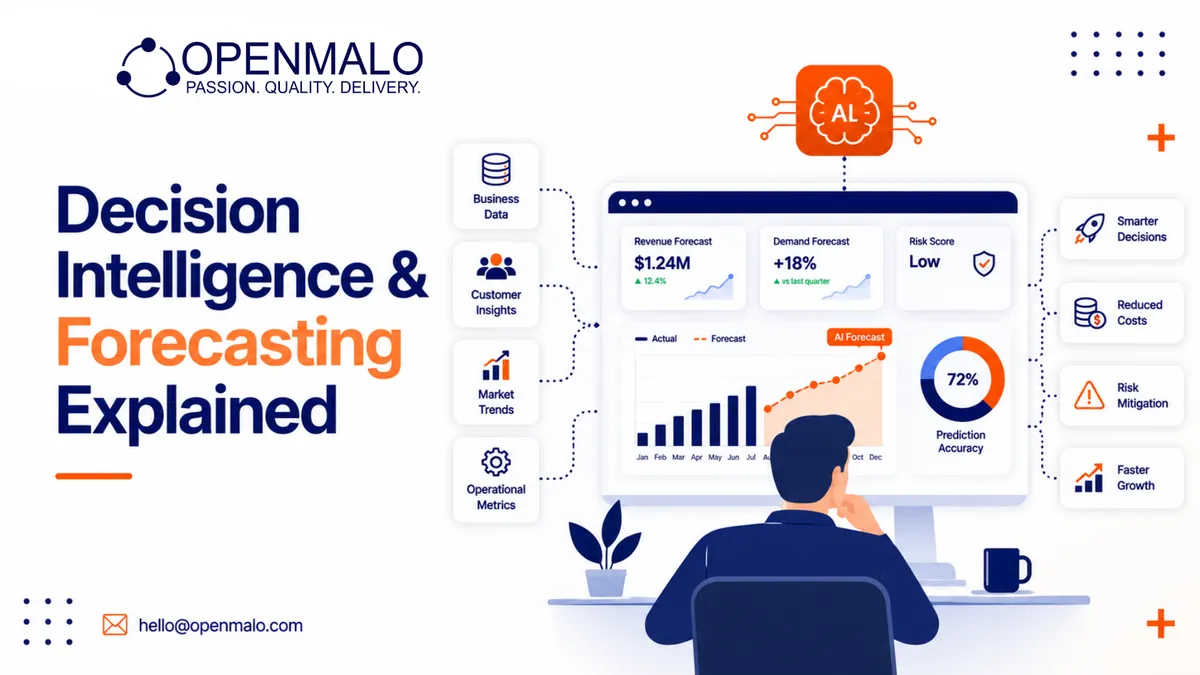
- Forecasting — predict demand, risk or other numeric outcomes (see decision intelligence).
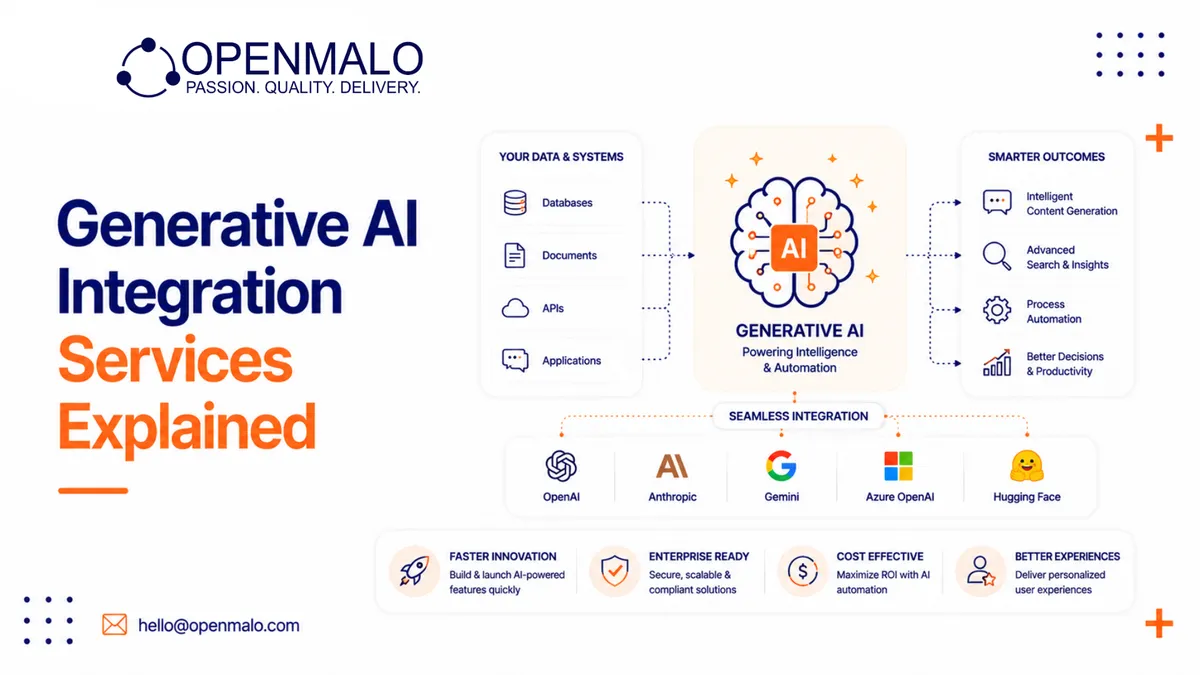
- Fine-tuned LLMs — adapt open models (Llama, Mistral, Qwen) to your domain.
- Computer vision — bespoke vision models for your imagery.