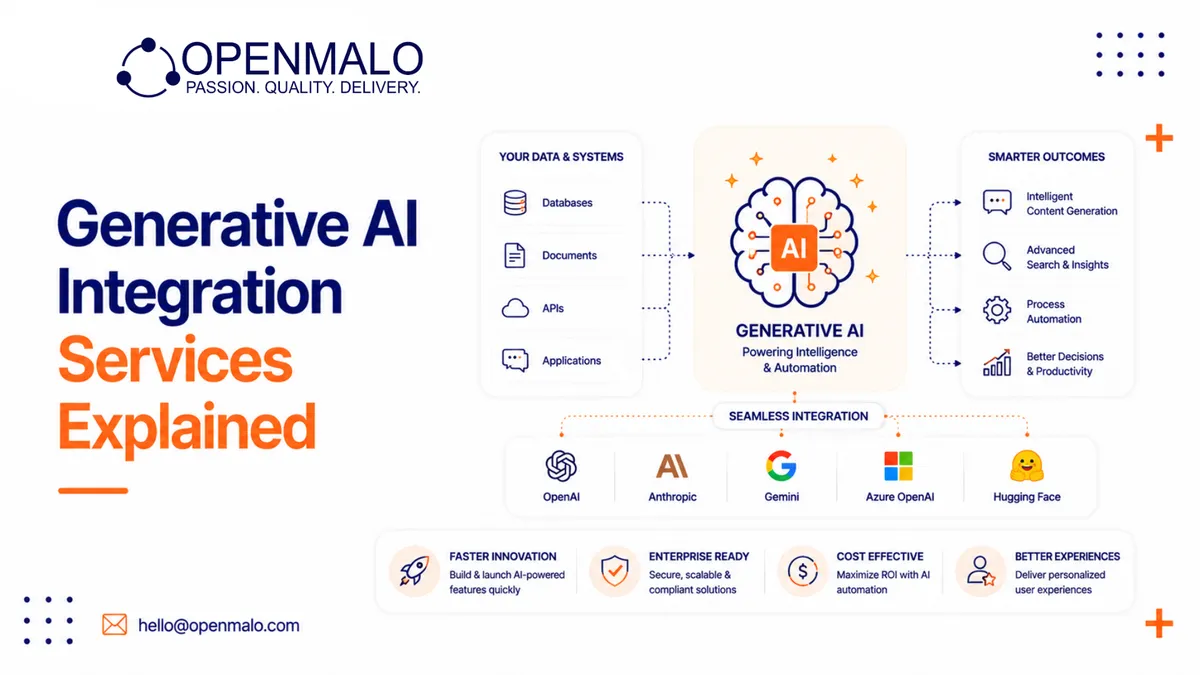
TL;DR: Generative AI integration is the practice of building foundation-model capabilities into software you already have. It's broader than a single chatbot — it includes copilots, RAG search, content generation and agents. The value is in doing it safely and cost-effectively, with evaluation and monitoring, not just calling an API.
Generative AI integration services embed foundation models — GPT, Claude, Gemini, Llama, Mistral — into your existing product, adding chat, copilots, content generation, RAG search or agentic workflows. The work covers model selection, prompt engineering, evaluation, cost optimization and production observability.
This post sits under our pillar on adding GPT or Claude to your SaaS.
What are generative AI integration services?
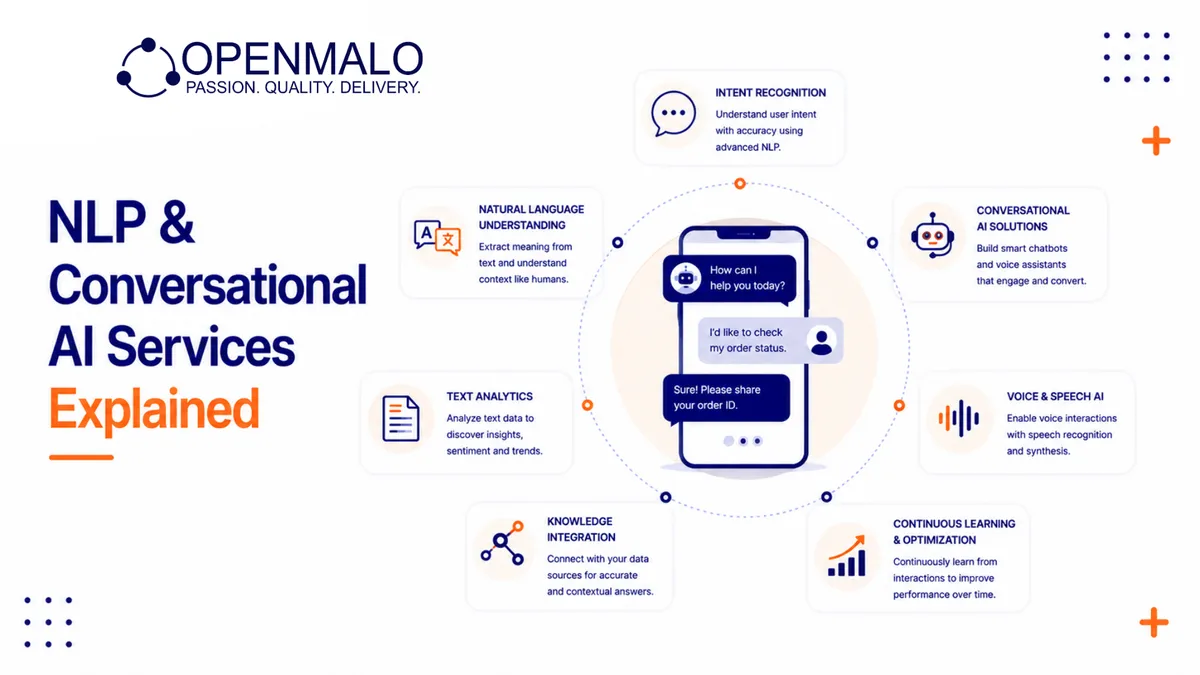
They embed foundation models into your product to add capabilities such as:
- Conversational AI — chat and support, grounded with RAG.
- Copilots — in-product assistants. See AI copilot development.
- Content generation — drafting, summarizing, rewriting.
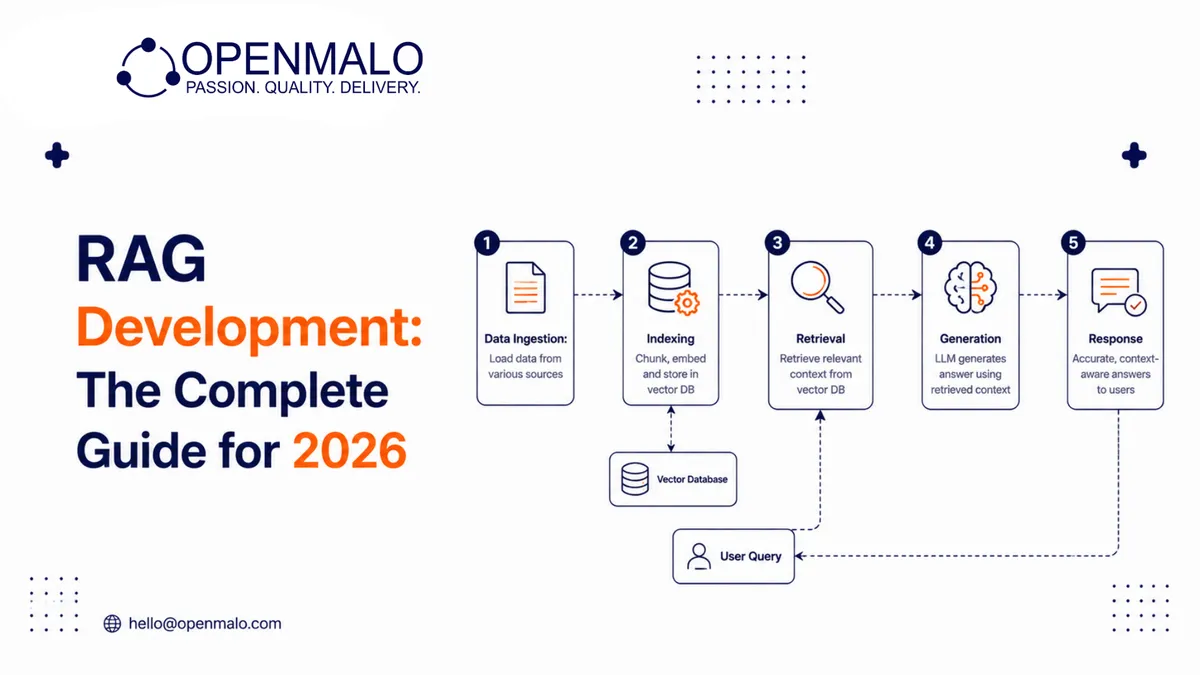
- RAG search — answers grounded in your documents.
- Agentic workflows — systems that take action. See AI agent development.
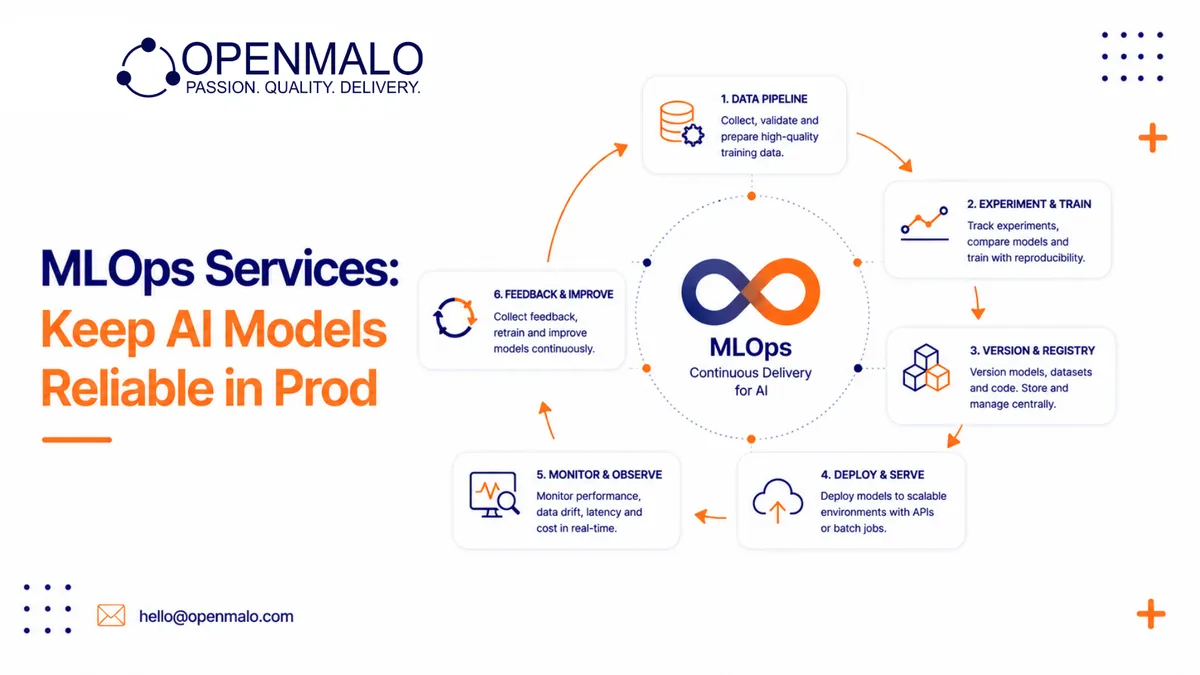
The provider handles model selection, prompt engineering, evaluation, cost optimization and production observability — the parts that make AI reliable at scale.
What is AI application development?
AI application development is building software with AI at its core — LLM-powered apps, RAG search, AI agents, computer vision and conversational AI — and integrating it into your existing product and data stack. It covers model selection, engineering, evaluation and production deployment. Generative AI integration is the slice focused on embedding foundation models into products you already run. For the full picture of what this looks like as a service, see our pillar on what an AI development company does.
Which foundation model should you use?
There's no universal winner — choice depends on the task, latency, cost and data sensitivity:
- Closed models (GPT, Claude, Gemini) — strong general capability, fast to start, data leaves your perimeter.
- Open models (Llama, Mistral, Qwen) — can be self-hosted for full data control.
A good integration partner picks per use case — and often uses more than one model in the same product, routing each task to the best fit.
What makes a generative AI integration production-ready?
- Evaluation — measured accuracy and hallucination, not vibes.
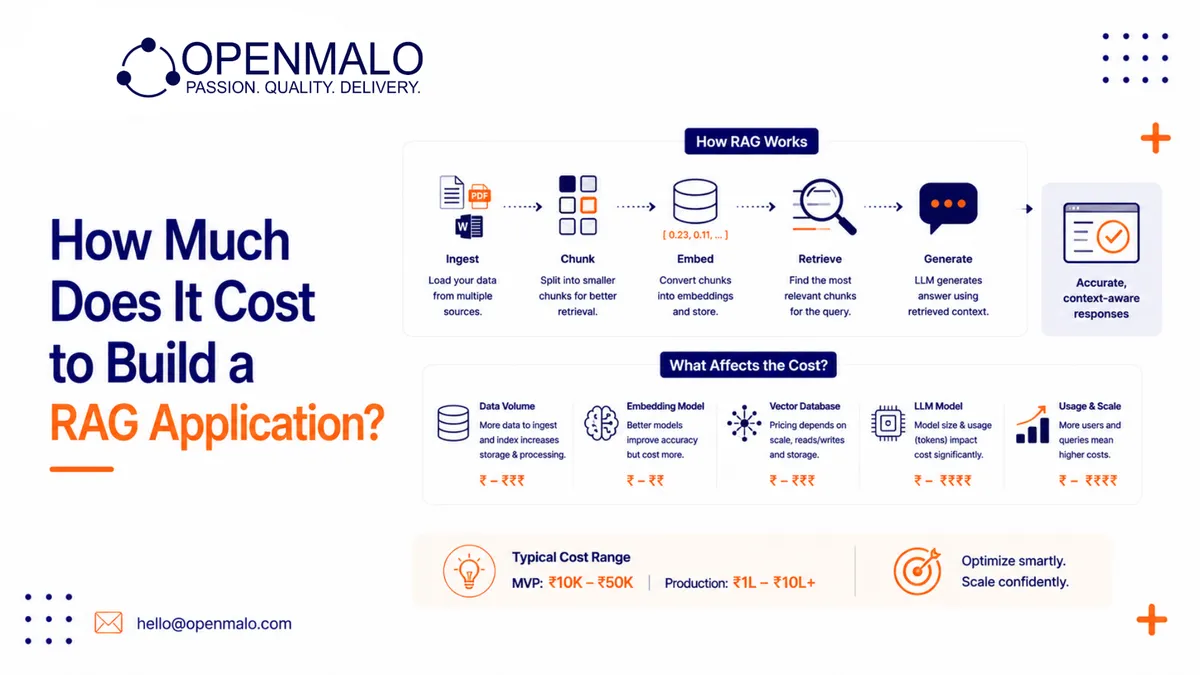
- Cost optimization — right-sized models, caching, trimmed context.
- Observability — monitoring quality and spend in production.
- Guardrails — permissions, filtering and fallback handling.
These are exactly the controls covered in adding GPT or Claude to your SaaS.