TL;DR: A good AI consulting partner identifies high-ROI use cases, assesses your data readiness, designs architecture, validates with a POC, and rolls out to production. Judge them on real delivery references, a de-risking POC-first approach, transparent pricing, who owns the IP, and whether they talk about evaluation, cost and security — not just models.
Look for a partner that proves value before asking for a big commitment: POC-first delivery, real experience in your industry, clear IP ownership (you keep it), evaluation discipline, and a focus on production — not just slideware. The right partner tells you honestly what's realistic now and what to fix first.
This is the pillar for our consulting posts: AI readiness assessment, fractional CTO, technical architecture design, legacy modernization and compliance consulting.
What does an AI consulting engagement actually deliver?
A real engagement produces decisions and working systems, not just a report. It typically delivers:
- A shortlist of high-ROI use cases, prioritized by value and feasibility.
- A data readiness assessment — what's usable now, what needs fixing. See AI readiness assessment.
- An architecture for how the solution will be built and scaled.
- A POC that validates the highest-value use case on your real data.
- A roadmap to production with timeline and cost.
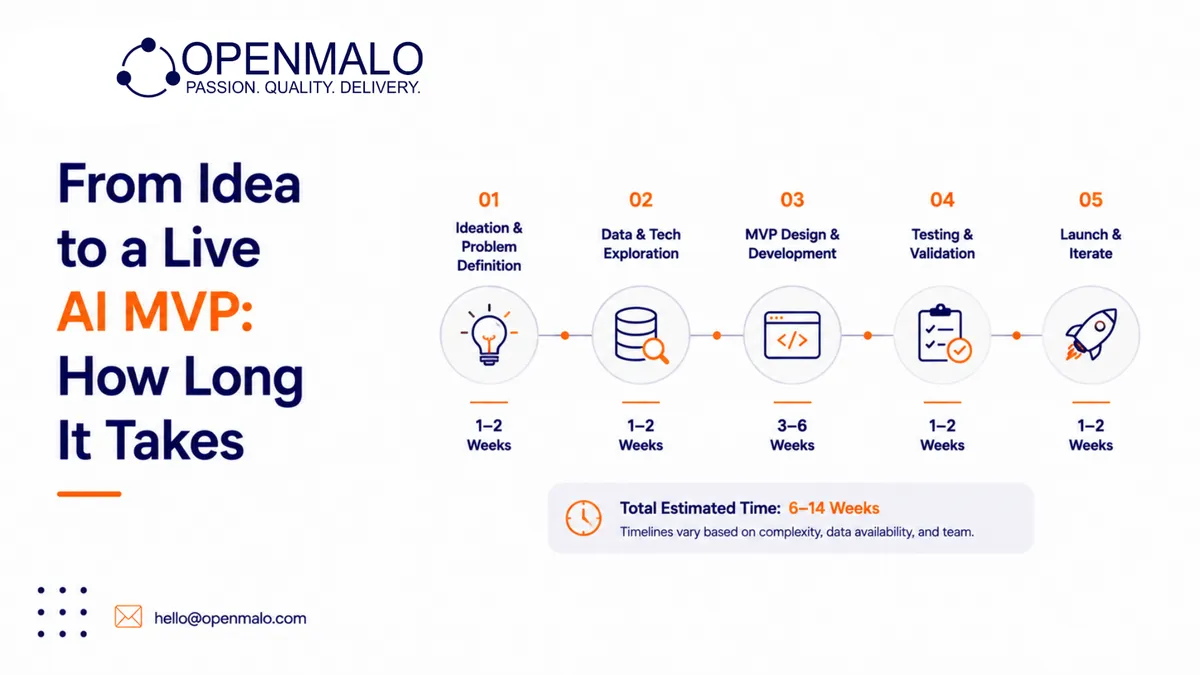
OpenMalo's engagements run roughly 6–8 weeks for strategy and 12–16 weeks through to live deployment.
What should you look for when choosing an AI partner?
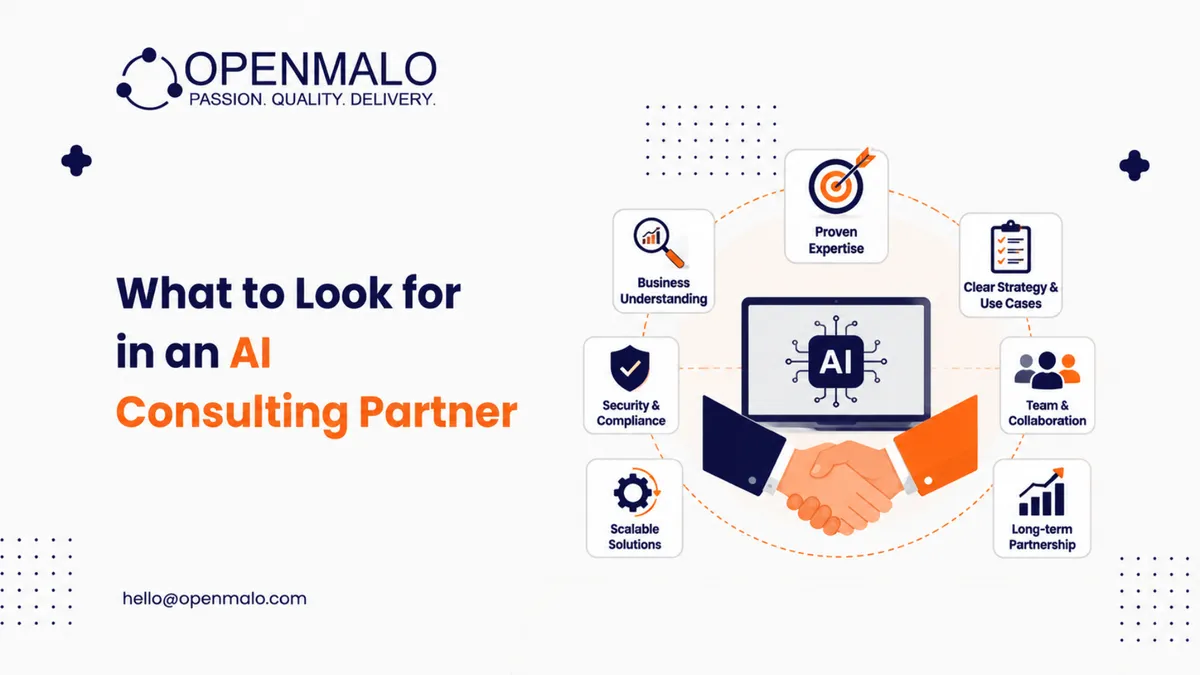
Use this checklist:
- POC-first — they de-risk before asking for a large commitment.
- Industry experience — references you can actually talk to in your sector.
- Clear IP terms — you own the code, models and IP they build. See IP ownership.
- Evaluation discipline — they measure accuracy and hallucination, not "it works."
- Production focus — they discuss monitoring, cost and security, not only demos.
- Honest scoping — they'll tell you when AI isn't the answer.
Red flags to avoid
- Promising production-grade AI with no POC or evaluation plan.
- Vague pricing or reluctance to break down cost drivers.
- Keeping the IP or locking you into their platform.
- Big accuracy claims with no way to verify them.
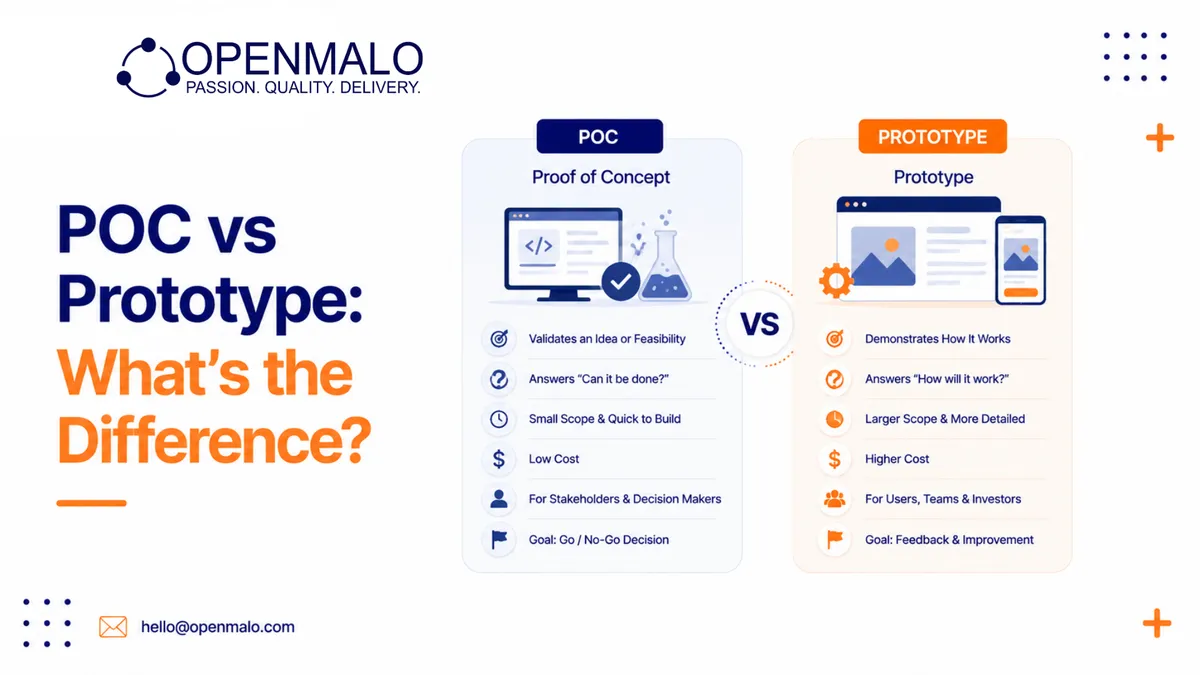
Why is a POC-first approach so important?
AI projects fail when teams commit to a full build before proving feasibility on real data. A focused POC validates accuracy, surfaces data problems early, and gives you a firm basis to budget — turning a risky bet into a staged, de-risked investment. A partner who skips this is gambling with your money.
How do you know if you even need AI consulting?
You likely benefit from consulting when you have a business problem you suspect AI could solve but aren't sure what's realistic, where the ROI is, or whether your data is ready. If you already know exactly what to build, you may just need a development partner. When in doubt, start with an AI readiness assessment.