The "Gold Rush" of AI experimentation has matured into a calculated era of deployment. In 2026, enterprise leaders are no longer asking if they should use Large Language Models (LLMs), but how to make them reliable, secure, and context-aware.
When you need an AI to understand your proprietary data—whether it's medical records, financial histories, or internal technical documentation—you generally face two primary paths: Retrieval-Augmented Generation (RAG) or Fine-Tuning.
Choosing the wrong path isn't just a technical hiccup; it can lead to massive cost overruns, "hallucinations" in critical business reports, and significant data privacy risks. This guide breaks down the mechanics, use cases, and strategic trade-offs of both approaches to help you decide which is right for your production environment.
1. Understanding the Basics: The Library vs. The Student
To understand the difference between RAG and Fine-Tuning, use this simple analogy:
- RAG is like a student taking an open-book exam. They have access to a massive library of updated textbooks. When asked a question, they look up the specific page, read the information, and summarize the answer.
- Fine-Tuning is like a student who has spent weeks memorizing a specific subject. They have "baked" the knowledge into their brain. They don't need a book to answer, but if the facts in the world change, they need to go back to school to "re-learn" the new information.
For enterprises, the "Library" represents your live databases, PDFs, and CRM data. The "Student" is the LLM (like GPT-4o, Claude 3.5, or Llama 3).
2. What is RAG? (The Open-Book Approach)
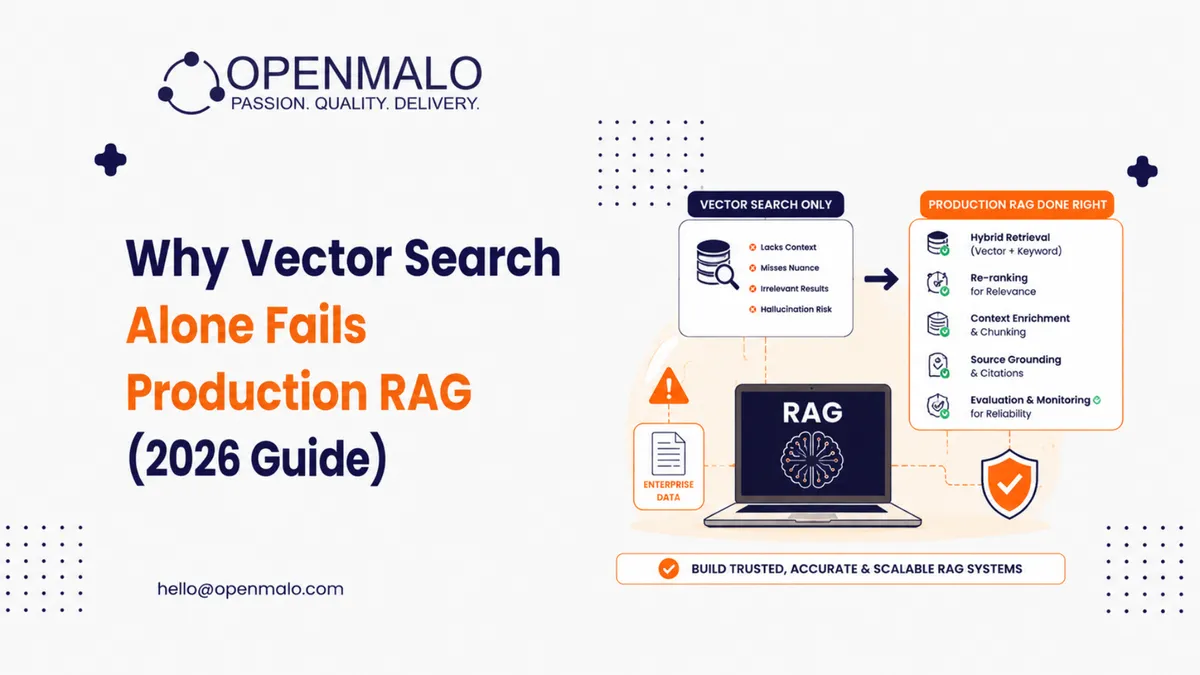
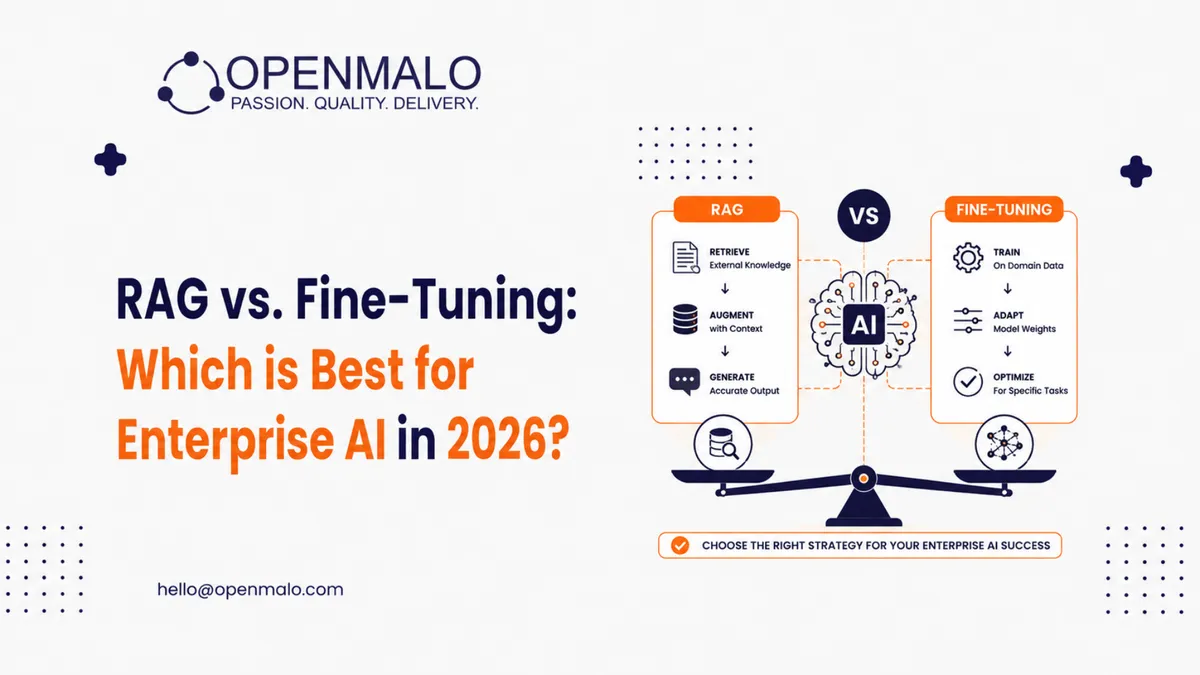
Retrieval-Augmented Generation (RAG) is a framework that connects an LLM to external data sources in real-time. Instead of relying solely on the data the model was originally trained on, RAG "retrieves" relevant snippets of information from your private data and feeds them to the model as part of the prompt.
How it Works:
- Vectorization: Your enterprise data is broken into "chunks" and converted into numerical values called vectors.
- Retrieval: When a user asks a question, the system searches the vector database for the most relevant chunks.
- Augmentation: These chunks are added to the user's prompt.
- Generation: The LLM generates an answer based only on the provided context.
Why Enterprises Love It: It provides a "source of truth." If the AI gives an answer, it can point to the specific internal document it used, which is vital for audit trails and compliance.
3. What is Fine-Tuning? (The Deep Learning Approach)
Fine-Tuning involves taking a pre-trained LLM and performing further training on a smaller, specific dataset. This process updates the internal "weights" of the model, essentially teaching it a new language, style, or specialized domain knowledge.
How it Works:
- Data Preparation: You curate a high-quality dataset of prompt-completion pairs.
- Training: You run a training job where the model learns the patterns, tone, and specific jargon of your data.
- Deployment: You host a "custom version" of the model.
Why Enterprises Love It: It is unbeatable for specialized tasks where the way something is said matters as much as what is said—such as writing legal briefs in a specific firm's voice or coding in a proprietary language.
4. The Comparison Matrix: Side-by-Side Analysis
| Feature | RAG | Fine-Tuning |
|---|---|---|
| Knowledge Update | Real-time (Just update the database) | Static (Requires re-training) |
| Transparency | High (Provides citations/sources) | Low (Black box "memory") |
| Hallucination Risk | Low (Grounds response in facts) | Moderate (Can confidently state false facts) |
| Cost (Setup) | Low to Moderate | High (Compute and data prep costs) |
| Latency | Slightly higher (Search step) | Lower (Direct inference) |
| Data Privacy | Easier to manage (Access control) | Complex (Data is "baked" into weights) |
5. When to Choose RAG: Ideal Use Cases
In 2026, RAG has become the default for most enterprise applications due to its flexibility.
A. Dynamic Information Environments
If your data changes daily—like stock prices, inventory levels, or evolving customer support tickets—RAG is the only logical choice. You don't want to re-train a model every time a product goes out of stock.
B. Internal Knowledge Bases
For HR portals or technical wikis, RAG allows employees to query thousands of documents and receive an answer with a link to the original PDF. This builds Trustworthiness, a core pillar of EEAT.
C. Reducing Hallucinations
In the healthcare or automotive sectors, accuracy is non-negotiable. RAG forces the model to stay within the "guardrails" of the provided text, significantly reducing the chance of the AI making up a dangerous repair step or medical dosage.
6. When to Choose Fine-Tuning: Ideal Use Cases
Fine-tuning is a "surgical" tool. It is best used when the base model simply doesn't understand the form of the task.
A. Learning Specialized Jargon
If you are in a highly niche field—like underwater robotics or specific branches of Vedic philosophy—a general LLM might not understand the terminology. Fine-tuning teaches the model the "vocabulary" of your industry.
B. Tone and Style Consistency
If a luxury brand wants an AI agent that sounds exactly like their high-end concierge service, fine-tuning on thousands of past successful interactions will achieve a "vibe" that RAG cannot replicate.
C. Performance on Small Models
Many enterprises now want to run AI "on the edge" (locally on laptops or private servers) to save costs. You can take a small, open-source model (like Llama 3 8B) and fine-tune it to perform as well as a massive model (like GPT-4) on one specific task.
7. The Hybrid Approach: The 2026 Enterprise Gold Standard
The most sophisticated AI architectures today don't choose—they combine.
The Strategy:
- Fine-tune a model to understand the industry's specific formatting, tone, and logic (the "how").
- Layer RAG on top of that model to provide the actual, up-to-date facts (the "what").
For example, a Fintech company might fine-tune a model to understand complex tax law structures and "speak" like a certified accountant. They then use RAG to feed that model the latest 2026 tax code updates and a specific client's financial history.
Key Takeaways
- RAG is for Facts: Use it when accuracy, citations, and frequently changing data are the priority.
- Fine-Tuning is for Form: Use it when you need to change the model's behavior, tone, or mastery of a niche language.
- Cost Efficiency: RAG is generally cheaper and faster to implement for the average business.
- Reliability: RAG significantly reduces the risk of AI hallucinations by grounding the model in "source" documents.
Conclusion
Choosing between RAG and Fine-Tuning is a strategic decision that impacts your AI's "Intelligence Quotient" and your bottom line. For the vast majority of enterprise applications—from customer support to internal research—RAG is the superior starting point. It offers the transparency and agility required in a fast-paced market.
However, as your AI needs become more specialized, don't ignore the power of Fine-Tuning to sharpen your model's edge. The future of enterprise AI isn't about finding the "perfect" model; it's about building the perfect pipeline for your data.
Is your data ready for the AI era?
Ready to transform your company's proprietary data into a competitive advantage? At OpenMalo Technologies, we specialize in hardening AI prototypes into production-ready agents using state-of-the-art RAG and agentic workflows.