Quick answer: There is no single “best” AI agent development company — the right partner depends on your use case, data, integrations, and risk tolerance. The practical move is to evaluate firms against a fixed set of criteria (production track record, evaluation and guardrails, senior engineers, integration depth, transparent pricing, post-launch support), then shortlist two or three to scope a pilot. Below is a criteria framework and a general shortlist for 2026.
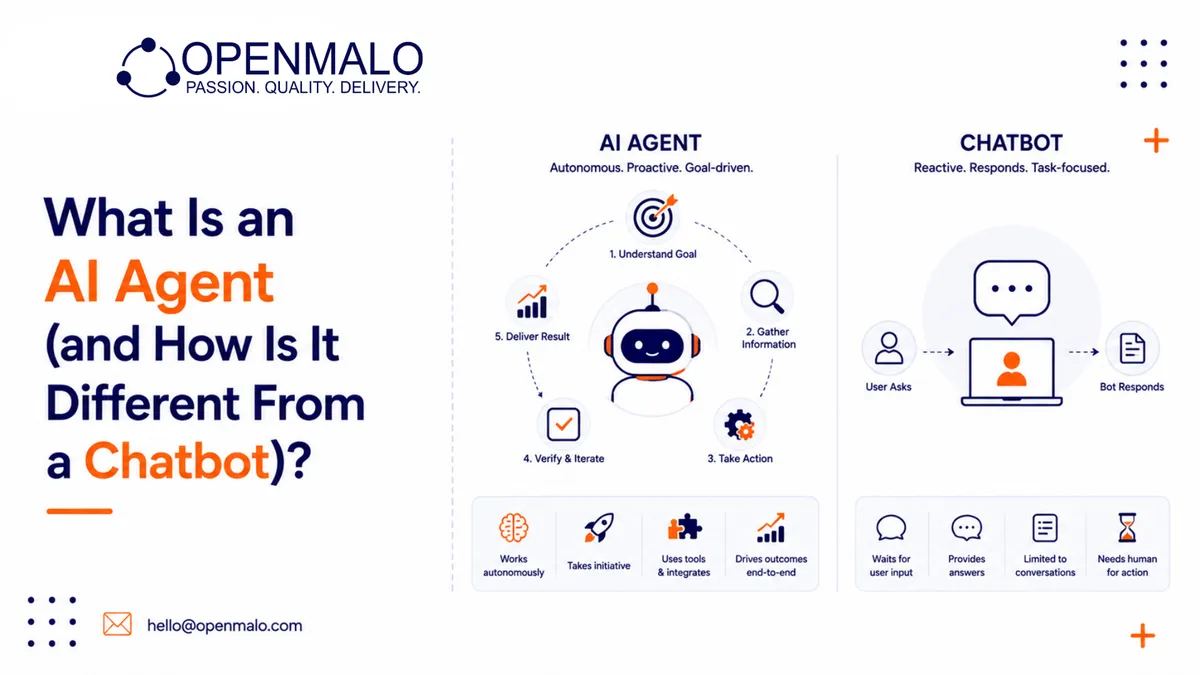
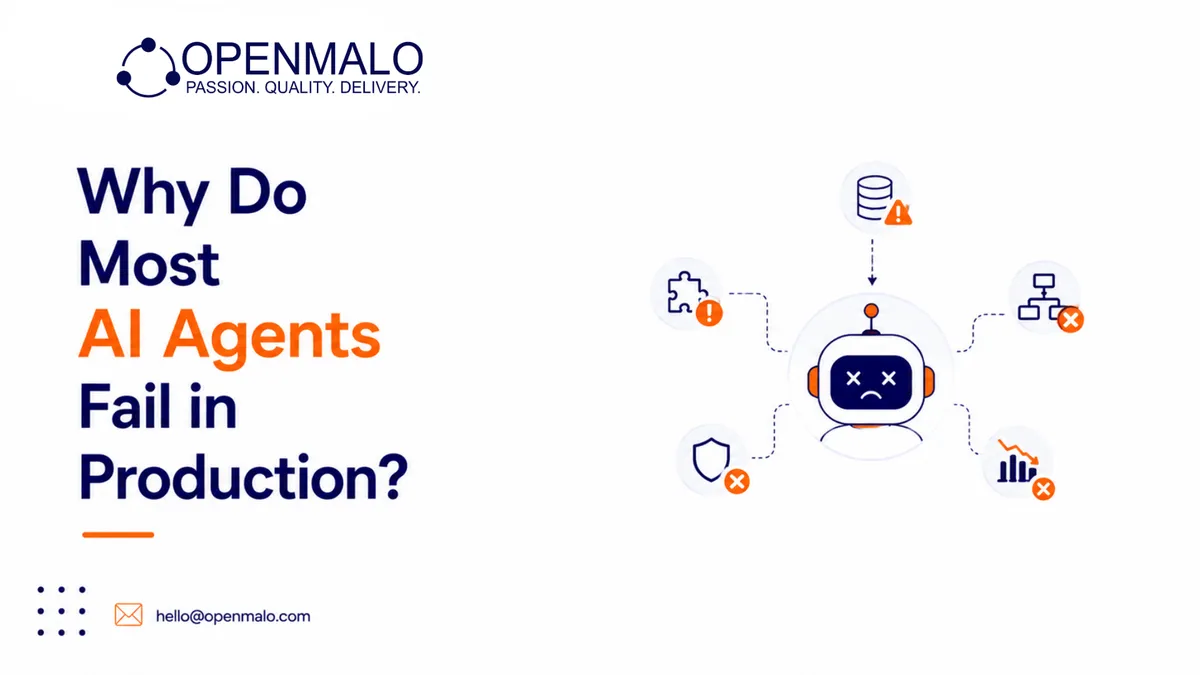
Searching for the best AI agent development company turns up dozens of confident lists. Most rank firms by marketing budget, not by fit. AI agents — systems that plan, call tools, and act with some autonomy — fail in production for boring reasons: weak evaluation, missing guardrails, brittle integrations, and no one on call when an agent does something unexpected. The firm that is right for a regulated bank is rarely the right firm for a seed-stage startup. So rather than crown a winner, this guide gives you the criteria that matter and a neutral shortlist to start from.
How to choose an AI agent development company
Score every candidate against the same checklist. If a vendor cannot answer these clearly, that is a signal.
- Production track record — have they shipped agents that run live, with real users and real failure handling, not just demos and prototypes?
- Evaluation and guardrails — do they build eval suites, set accuracy and safety thresholds, and add guardrails for hallucination, prompt injection, and tool misuse before launch?
- Senior engineers — will experienced engineers design the agent architecture, or is the work handed to juniors after the sales call?
- Integration depth — can they connect the agent to your real systems (CRM, ERP, databases, internal APIs) and handle auth, rate limits, and data security?
- Transparent pricing — is scope, cost, and ownership of the code clear up front, or buried in change orders?
- Post-launch support — who monitors the agent, retrains on new data, and responds when behavior drifts after go-live?
A useful test: ask each firm to describe an agent project that went wrong and what they changed. Honest answers reveal more than case-study highlight reels.
Top AI agent development companies in 2026
The shortlist below spans categories — large IT services firms, AI-focused boutiques, and full-stack product partners — so you can match a firm to your situation. Entries are described in neutral, general terms; verify current capabilities, references, and pricing directly with each before deciding.
1. Global IT services firms
Large, well-known global IT services firms offer broad delivery capacity, established compliance processes, and the scale to staff large programs. They suit enterprises that need agents embedded into existing transformation programs and value vendor stability. The trade-off is often higher cost and slower iteration than smaller, specialized teams.
2. AI-focused boutiques and research-led labs
Boutique firms and research-led labs that specialize narrowly in applied AI tend to bring deep technical expertise in agent architectures, evaluation, and the latest model tooling. They fit teams that want to push the frontier and have in-house staff to maintain the result. Capacity for very large, multi-team rollouts can be more limited.
3. OpenMalo Technologies
OpenMalo is a software development company founded in 2013, with 13+ years of delivery, 55+ senior engineers, 280+ projects shipped across 6 countries, and a 5.0 rating on Clutch. For AI agents, the model is execution-partner rather than pure consulting: senior engineers design the agent architecture, build evaluation suites and guardrails, integrate with your existing CRM, ERP, and internal APIs, and stay on for post-launch monitoring and iteration. The fit is strongest for companies that want a partner to build and run a production agent end to end with transparent fixed-scope pricing, rather than a research engagement or a staff-augmentation contract. As with any firm, scope a pilot against your own requirements before committing.
4. Full-stack product studios
Product-focused studios that build complete applications — not just the model layer — suit companies launching a new agent-powered product where UX, backend, and the agent all need to ship together. They are a good match when you do not have an in-house engineering team to assemble the surrounding application.
5. Cloud platform professional services
The professional-services arms of major cloud providers help teams that are standardizing on a single cloud and its AI services. They bring strong platform alignment and reference architectures. The trade-off is a degree of lock-in to that provider’s ecosystem.
6. Specialist automation and RPA vendors
Vendors that came from the automation and RPA world increasingly extend into AI agents for back-office workflows. They suit organizations automating high-volume internal processes and already invested in those toolchains. Evaluate how mature their agent and evaluation tooling is versus their established automation features.
7. Independent senior contractors and small pods
For narrow, well-defined agents, experienced independent engineers or small pods can be faster and cheaper than a firm. The risk is continuity and support — confirm what happens to the project if a key individual becomes unavailable.
This list is a general overview of common categories, not a ranking. The best choice is the firm that scores well against your own weighted criteria. Always check current references and run a small paid pilot before a large commitment.
If you want a partner that builds, evaluates, and runs production AI agents end to end, OpenMalo offers AI Agent Development Services — from architecture and guardrails through integration and post-launch support. Scope a pilot and judge the work against the criteria above.