TL;DR: Cloud bills balloon from over-provisioned resources, idle waste and unoptimized pricing. Cloud cost optimization fixes this through right-sizing, savings plans, autoscaling, storage tiering and cutting waste. It usually starts with an audit that finds where money is going, then targets the biggest savings first.
Yes, your cloud bill can almost always come down. Cloud cost optimization covers right-sizing, reserved and savings plans, autoscaling, storage tiering and waste elimination. Most teams see meaningful monthly reductions after an initial audit — without sacrificing performance.
This post sits under our pillar on data foundations for AI.
Can you reduce your cloud bill?
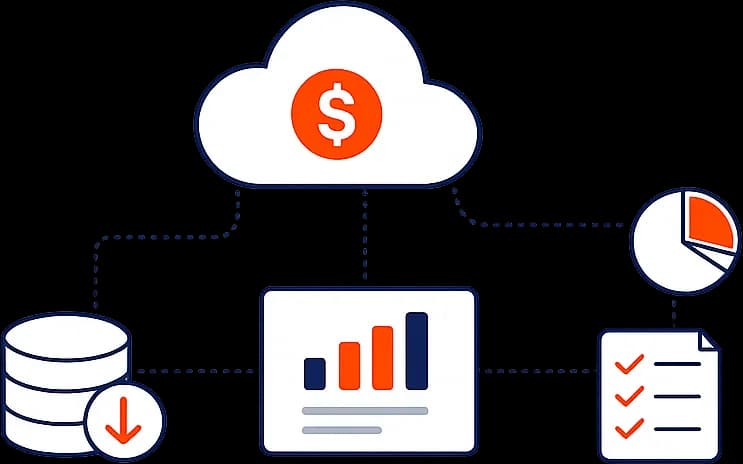
Almost always, yes. Cloud cost optimization covers right-sizing, reserved/savings plans, autoscaling, storage tiering and waste elimination. Most teams see meaningful monthly reductions after an initial audit, without sacrificing performance — because most bills contain resources that are oversized, idle, or paying on-demand prices for steady workloads.
Where does cloud waste come from?
- Over-provisioning — instances far larger than the workload needs.
- Idle resources — things left running that nobody uses.
- On-demand pricing for steady workloads that could use savings plans.
- Untiered storage — hot storage for data that's rarely accessed.
- No autoscaling — paying for peak capacity 24/7.
How does cloud cost optimization work?
It typically starts with an audit to see where the money actually goes, then targets the highest-impact fixes:
- Right-sizing — match resources to real usage.
- Reserved / savings plans — commit for discounts on steady workloads.
- Autoscaling — scale up and down with demand.
- Storage tiering — move cold data to cheaper tiers.
- Waste elimination — shut down and clean up the unused.
Why an audit comes first
You can't optimize what you can't see. An audit reveals which services, teams and resources drive the bill, so effort goes where the savings are — rather than guessing. It's the same measure-before-optimizing discipline that applies to AI cost.
Will cutting costs hurt performance?
Done right, no. Optimization removes waste and matches resources to actual need — it doesn't starve workloads. Right-sizing and autoscaling often improve reliability by aligning capacity with demand. The goal is to stop paying for what you don't use, not to under-provision what you do.