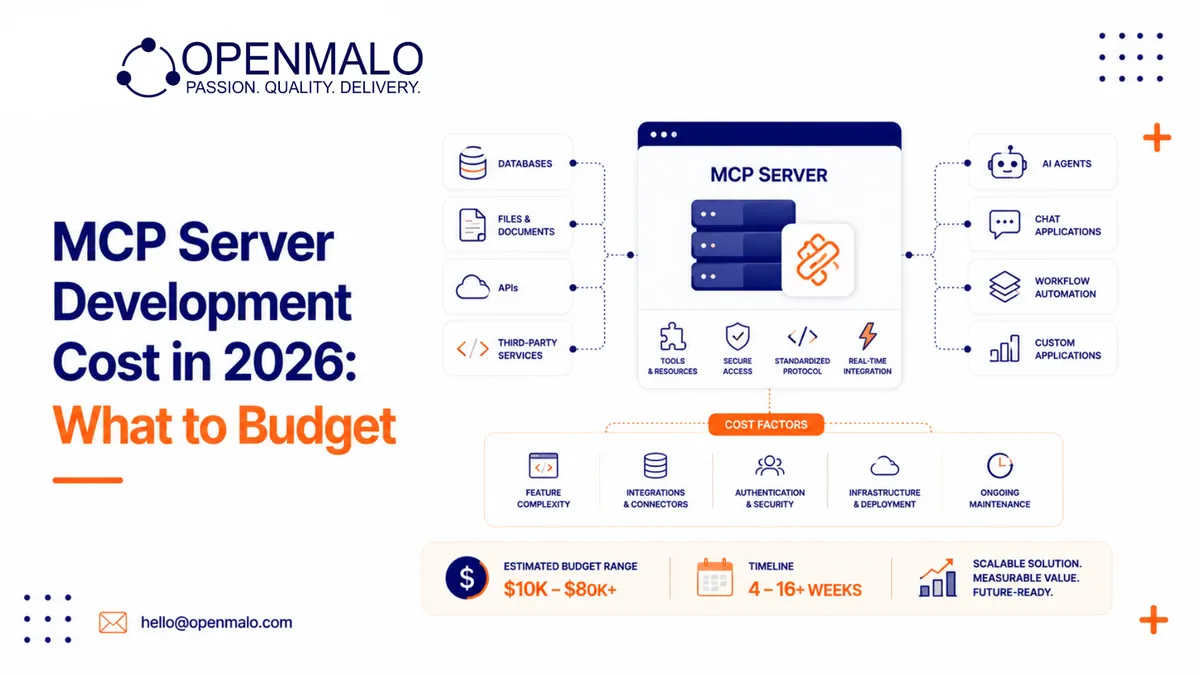
In 2026, building a custom MCP server typically ranges from the low-to-mid five figures (USD) for a focused server exposing a handful of tools, up to the higher five figures or more when it must connect to several internal systems with strict auth and audit requirements. The number is driven mostly by how many tools you expose and how complex the systems behind them are.
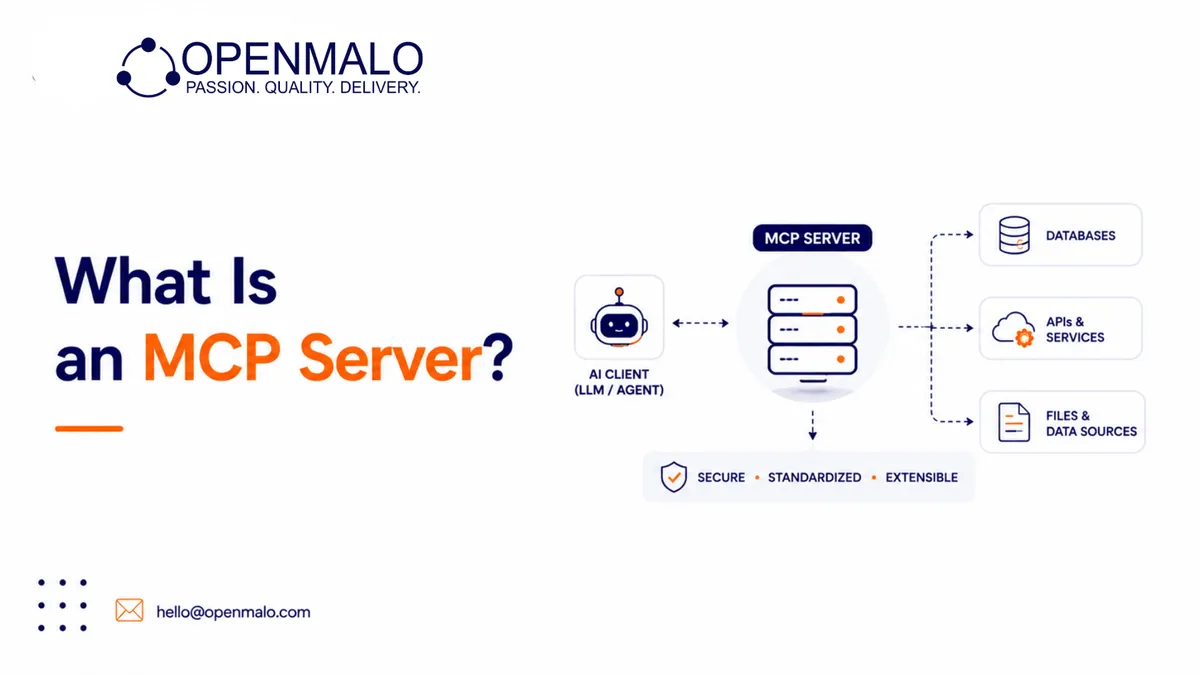
MCP (Model Context Protocol) is an open standard that lets AI assistants connect to external tools and data through a consistent interface. An MCP server is the component you build to expose your systems — databases, APIs, internal services — as tools an AI client can safely call. As with most integration work, the cost lives in the connections and the safety, not the protocol itself. Every project is scoped individually, so treat these as market ranges.
What drives the cost
- Number and complexity of tools. Each tool you expose (a query, an action, a search) needs a defined schema, input validation, error handling, and tests. Ten simple read tools cost far less than three complex write tools that change real data.
- Systems behind the tools. A clean, documented internal API is cheap to wrap. A legacy system with no API, or one requiring scraping or custom adapters, is expensive.
- Authentication and authorization. Who is allowed to call which tool, and how that maps to your existing permissions, is real security engineering — especially when tools can modify data.
- Audit and compliance. Logging every tool call, redacting sensitive data, and meeting compliance requirements add work in regulated environments.
- Deployment and hosting. A local developer server is trivial; a hosted, authenticated, multi-user server with monitoring is a production system.
Typical project tiers
General market ranges, varying widely by scope and region:
- Simple — a handful of read-only tools over one well-documented API, local or single-tenant deployment. Low five figures (USD).
- Mid — read and write tools over two or three systems, real authentication, hosted deployment, basic audit logging. Mid five figures.
- Complex — many tools across multiple internal systems, fine-grained authorization, full audit trails, and compliance requirements. Higher five figures and up.
Typical phases
- Discovery. Decide which tools to expose, who calls them, what they can do, and how they map to your existing permissions.
- Build. Implement the tools with schemas, validation, and error handling; wire up auth; add logging.
- Hardening. Security review, rate limiting, and careful handling of any tool that writes or deletes data.
- Deploy and support. Host the server, monitor usage, and maintain it as the underlying systems change.
Engagement models
- Fixed scope — works well when the tool list is settled. You get a fixed estimate against a defined set of tools.
- Time and materials — fits when the right set of tools is still being discovered alongside the AI use case.
- Dedicated team — fits when the MCP server will grow with new tools over time as more teams adopt it.
What changes the price up or down
Price goes up with: write or delete tools (vs read-only), legacy systems without clean APIs, fine-grained per-user authorization, audit and compliance needs, and multi-tenant hosting. Price goes down with: read-only tools, well-documented existing APIs, a small focused tool list, and reusing standard auth you already run. Starting with read-only tools and adding write tools later is a common way to stage cost.
For a scoped, fixed estimate, see MCP Server Development Services or book a discovery call.