In 2026, custom concrete dispatch software typically ranges from the mid five figures (USD) for a focused scheduling and order-management tool, up to six figures for a full platform with live truck tracking, plant integration, ticketing, and driver and customer apps. The main cost driver is how much real-time tracking and how many hardware and back-office integrations you need.
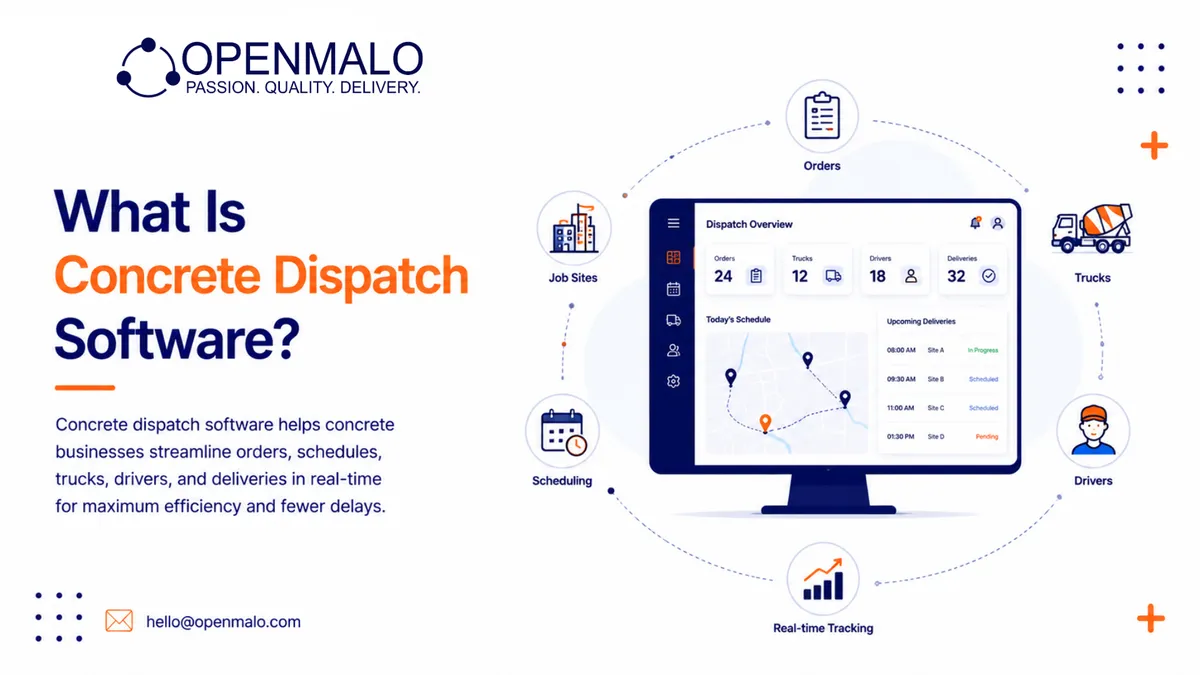
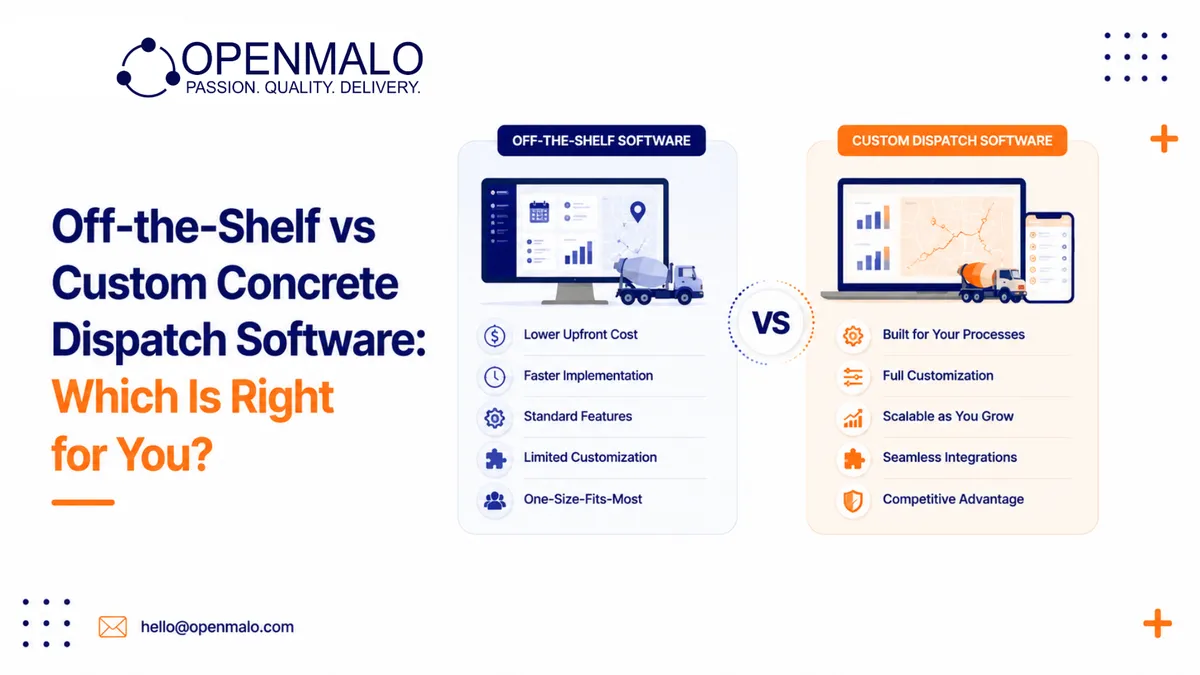
Concrete dispatch software coordinates the moving parts of a ready-mix operation — orders, batch plant scheduling, truck assignment, delivery tracking, and tickets. Because concrete is perishable and timing-critical, the value is in real-time coordination, and that is also where the cost concentrates. Off-the-shelf products exist; a custom build makes sense when your scheduling rules, integrations, or scale do not fit them. Every project is scoped individually, so treat these as market ranges.
What drives the cost
- Real-time tracking. Live truck location, status (loading, in transit, pouring, returning), and ETA require GPS or telematics integration, a live map, and reliable updates — a major cost area.
- Scheduling complexity. Simple order lists are cheap. Optimised dispatch that balances plant capacity, truck availability, drive times, and pour rates is sophisticated logic.
- Integrations. Batch plant control systems, telematics hardware, accounting or ERP, and weighbridge or ticketing systems each add connector work and testing.
- Apps and roles. Separate experiences for dispatchers, drivers (mobile), plant operators, and customers each add build effort.
- Scale and reliability. A single-plant operation differs greatly from a multi-plant, multi-region operation needing high availability during business hours.
Typical project tiers
General market ranges, varying widely by scope and region:
- Simple — order entry, manual scheduling, basic ticketing, single plant, no live tracking. Mid five figures (USD).
- Mid — assisted scheduling, live truck tracking, a driver mobile app, and one or two integrations. High five figures.
- Complex — optimised multi-plant dispatch, full telematics and plant integration, driver and customer apps, accounting sync, and high reliability. Six figures and up.
Typical phases
- Discovery. Map your dispatch workflow, scheduling rules, the systems and hardware to integrate, and the roles that need access. This is where the real scope emerges.
- Build. Core scheduling and order management first, then tracking, apps, and integrations in priority order so value lands early.
- Field testing. Concrete dispatch runs in the real world — test on actual routes, plants, and devices, including poor-signal conditions.
- Launch and support. Roll out by plant or region, monitor reliability during business hours, and maintain integrations as hardware and back-office systems change.
Engagement models
- Fixed scope — works for a defined first release after discovery, with later phases scoped separately.
- Time and materials — fits when scheduling rules and integrations need to be discovered alongside the build.
- Dedicated team — fits a multi-phase platform that will grow across plants and roles over time.
What changes the price up or down
Price goes up with: live tracking, optimised auto-scheduling, telematics and plant integrations, multiple apps and roles, multi-plant scale, and high reliability needs. Price goes down with: manual scheduling, a single plant, no live tracking in the first release, reusing standard mapping and telematics providers, and phasing the rollout so the most valuable features ship first. A clear first-release scope keeps the initial estimate predictable.
For a scoped, fixed estimate, see Concrete Dispatch Software Development Services or book a discovery call.