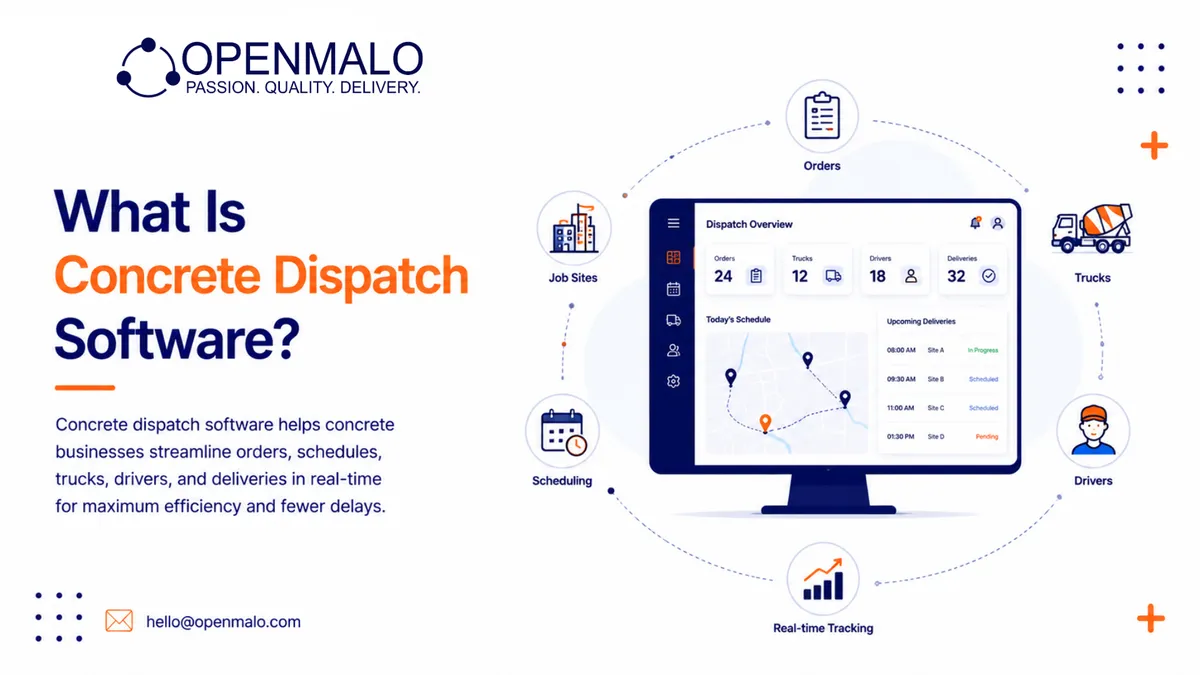
Concrete dispatch software is the system a ready-mix concrete producer uses to take orders, schedule deliveries, and send trucks to job sites. It connects the order desk, the batch plant, and the drivers so a load is mixed on time, the right truck is sent to the right site, and every delivery is tracked and confirmed.
What does concrete dispatch software actually do?
At its core, the software coordinates the flow from a customer call to a finished pour. It replaces whiteboards, spreadsheets, and radio calls with one shared view that the office and the yard both trust. The goal is simple: keep trucks moving, keep plants batching, and keep job sites supplied without gaps or overlaps.
Most platforms cover the same core jobs:
- Order intake — capturing the mix design, quantity, site address, and pour time
- Scheduling — slotting orders across the day so the plant and trucks are not overbooked
- Truck and driver dispatch — assigning loads to vehicles and routing them to sites
- GPS tracking — showing where each truck is in real time
- E-ticketing — creating an electronic ticket for every load
- Plant integration — sending batch instructions to the batch plant
- Delivery confirmation — recording proof that the concrete arrived and was accepted
What is ready-mix concrete?
Ready-mix concrete is concrete that is batched (measured and mixed) at a central plant and delivered to the job site in a rotating drum truck, rather than mixed on site. Because concrete starts curing the moment water meets cement, timing matters. Ready-mix dispatch software exists to manage that clock across many orders at once.
How does order intake work?
Order intake is where a delivery begins. An office user enters the customer, the mix design (the recipe of cement, aggregate, water, and admixtures), the volume in cubic yards or cubic meters, the delivery address, and the requested pour time. Good software validates the order against plant capacity and flags conflicts before the day fills up.
Once accepted, the order becomes a scheduled job that the rest of the system can act on — no re-keying into a separate plant or trucking tool.
What is a dispatch board?
A dispatch board is the live screen a dispatcher uses to see every order, truck, and driver for the day. Think of it as the control tower. It shows which loads are batching, which trucks are loaded, which are on the road, and which sites are waiting. Dispatchers drag and assign loads to trucks and adjust as pours run long or short.
The dispatch board is usually the feature operators care about most, because it turns scattered information into one decision-making view.
How does truck and driver dispatch work?
Dispatch is the act of assigning a load to a specific truck and driver and sending them to a site. The software factors in truck availability, driver hours, plant location, and the drive time to the site. Many platforms use telematics — the data feed from a vehicle's GPS and sensors — to know exactly where each truck is and how long until it returns to load again.
Some systems add geofences — virtual boundaries drawn around a plant or job site — so the system automatically logs when a truck arrives or leaves, without the driver pressing a button.
What is e-ticketing and POD?
An e-ticket (electronic ticket) is the digital version of the paper delivery ticket that used to ride in the truck. It records the mix, quantity, batch time, and load details, and the driver and customer can sign it on a phone or tablet. POD (proof of delivery) is the confirmation — a signature, photo, or timestamp — that the concrete arrived and was accepted at the site.
E-ticketing and POD matter because they cut disputes. When the data is captured digitally at the moment of delivery, billing is faster and arguments about what was delivered shrink.
How does the software connect to the batch plant?
A batch plant is the facility that measures and mixes the raw materials into concrete. Plant integration means the dispatch software can send the order's mix design straight to the plant's batching controls and receive back the actual batched quantities. This keeps the office, the plant, and the ticket in agreement instead of relying on someone to copy numbers between systems.
Why do ready-mix producers use it?
Producers adopt dispatch software to reduce truck idle time, avoid late or missed pours, and bill accurately. When orders, trucks, plants, and tickets share one source of truth, dispatchers spend less time on the phone and more time managing exceptions. Drivers get clear instructions, and customers get reliable delivery windows.
Thinking about custom dispatch software for your plant? See Concrete Dispatch Software Development.