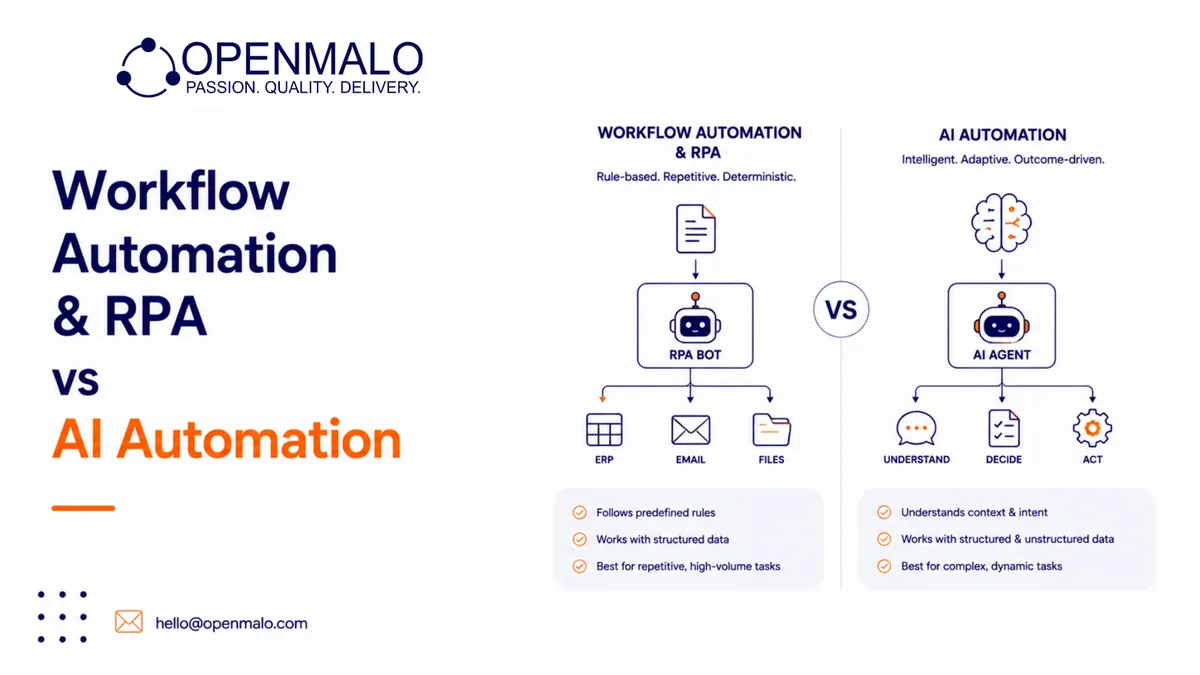
TL;DR: RPA (robotic process automation) automates repetitive, rule-based tasks by following fixed scripts — great for stable, structured processes. AI-powered automation adds the ability to handle unstructured inputs and changing conditions (reading documents, understanding language, making judgment calls). The best automations combine both: RPA for deterministic steps, AI for the messy parts.
Workflow automation and RPA use software (and increasingly AI agents) to perform repetitive, rule-based tasks across systems — data entry, reconciliation, approvals — freeing staff for higher-value work. AI-powered automation goes further, handling the unstructured inputs that traditional RPA can't.
This post sits alongside our guides on AI agents and document intelligence.
What is workflow automation / RPA?
Workflow automation and RPA use software — and increasingly AI agents — to perform repetitive, rule-based tasks across systems, such as data entry, reconciliation and approvals, freeing staff for higher-value work. Traditional RPA follows fixed rules and works through existing interfaces; AI-powered automation also handles unstructured inputs that rules alone can't.
Which workflows are best suited to RPA versus AI-powered automation?
A simple way to decide:
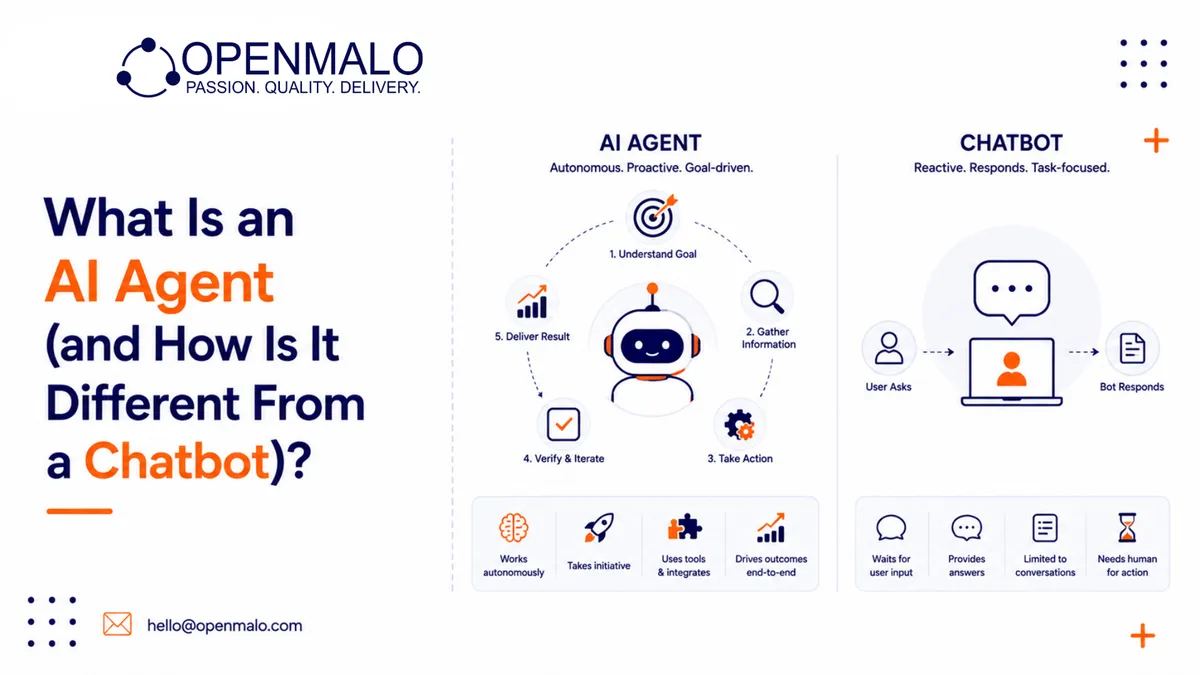
| Use RPA when | Use AI-powered automation when |
|---|---|
| Steps are fixed and rule-based | Inputs are unstructured (documents, text, images) |
| Inputs are structured and predictable | Conditions vary or need judgment |
| The process rarely changes | Rules can't capture all the cases |
| You're moving data between systems | You need understanding, not just movement |
In practice, many real workflows are hybrid — RPA handles the deterministic steps, and AI (document intelligence or an agent) handles the parts that require reading, understanding or deciding.
Why traditional RPA breaks
RPA follows scripts, so it's brittle: change a form, an interface or an input format and the bot fails. It also can't handle anything unstructured — a PDF invoice, a free-text email. That's exactly the gap AI-powered automation fills, which is why the two are increasingly combined.
What can you automate?
- Data entry & migration — moving data between systems.
- Reconciliation — matching records across sources.
- Approvals & routing — pushing items through defined steps.
- Document-driven processes — using document intelligence to read inputs.
- Judgment-heavy steps — using AI agents where rules fall short.
How do you start an automation project?
Begin with a process that's high-volume, repetitive and costly in staff time — then map which steps are rule-based (RPA) and which need understanding (AI). Automating the right process well beats automating many poorly. A focused pilot proves the savings before you scale.