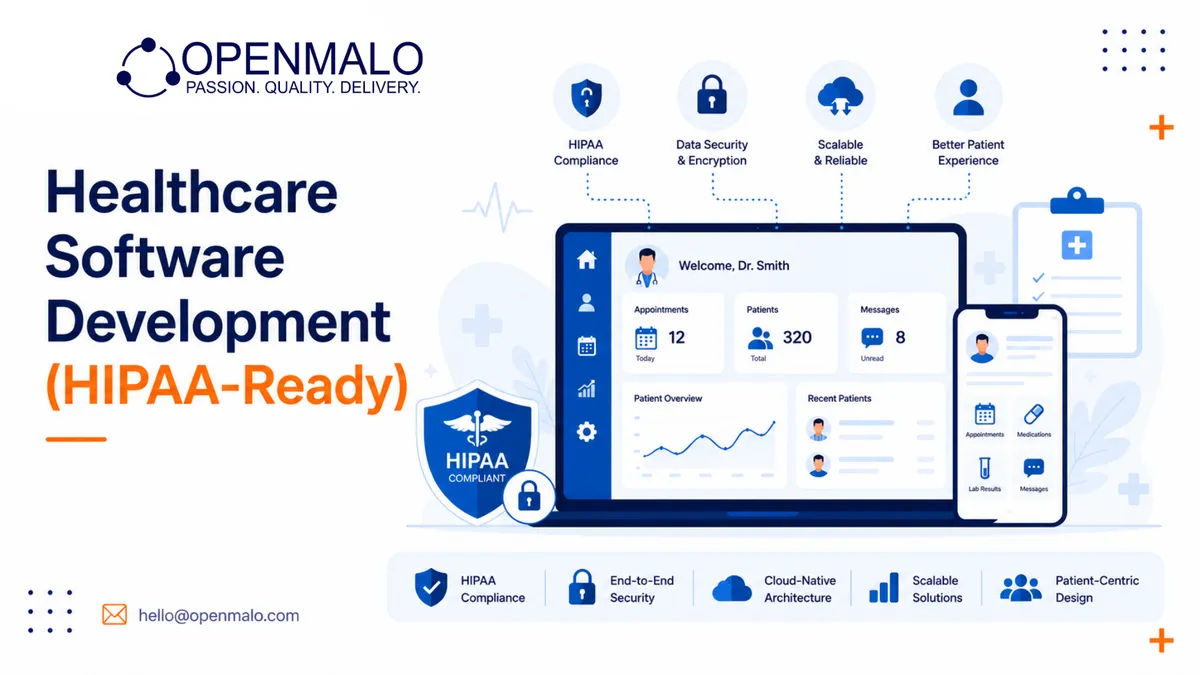
TL;DR: A healthcare software development company builds clinical and patient-facing systems that handle protected health information safely. That means HIPAA-ready, BAA-ready architecture, HL7 and FHIR R4 integration with existing EHR/EMR systems, and encryption, access control and audit trails built in. The compliance and integration engineering is what separates a real healthcare partner from a generic dev shop.
Healthcare software development builds HIPAA-ready systems — EHR/EMR, telehealth, patient portals, clinical decision support and clinical AI — with HL7/FHIR integration. For HealthTech startups, providers and payers, the work is BAA-ready and engineered so protected health information (PHI) is secure by design.
This is an industry-hub guide; for the underlying engineering see building to HIPAA and data security.
What does a healthcare software development company do?
It builds software for clinical and patient-facing use, including:
- EHR / EMR — electronic health and medical records.
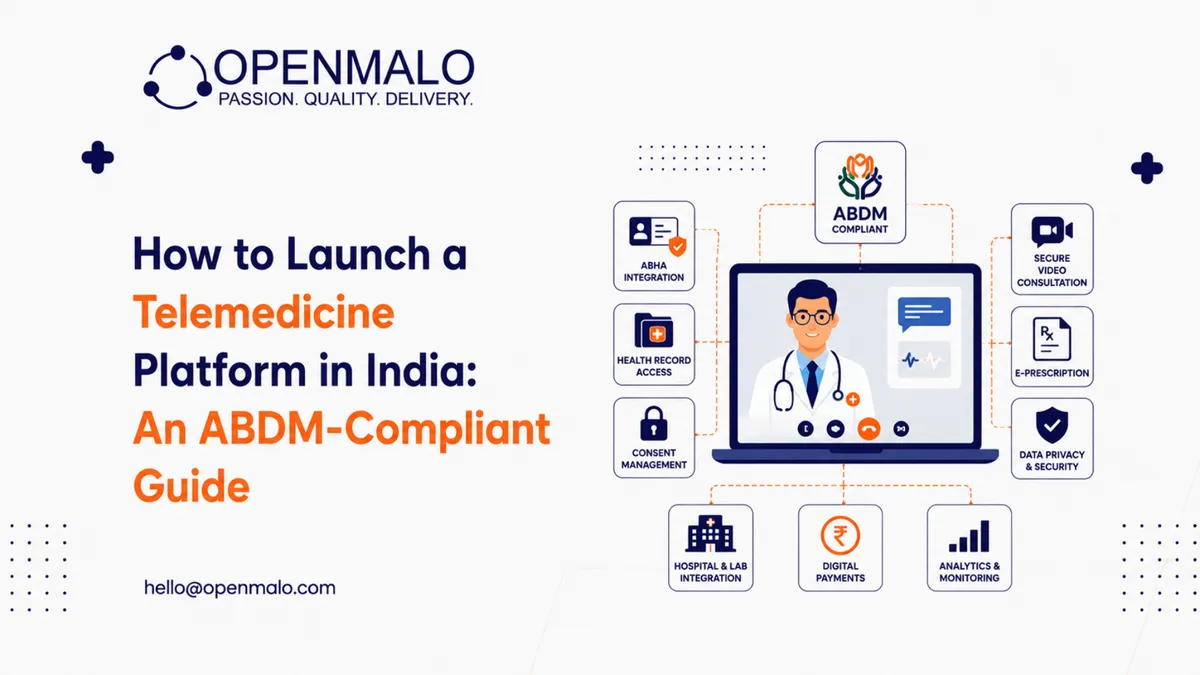
- Telehealth — virtual care and remote consultation.
- Patient portals — access to records, scheduling and messaging.
- Clinical decision support — tools that assist clinicians.
- Clinical AI — document intelligence and analysis on clinical data.
It serves HealthTech startups, providers and payers — and everything is built around protecting PHI.
Is OpenMalo HIPAA compliant, and will you sign a BAA?
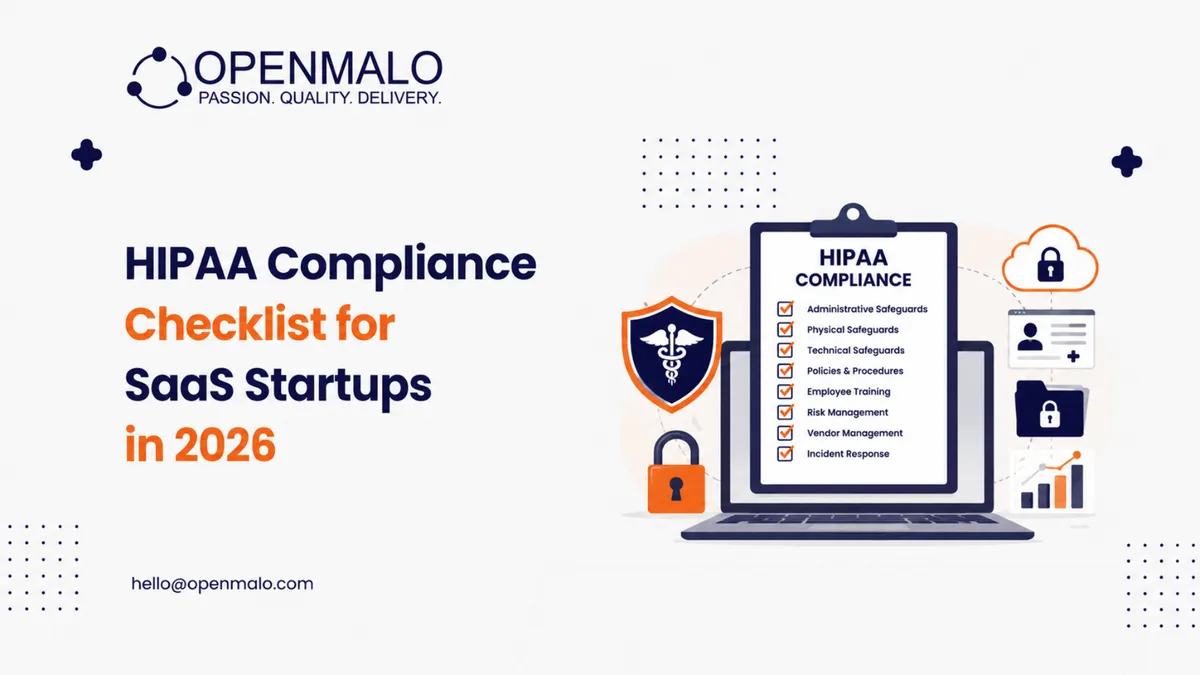
OpenMalo builds HIPAA-ready healthcare software and is BAA-ready — meaning a Business Associate Agreement can be signed to govern how protected health information is handled, and the architecture is engineered to meet HIPAA requirements (encryption, access control, audit trails, secure data handling). HIPAA is a framework software is built to; we align your system with it and operate under a BAA, rather than acting as a certifying authority. See HIPAA software engineering.
Can you integrate with our EHR/EMR using HL7 and FHIR R4?
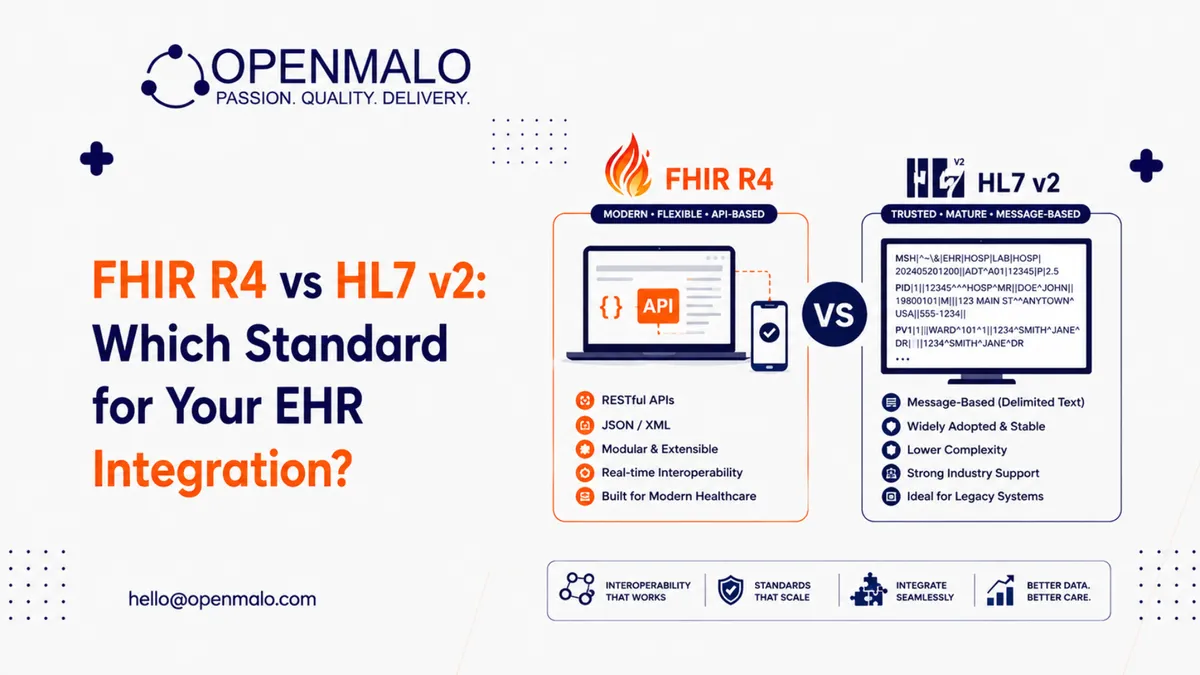
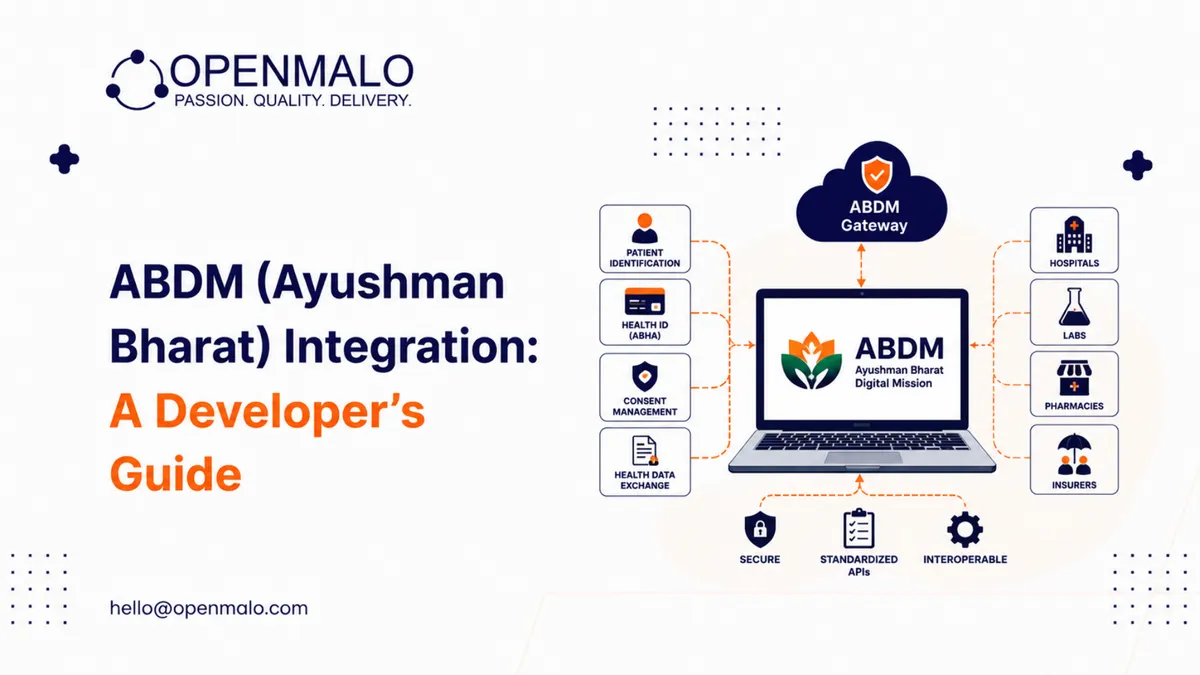
Yes — healthcare interoperability is built on standards like HL7 and FHIR R4, which allow new software to exchange clinical data with existing EHR/EMR systems. Integration covers reading and writing the relevant resources (patients, encounters, observations) in line with FHIR R4, so your system works with the records clinicians already use rather than creating a data island.
Why interoperability matters
Healthcare software that can't talk to existing EHR/EMR systems forces duplicate data entry and fragments the patient record. HL7/FHIR integration is what makes new tools usable in real clinical settings — which is why it's a core capability rather than an add-on.
How do you keep patient data secure and compliant in the cloud?
Through layered, HIPAA-aligned controls:
- Encryption in transit and at rest.
- Least-privilege access so staff and systems see only what they need.
- Audit trails of every access to PHI.
- BAA governing data handling with any partner.
- Perimeter options — keeping sensitive data and even self-hosted AI within your environment.